
Breaking Down Silos: Singapore's Inaugural Integrated IP, Valuation & Tax Masterclass
26 October 2026
Connecting IP strategy, valuation and taxation to support better business decisions
As businesses increasingly derive value from intangible assets such as technology, software, brands and intellectual property (IP), decisions about how these assets are created, protected, valued and taxed have become more complex.
Yet IP, valuation and tax are often considered separately, even though they are closely interconnected in business decisions involving commercialisation, restructuring, mergers and acquisitions, and cross-border expansion.
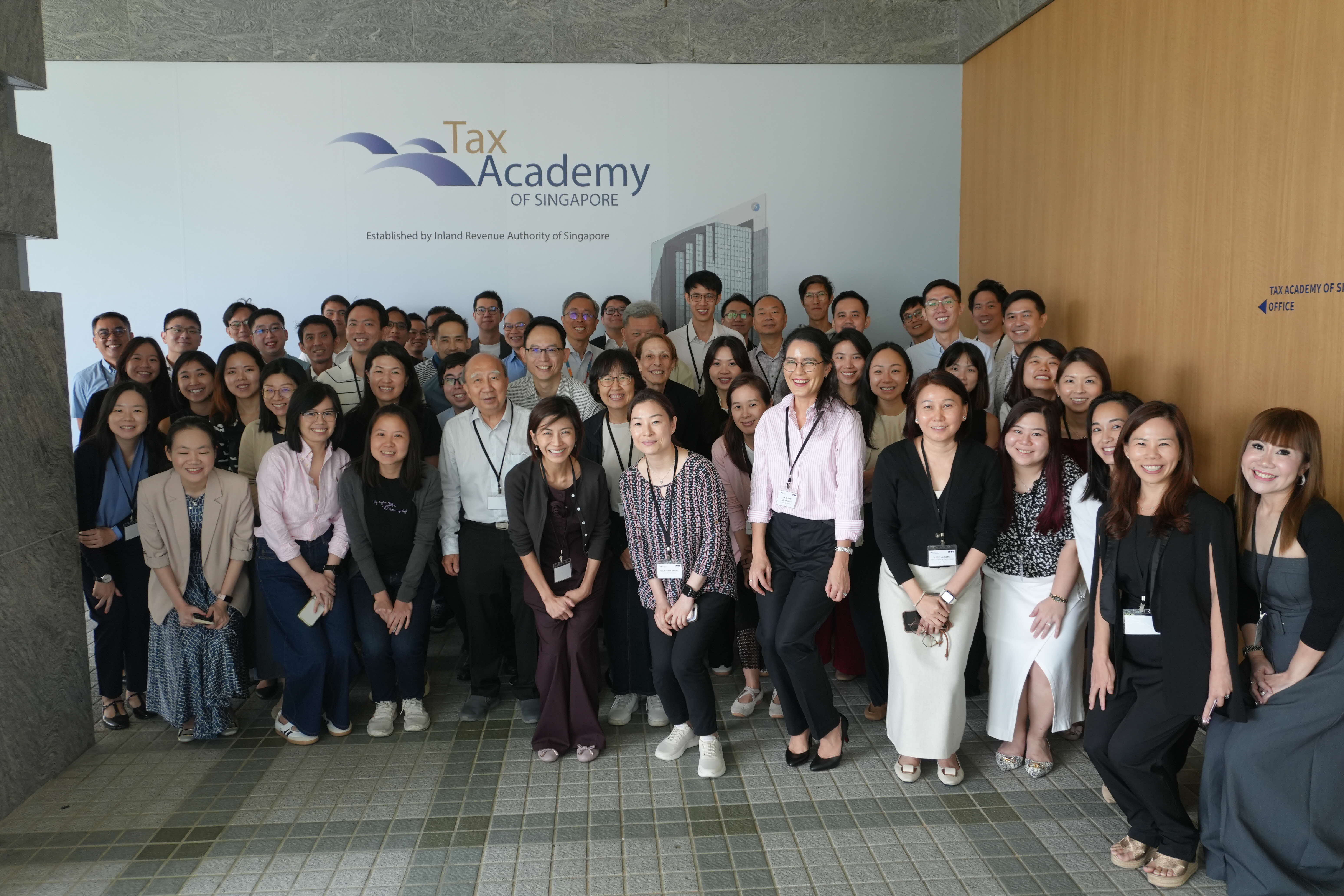
Recognising the need for a more integrated approach, the Tax Academy of Singapore (TA) and IPOS International jointly organised the inaugural Integrated IP, Valuation & Tax (IIVT): A Strategic Toolkit for Decision-Makers masterclass from 5 to 7 October 2026 at the Tax Academy of Singapore Hub.
The three-day programme brought together over 70 participants, including senior business leaders, corporate counsel, finance and tax professionals, valuation specialists and public sector representatives, to explore how these disciplines intersect in real-world business situations.
Connecting the Dots: From IP Creation to Commercial Value
The masterclass opened with remarks by Mr Tan Kong Hwee, Chief Executive of the Intellectual Property Office of Singapore (IPOS), and Mr Dennis Lui, Chief Executive Officer of TA.
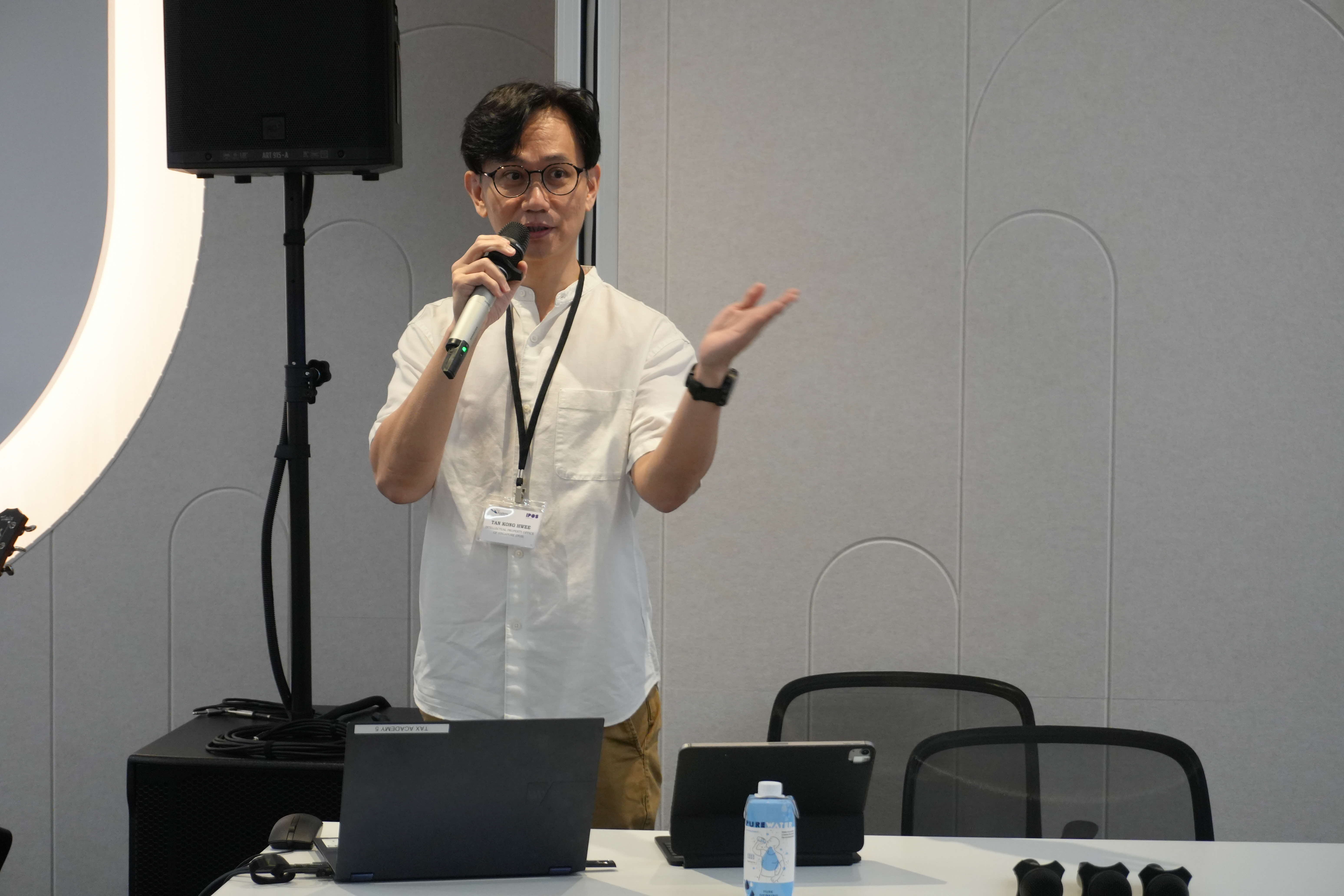
Opening Address by Mr Tan Kong Hwee, Chief Executive of Intellectual Property Office of Singapore (IPOS)
Dear Mr Dennis Lui, CEO of Tax Academy of Singapore, distinguished speakers, ladies and gentlemen, good morning.
When my team asked me to speak here today, I must admit I felt I was in a rather strange position. Not only am I giving an opening address, but I am also participating in this course as a delegate myself. So, asking me to sound intelligent on IP, valuation, and tax all at once is quite a tall order. Instead of trying to do that, allow me to share why IPOS International strongly championed and supported this course.
The way IPOS sees it is this: today, much of a company's value resides in intangible assets such as technology, brands, data, and intellectual property. Yet when there is a need to look at these assets for legal, business strategy, valuation, or tax purposes, we traditionally apply entirely different lenses. In reality, these issues are closely connected. As businesses increasingly rely on intangible assets to drive growth and competitiveness, there is a growing need to understand not only how these assets are created and protected, but also how they are valued, commercialised, and managed from a tax perspective. An integrated understanding of IP, valuation, and tax helps organisations make more informed decisions, better unlock value from their intangible assets, and navigate an increasingly complex innovation and business landscape.
Over the years, IPOS International has organised various sessions on intellectual property and tax. Building on growing interest in this area, we partnered with the Tax Academy of Singapore to launch the inaugural IP & Tax Series earlier this year in March. During Singapore IP Week 2026, we strengthened that partnership through the signing of a Collaboration Agreement. This IIVT programme is one of the first major initiatives arising from that collaboration.
For this new programme, we have brought learning about IP, valuation, and tax into a single, flexible, stackable three-day journey spanning IP on Day 1, Valuation on Day 2, and Tax on Day 3. Participants can choose the modules most relevant to them or attend all three days to gain a holistic perspective. The programme also incorporates practical case studies and real-world scenarios to bring these concepts to life—which is the part I am most looking forward to as a participant.
Ultimately, we believe that this integrated approach is the right one, and I hope these three days will create opportunities not only to learn from our expert speakers, but also from one another. Finally, allow me to thank Dennis, the Tax Academy of Singapore, our speakers, and our organising teams for making this programme possible. I wish everyone a fruitful and enjoyable masterclass.
Mr Tan highlighted the growing importance of intangible assets in driving business competitiveness and the need for organisations to consider IP, valuation and tax through a more integrated lens.
He also reflected on the growing collaboration between IPOS International and TA, from the launch of the IP & Tax Series in March 2026 to the signing of a Collaboration Agreement during Singapore IP Week 2026. The IIVT masterclass represents one of the first major initiatives arising from this partnership.
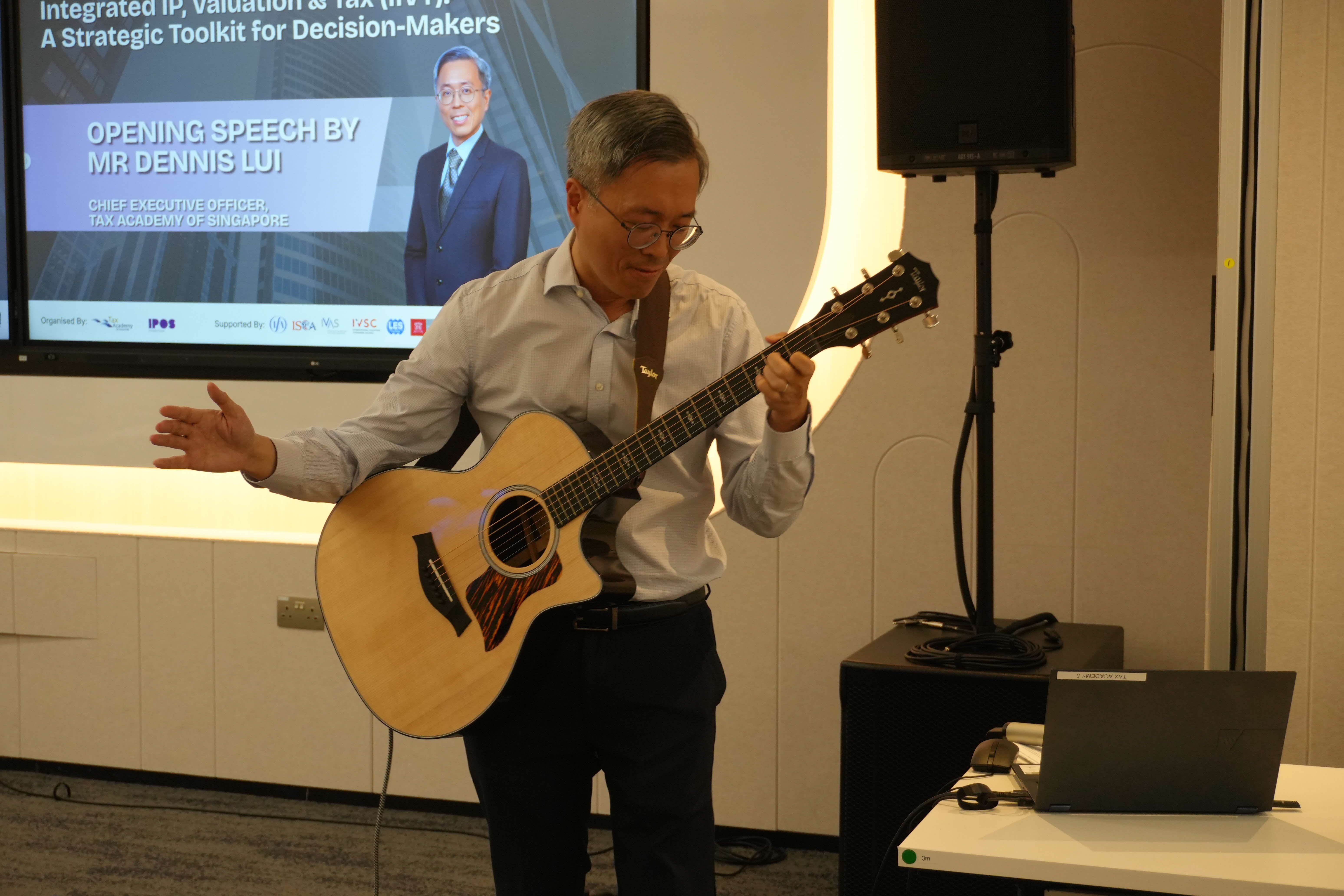
Opening Address by Mr Dennis Lui, Chief Executive Officer of the Tax Academy of Singapore
Thank you, Kong Hwee, for setting the context. And a very warm welcome to everyone to the Tax Academy of Singapore Hub.
I thought I would begin this morning not with words, but with a few musical notes.
The opening of Stairway to Heaven is one of the most recognisable pieces of guitar music in the world. It was also at the centre of a remarkable copyright dispute. Led Zeppelin was alleged to have copied part of an earlier song called Taurus, written by Randy Wolfe and performed by the band Spirit. The lawsuit began in 2014—43 years after Stairway to Heaven was released. It went through a jury trial, an appeal, and eventually an 11-judge panel of the Ninth Circuit Court of Appeals. Led Zeppelin ultimately prevailed, and on 5 October 2020—exactly six years ago today—the United States Supreme Court declined to hear the final appeal.
I am not an IP expert, but I find the case fascinating because you can listen to the two pieces and hear similarities. Yet copyright law has to answer a much harder question: what exactly is protected creative expression, and what consists of musical building blocks that are available to everyone?
There is a broader lesson here for business. We talk very easily about 'intangible assets' and 'intellectual property'. But once you start making real commercial decisions, the questions become much harder. What exactly is the asset? Who created it? Who owns it? Who has improved it? Who protects it? Who controls it? And perhaps most importantly—how does it actually create value for the business?
Then we get to the next set of questions. What is that asset worth? How should it be commercialised? And when the people, rights, funding, and commercial activities sit across different companies and different countries—where should the returns properly arise, and how should they be taxed?
These are often treated as separate IP, valuation, and tax questions. But in the real world, they are really different perspectives on the same business story. Over the next three days, I am certain that all these perspectives would be connected through this exciting programme. Many thanks to our teams at IPOS International and Tax Academy for putting this inaugural collaboration together! My hope is that you leave not only with more answers, but with better questions to take back to your organisations. On that note, I wish all of you a very productive three days. Thank you.
Mr Dennis Lui brought the discussion to life with an unconventional opening, playing the familiar guitar riff from Led Zeppelin's Stairway to Heaven.
Drawing on the copyright dispute involving the song, he illustrated how seemingly straightforward questions about intellectual property can become complex when legal rights, ownership and commercial value are involved.
He challenged participants to consider fundamental questions: What exactly is the asset? Who owns and controls it? How does it create value? What is it worth? And how should the resulting economic returns be taxed?
These questions, he noted, are often addressed separately by IP, valuation and tax specialists, although they are different perspectives on the same business reality.
The masterclass was designed to bring these perspectives together, helping participants develop a more holistic understanding of the issues involved.
Three Days, Three Disciplines, One Integrated Perspective
Structured as a flexible, modular learning experience, the masterclass allowed participants to attend individual days based on their professional interests or complete all three days for a broader perspective.
Day 1: IP Strategy and Value Creation
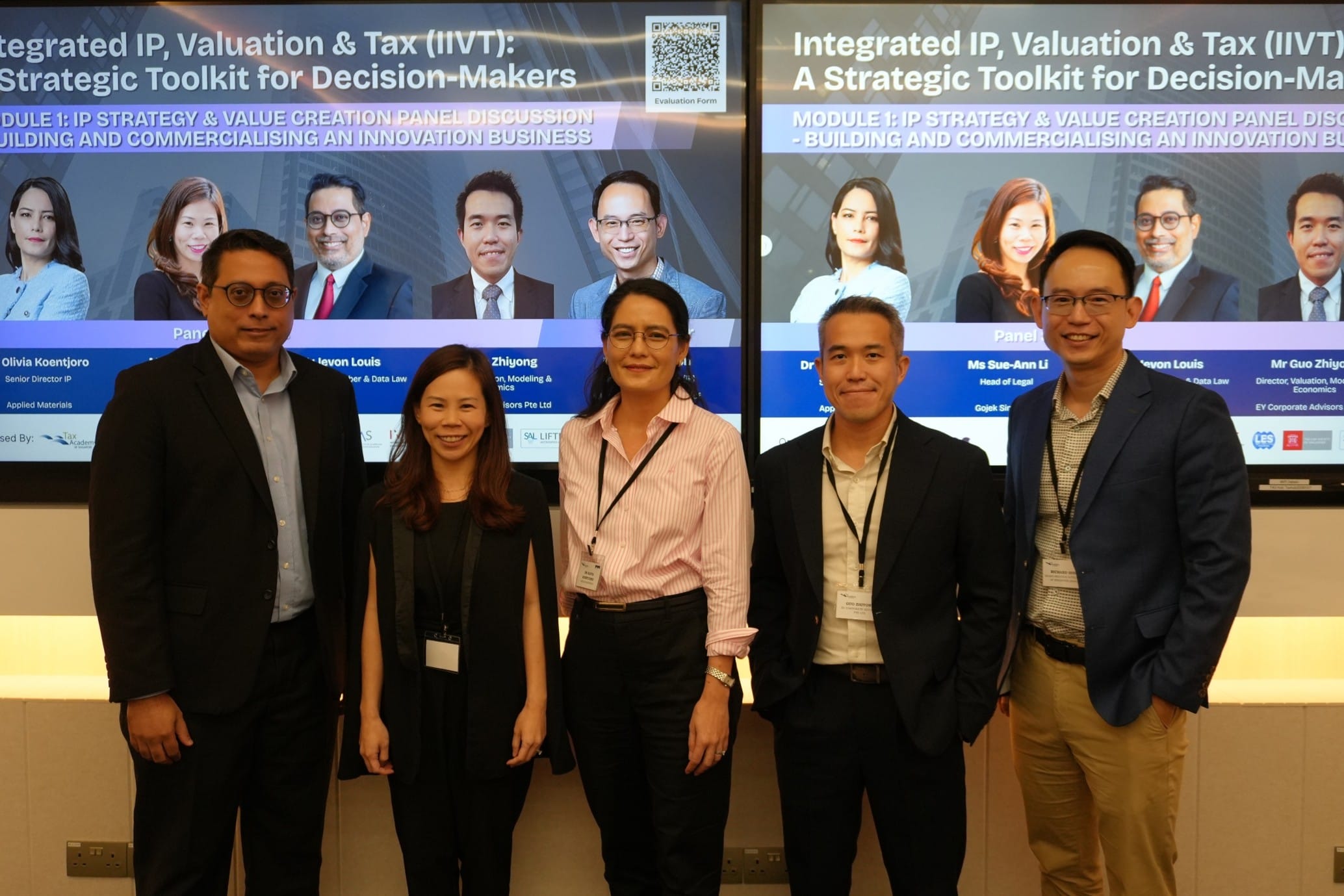
The first day explored how businesses can identify, protect and commercialise their intellectual property.
Sessions covered IP portfolio management, commercialisation strategies and IP due diligence in mergers, acquisitions and corporate restructuring.
An industry panel moderated by Mr Richard Goh from IRAS brought together representatives from Applied Materials, Gojek, PwC and EY to examine practical challenges involving IP ownership, data rights, research collaborations and intangible asset disclosures.
Using a business case that followed an enterprise's growth journey, the discussion highlighted why early and deliberate IP management is critical to protecting and creating long-term business value.
Day 2: Valuing Intangible Assets for Business Decisions
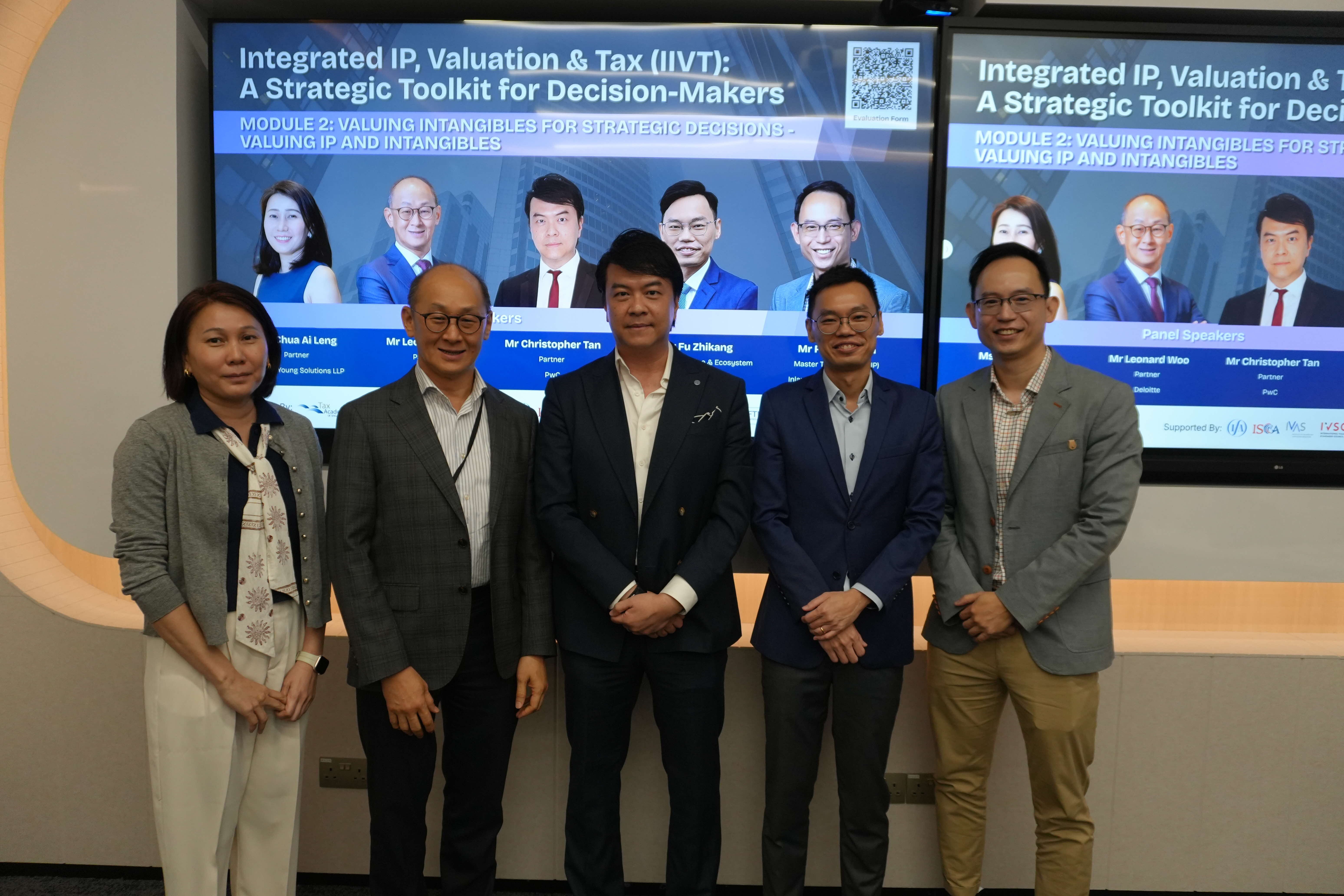
The second day focused on translating intangible assets into economic value.
Valuation specialists from EY, Deloitte and PwC guided participants through valuation standards, methodologies and their application in business transactions, financial reporting and tax matters.
Through practical examples and an integrated case study, participants explored how valuation considerations influence commercial negotiations, financing arrangements, licensing decisions and dispute resolution.
The sessions reinforced the importance of valuation not simply as a compliance requirement, but as a tool for informed business decision-making.
Day 3: Tax, Transfer Pricing and Cross-Border Considerations
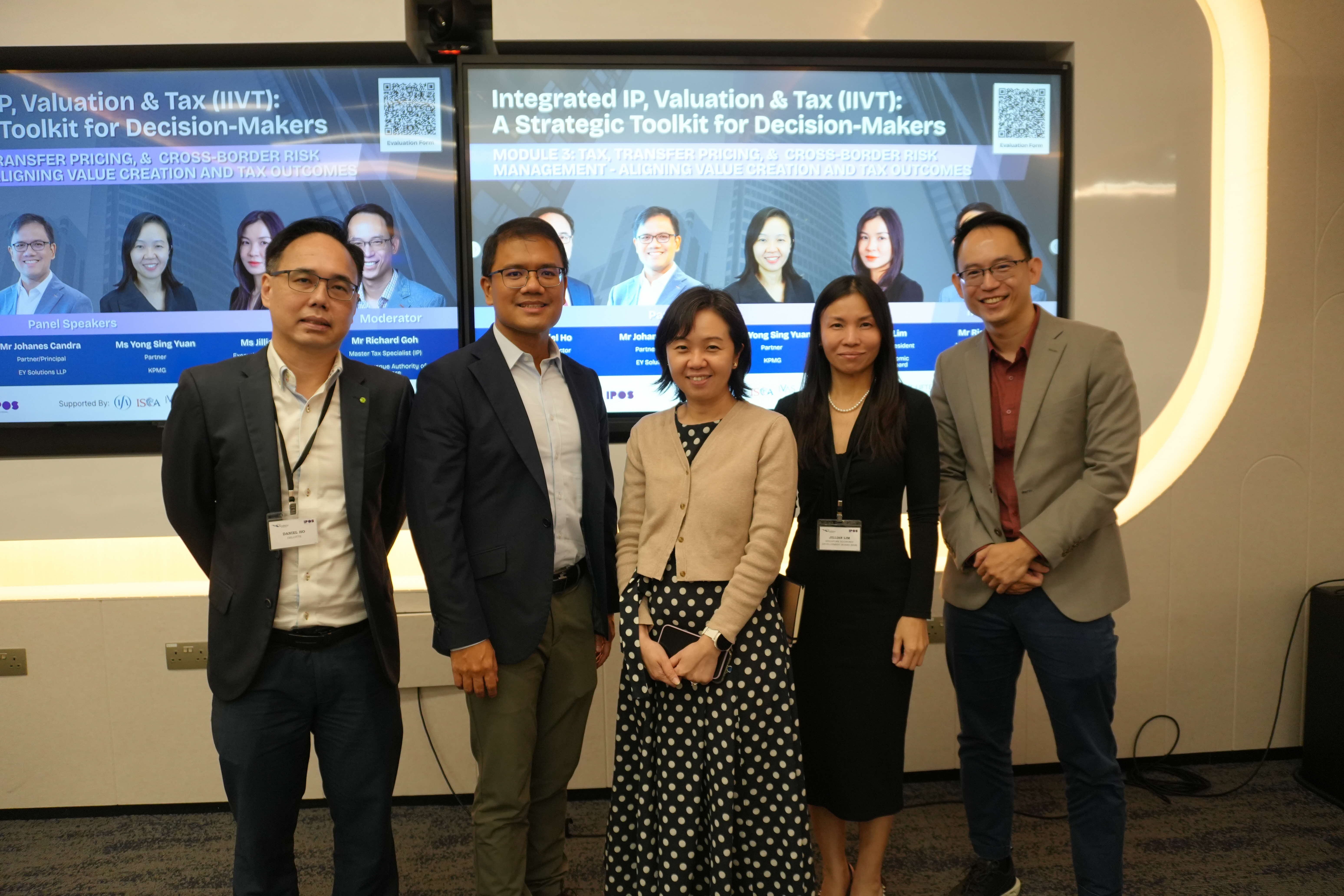
The final day examined the tax implications of IP ownership, commercialisation and cross-border business structures.
Topics included international taxation, transfer pricing, business substance, tax due diligence, treaty considerations and dispute resolution.
A concluding panel moderated by Mr Richard Goh, featuring representatives from leading advisory firms and the Singapore Economic Development Board, brought together the perspectives developed over the three days.
The discussion demonstrated how decisions made during IP creation and commercialisation can have significant implications for valuation, transfer pricing and tax outcomes years later.
Learning Beyond Traditional Professional Boundaries
A key feature of the masterclass was its use of practical case studies and cross-disciplinary discussions to connect technical concepts with business realities.
Rather than examining IP, valuation and tax as independent subjects, participants were encouraged to consider how decisions in one area influence outcomes in another.
The programme also created opportunities for professionals from different backgrounds to exchange perspectives, challenge assumptions and learn from one another.
This integrated approach reflects the growing need for professionals to look beyond their areas of specialisation and develop a broader understanding of the commercial, legal and tax considerations shaping business decisions.
Strengthening Cross-Disciplinary Learning
The inaugural IIVT masterclass marks an important milestone in the collaboration between TA and IPOS International.
By bringing together expertise from government, industry, academia and professional services, the programme demonstrates how cross-disciplinary learning can help professionals navigate increasingly complex business challenges.
It also reflects TA's commitment to expanding beyond traditional tax training by connecting tax knowledge with adjacent disciplines and real-world business applications.
Building on this inaugural programme, TA and IPOS International will continue to explore opportunities to strengthen professional capabilities and promote greater collaboration across IP, valuation and tax.
As business challenges become increasingly interconnected, the ability to bring together different professional perspectives will be essential to making better-informed decisions.