
From Tax Rates to Defensibility: Managing Cross-Border Tax and Trade Risk in Southeast Asia
18 September 2026
As tax and trade rules converge across Southeast Asia, businesses increasingly need to look beyond rates and filings towards data, documentation, origin, controls and the ability to defend cross-border positions under scrutiny.
Panel Discussion
For businesses operating across Southeast Asia, cross-border risk is increasingly difficult to divide neatly into separate tax, customs and trade compliance questions.
A tax incentive may have implications under the global minimum tax. A transfer pricing policy may intersect with customs valuation. The origin assigned to a product may determine tariff exposure. The parties, destination and end-use of a transaction may raise export-control considerations. And across these areas, authorities are increasingly able to test positions against data and documentation accumulated before an audit begins.
These connections were explored at Tax & Trade Strategies for Cross-Border Business, a two-part joint seminar by the Tax Academy of Singapore and Taxise Asia LLC (WTS Taxise) on 16 and 17 September 2026. The programme brought together tax, trade and legal practitioners from Singapore, Indonesia, the Philippines and Vietnam to examine developments affecting businesses operating across Southeast Asia.
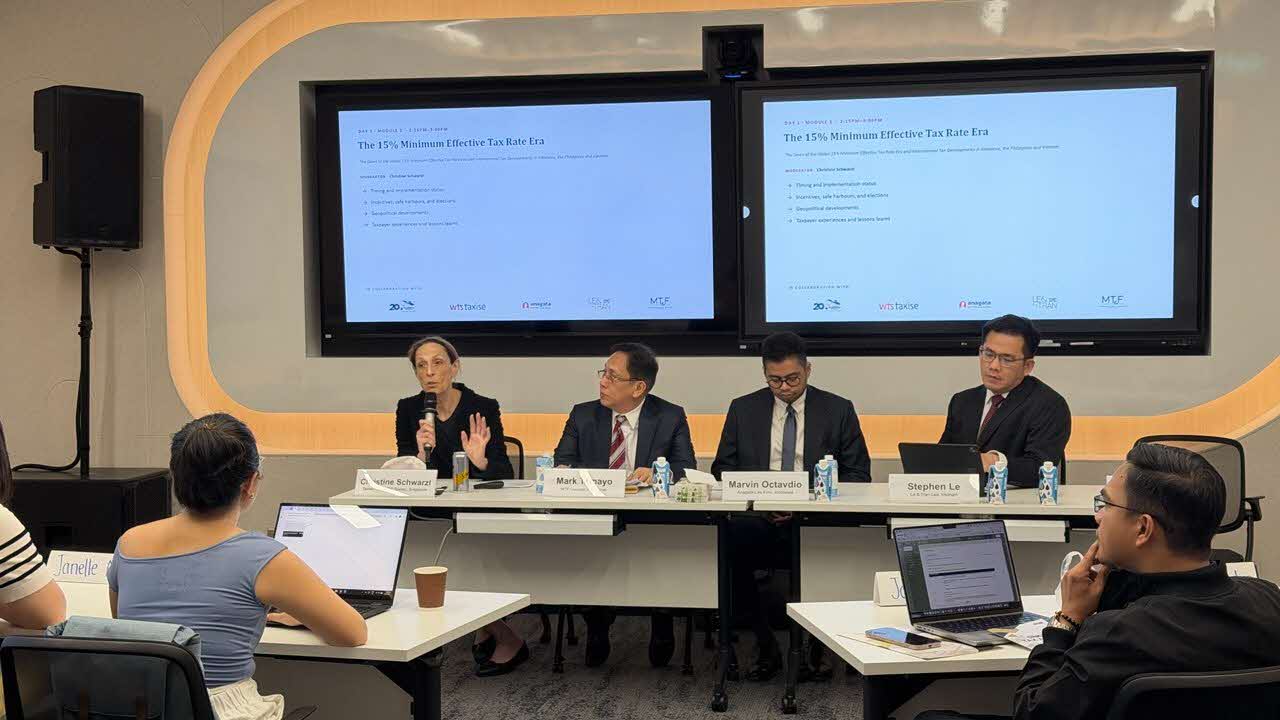
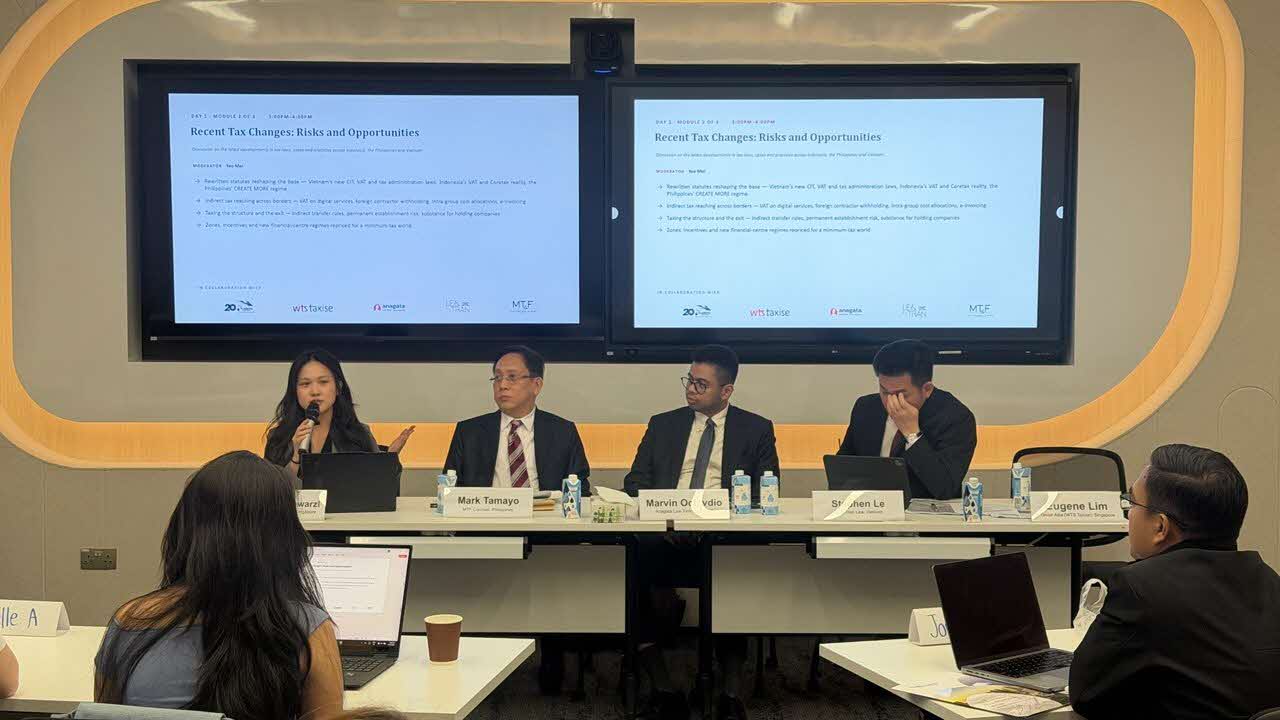
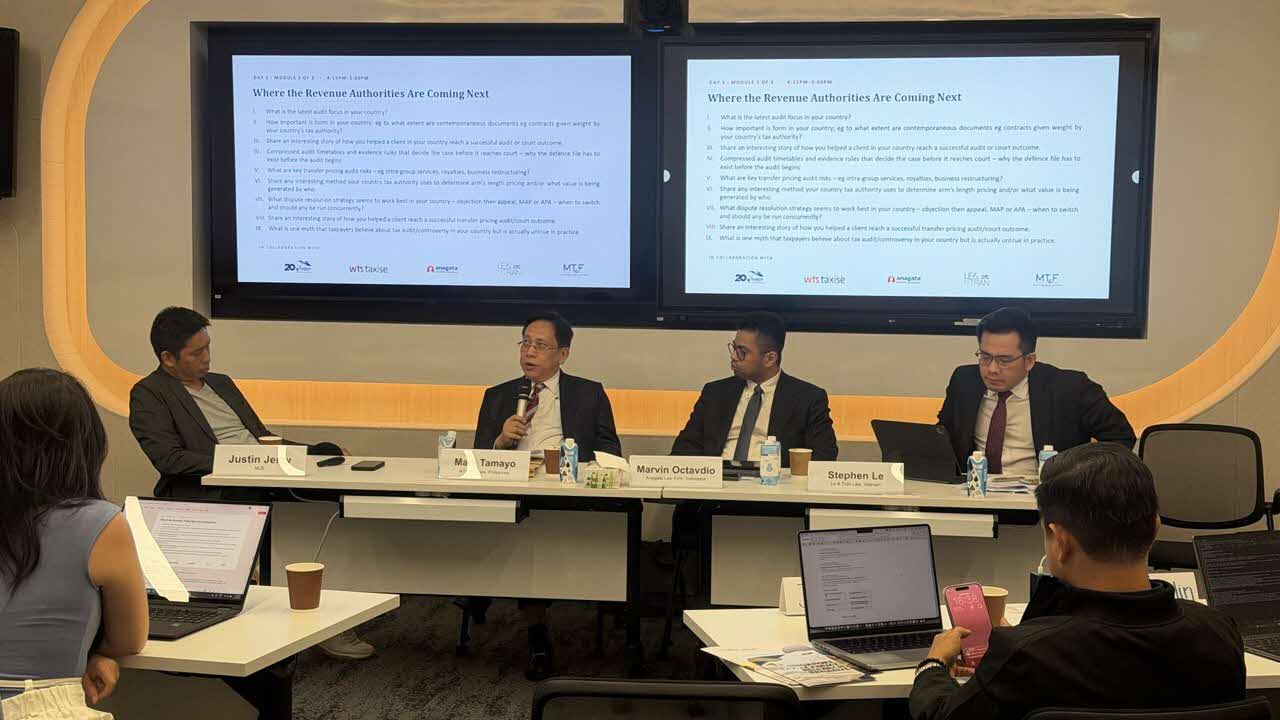
The Tax Showcase on 16 September opened with Eugene Lim of Taxise Asia and comprised three moderated discussions. Christine Schwarzl of Taxise Asia moderated the discussion on Pillar Two and the global 15% minimum effective tax rate; Mei Yeo of Taxise Asia moderated the discussion on recent tax developments across the three jurisdictions; and Justin Tan, a consultant with Taxise Asia who also teaches tax at NUS Law, moderated the concluding discussion on tax audits and dispute resolution. The regional panellists included Marvin Octavdio of Anagata Law Firm, Indonesia; Mark Anthony P. Tamayo of MTF Counsel, Philippines; and Chuong (Stephen) H. Le of Le & Tran Law, Vietnam.
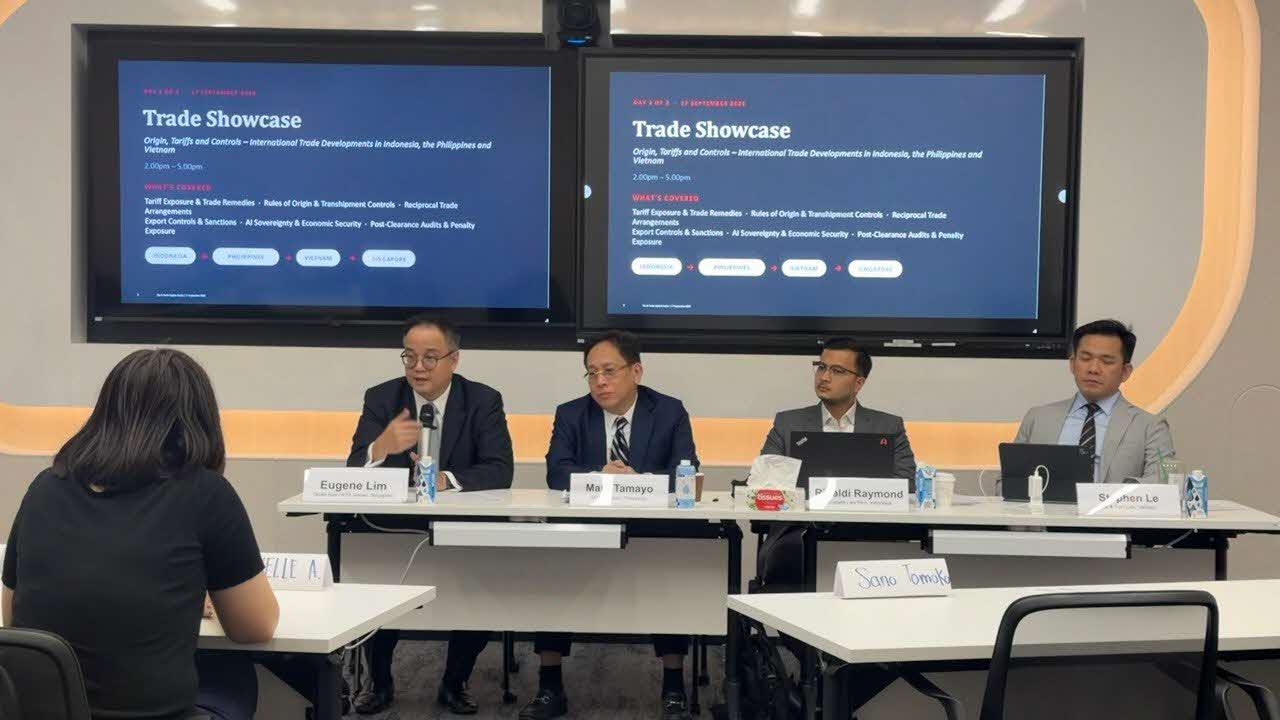
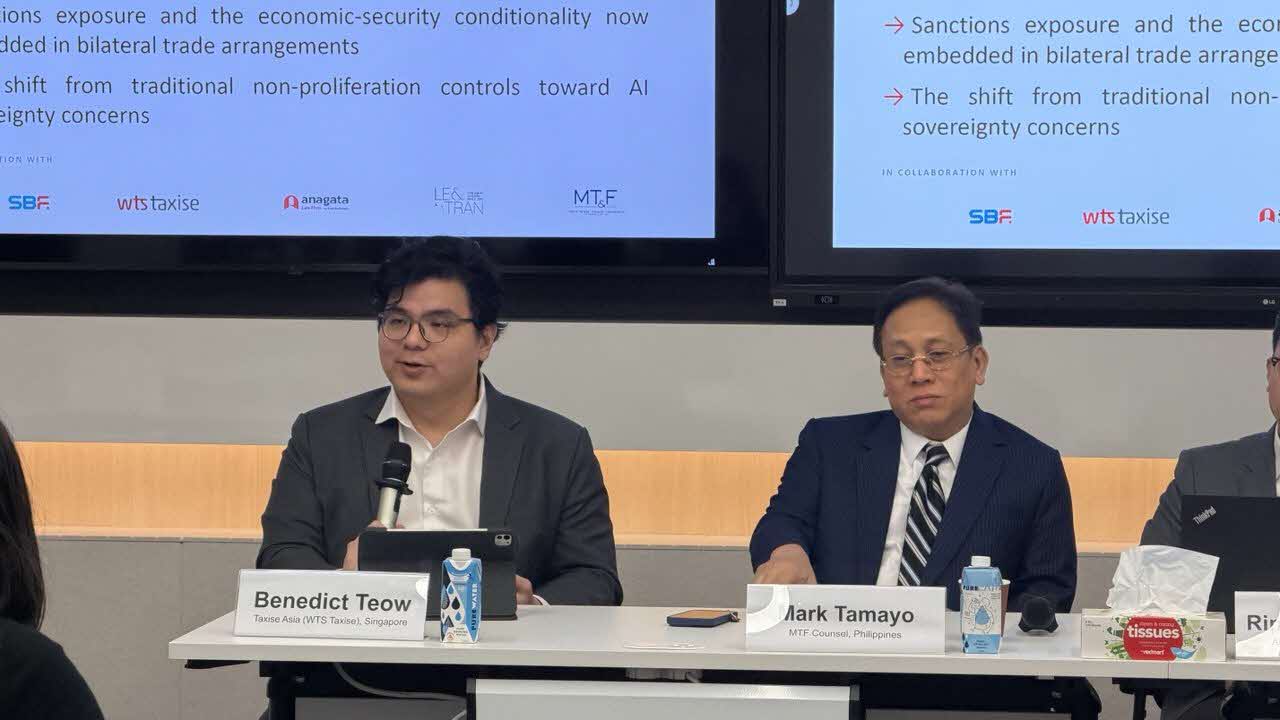
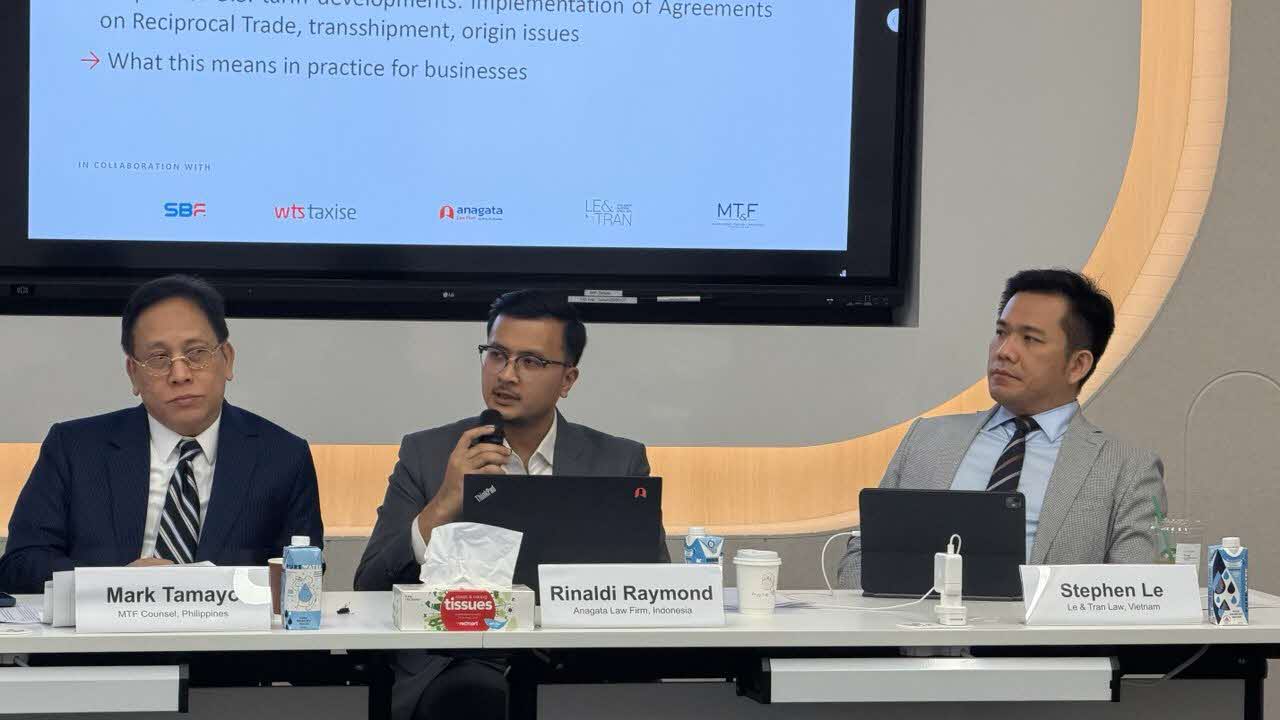
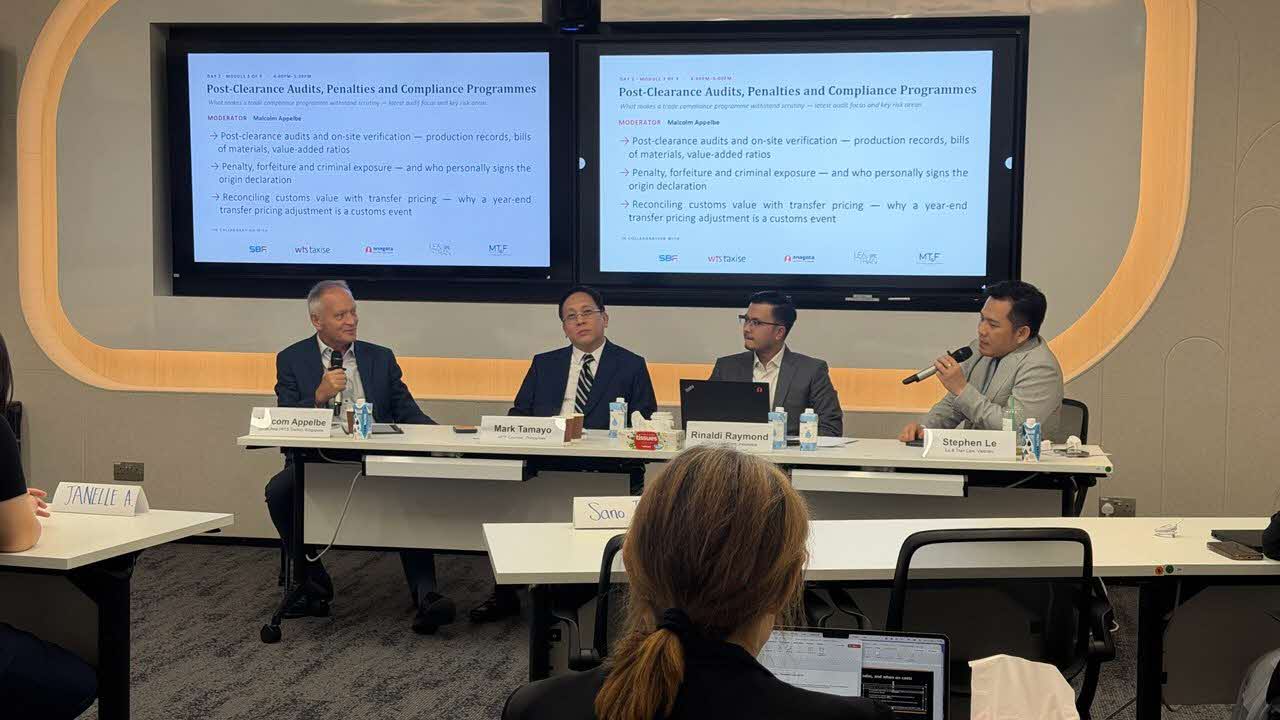
The Trade Showcase on 17 September, supported by the Singapore Business Federation, again opened with Eugene Lim and brought together regional practitioners for three discussions covering customs and tariffs, export controls and sanctions, and customs audits and compliance. The sessions were moderated respectively by Jack Hu, Benedict Teow and Malcolm Appelbe of Taxise Asia, with Mark Anthony P. Tamayo representing the Philippines, Rinaldi Raymond of Anagata Law Firm representing Indonesia, and Chuong (Stephen) H. Le representing Vietnam.
Across these different panels, a common theme emerged: cross-border compliance is moving upstream. Businesses increasingly need to establish the facts, evidence and internal ownership of their positions before a transaction is challenged.
Pillar Two changes more than the tax rate
The first day's discussion began with the global minimum tax and the different stages of implementation across Indonesia, the Philippines and Vietnam.
The OECD's Global Anti-Base Erosion (GloBE) rules under Pillar Two establish a coordinated system of top-up taxation where an in-scope multinational enterprise group's effective tax rate in a jurisdiction falls below 15%. The rules generally apply to large MNE groups meeting the EUR750 million consolidated revenue threshold.
But the seminar's discussion moved quickly beyond the headline rate.
Participants examined what implementation means operationally: identifying relevant entities and data, understanding safe harbours and elections, considering how domestic incentives interact with the minimum tax, coordinating regional and local teams, and preparing for reporting obligations that may require information held outside the traditional tax function.
The regional comparison also illustrated why multinational groups cannot assume that implementation will proceed uniformly.
Indonesia, for example, has enacted its global minimum tax framework through Minister of Finance Regulation No. 136 of 2024, supplemented in 2026 by detailed administrative procedures. Indonesia's rules incorporate the 15% minimum rate and mechanisms including the Income Inclusion Rule, Undertaxed Profits Rule and Domestic Minimum Top-up Tax.
The Philippines was discussed from a different starting point, with participants considering preparations for possible future implementation alongside significant domestic reforms already affecting businesses. The country's CREATE MORE reforms, for example, have changed aspects of corporate taxation and the incentives framework. Revenue Regulations No. 7-2025 implements relevant corporate income tax amendments under the CREATE MORE Act.
The practical implication is that Pillar Two cannot be treated simply as another tax calculation. Its effects can reach investment incentives, systems, data collection, governance and the relationship between headquarters and local finance and tax teams.
It also remains a moving international framework. The OECD continued to issue administrative guidance in 2026, including a Side-by-Side package in January and further guidance in May and September. For businesses, implementation therefore requires not only technical compliance but a process for monitoring how the rules continue to develop.
The audit increasingly begins before the audit letter
A second theme from the tax discussions concerned the changing nature of tax administration.
Across the country perspectives, speakers discussed digitalisation, electronic reporting, tax authority access to information, refund processes and changing audit practices. The details varied significantly between Indonesia, the Philippines and Vietnam, but the practical question was similar: what evidence would a business have available if its position were challenged?
That shifts attention from responding to an audit towards preparing for one.
A technically supportable position may still be difficult to defend if the underlying agreements, calculations, invoices, contemporaneous explanations and decision-making records do not align. Conversely, documentation prepared as part of the ordinary business process can help explain why a transaction was structured or reported in a particular way.
The seminar therefore placed considerable emphasis on what might be called the "defence file": not necessarily a single document assembled in anticipation of litigation, but the body of evidence needed to substantiate the facts and reasoning behind a tax position.
This is particularly relevant where multiple tax issues overlap. The discussions ranged across transfer pricing, withholding tax, permanent establishment exposure, indirect taxation, refunds and deductions. They also highlighted the importance of local teams in understanding both the formal law and how administrative processes operate in practice.
The broader lesson is that compliance increasingly involves evidence architecture: knowing what information exists, where it sits, who owns it and whether it tells a consistent story.
Trade risk now reaches into commercial decision-making
The second day extended this idea from tax into international trade.
The discussion began from a simple observation: trade problems rarely remain confined to one jurisdiction. Goods move through supply chains involving multiple countries, and a decision taken in one location may have consequences elsewhere.
Rules of origin provided a clear example.
Origin is not simply the country from which goods are shipped. Depending on the applicable rules, determining origin may require examining where goods were produced, whether sufficient processing or substantial transformation occurred, and whether applicable product-specific or value-added requirements have been met.
That distinction has become commercially important as tariff differentials have widened and authorities have increased their scrutiny of transhipment and origin claims.
For businesses, the implications extend beyond the customs team. Procurement choices, manufacturing arrangements, routing, contracts and pricing may all affect — or be affected by — an origin determination.
The seminar accordingly emphasised the importance of establishing the commercial arrangement clearly and allocating responsibilities between parties. When a tariff outcome depends upon origin, classification or valuation, ambiguity in contracts and supporting records can become a financial risk rather than merely an administrative inconvenience.

Export controls require businesses to know more than their products
The export-controls discussion added another dimension.
A compliance assessment cannot necessarily stop after determining what the product is. Depending on the relevant regime, businesses may also need to understand the destination, consignee, end-user and intended end-use, as well as whether other parties to the transaction present sanctions or proliferation concerns.
This makes internal compliance systems particularly important.
The discussion considered internal compliance programmes as a way of embedding checks into the organisation rather than treating export controls as an isolated licensing exercise. Product classification, counterparty and end-user screening, record keeping, training, escalation procedures and internal review can all form part of that framework.
Singapore provides a useful illustration. Under Singapore's Strategic Goods (Control) framework, permits are required for specified transfers of controlled strategic goods and technology and for certain transfers connected with weapons of mass destruction even where the item is not otherwise listed.
For businesses seeking a Strategic Trade Scheme Bulk Permit, Singapore Customs requires an effective Internal Compliance Programme. Its specified elements include company commitment, designated strategic goods control officers, product screening, end-user screening, record keeping, awareness and training, and internal audits.
This provides a broader governance lesson beyond strategic goods themselves: compliance is strongest when checks are incorporated into business processes before a transaction proceeds.
Customs valuation and transfer pricing cannot always be managed separately
The final trade discussions returned to an issue with particular significance for multinational groups: the interaction between customs valuation and transfer pricing.
Both regimes examine the value of related-party cross-border transactions, but they do so for different purposes and under different legal frameworks. That creates the possibility that an adjustment considered appropriate for one purpose may have consequences for the other.
The seminar explored practical areas in which customs authorities may scrutinise declarations, including classification, origin, valuation, licensing and supporting documentation. Royalties and subsequent pricing adjustments were among the issues discussed.
The Philippines provides an official illustration of this wider customs focus. The Bureau of Customs identifies undervaluation, incorrect origin, missing permits and inaccurate documentation among common compliance issues and expressly notes that relevant valuation adjustments can include commissions, freight, insurance, assists, royalties and proceeds. It also confirms that post-clearance audits may examine declarations, tariff classification, customs valuation and payment of duties and taxes after goods have been released.
The important organisational question is therefore whether the teams responsible for transfer pricing, customs, supply chains and contracts are working from the same underlying facts.
A transfer pricing adjustment should not be considered solely through the corporate income tax lens if it may also affect the declared customs value of imported goods. Similarly, the treatment of royalties in accounting or transfer pricing documentation does not by itself determine their customs treatment.
The broader principle is one of consistency: businesses need to understand where different regulatory regimes interrogate the same transaction from different directions.
What this means for businesses managing the region from Singapore
For regional teams based in Singapore, the two days of discussion highlighted a particular governance challenge.
A multinational group may have a regional tax policy, common systems and standard contractual arrangements, but compliance ultimately takes place within national legal and administrative frameworks. Indonesia, the Philippines and Vietnam may be addressing similar international developments while doing so through different rules, institutions, procedures and implementation timetables.
Singapore itself is also part of this changing landscape. For financial years beginning on or after 1 January 2025, Singapore has implemented the Multinational Enterprise Top-up Tax — corresponding to the Income Inclusion Rule — and a Domestic Top-up Tax for in-scope MNE groups.
At the same time, Singapore's position as a major trading hub means that tax governance cannot be separated entirely from customs and strategic trade compliance. Singapore Customs' framework covers the export, transhipment, transit and intangible transfer of controlled strategic goods and technologies, reinforcing the importance of understanding transactions across their full cross-border lifecycle.
The capability required of regional professionals is therefore becoming broader. Technical expertise remains essential, but so do coordination, data governance, documentation and the ability to identify where one decision has consequences under another regulatory regime
From compliance to defensibility
Taken together, the tax and trade discussions suggest a shift in the way businesses should think about cross-border risk.
The central question is no longer simply whether the correct return was filed, the correct tariff code used or the required permit obtained. Increasingly, it is whether the organisation can reconstruct and defend the factual and legal basis for its position when that position is tested.
That requires earlier involvement by tax, trade and legal professionals; stronger connections with finance, logistics and commercial teams; clearer ownership of data; and documentation that reflects what actually happened rather than what a transaction was assumed to involve.
Pillar Two, digitalised tax administration, tariffs, origin scrutiny, export controls and post-clearance audits may appear to be separate developments. The two-day conversation showed why businesses operating across Southeast Asia increasingly need to view them as parts of the same governance challenge.
The common thread is defensibility: knowing the transaction, understanding which regimes touch it, documenting the position contemporaneously, and being prepared to explain it when scrutiny arrives.