
GST Risks and Controls Series: How to Review Your GST Returns
20 November 2026
Tax Academy of Singapore, in collaboration with Jed Tax Consulting Pte Ltd, held a practical seminar exploring how businesses can strengthen their GST return review processes and identify potential reporting errors before submission.
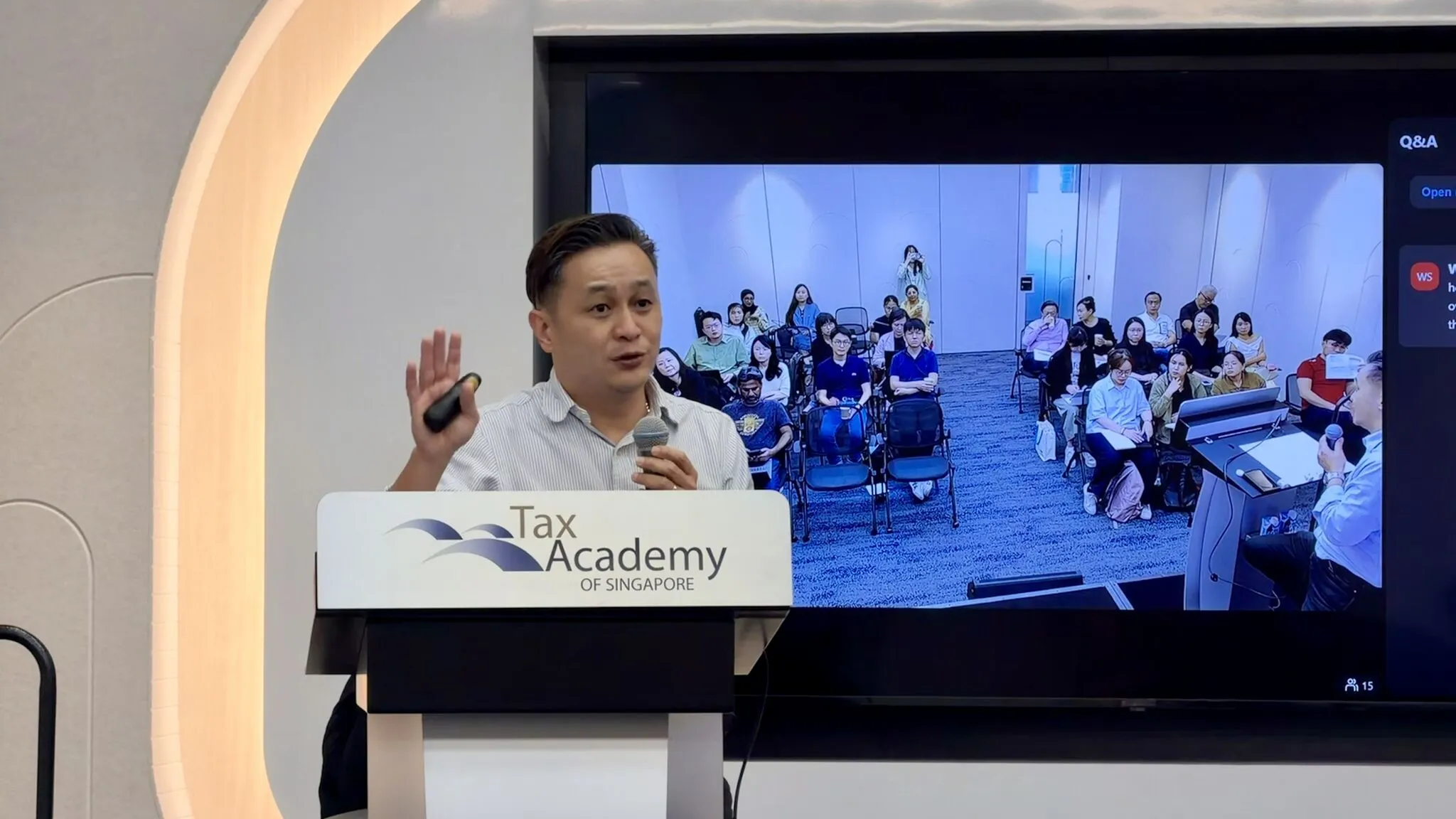
Led by Mr Eddie Soh, Co-Founder and Tax Director of Jed Tax Consulting Pte Ltd (opens in new tab), the seminar examined common GST reporting risks and highlighted the importance of effective detective controls in maintaining compliance. Drawing on practical experience, the session encouraged participants to look beyond the figures reported in their GST returns and consider how a more structured review process can help identify potential issues.
Understanding Where GST Reporting Risks Arise
The discussion began by looking at some of the challenges businesses face when preparing and reviewing their GST returns. While errors may arise from the incorrect application of GST rules, they can also stem from less obvious issues such as incomplete accounting data, system limitations and gaps in internal review processes.
This highlighted an important starting point for any GST review: ensuring that the underlying information is complete and accurate. After all, even well-established review procedures may not be effective if the data supporting the GST return is unreliable.
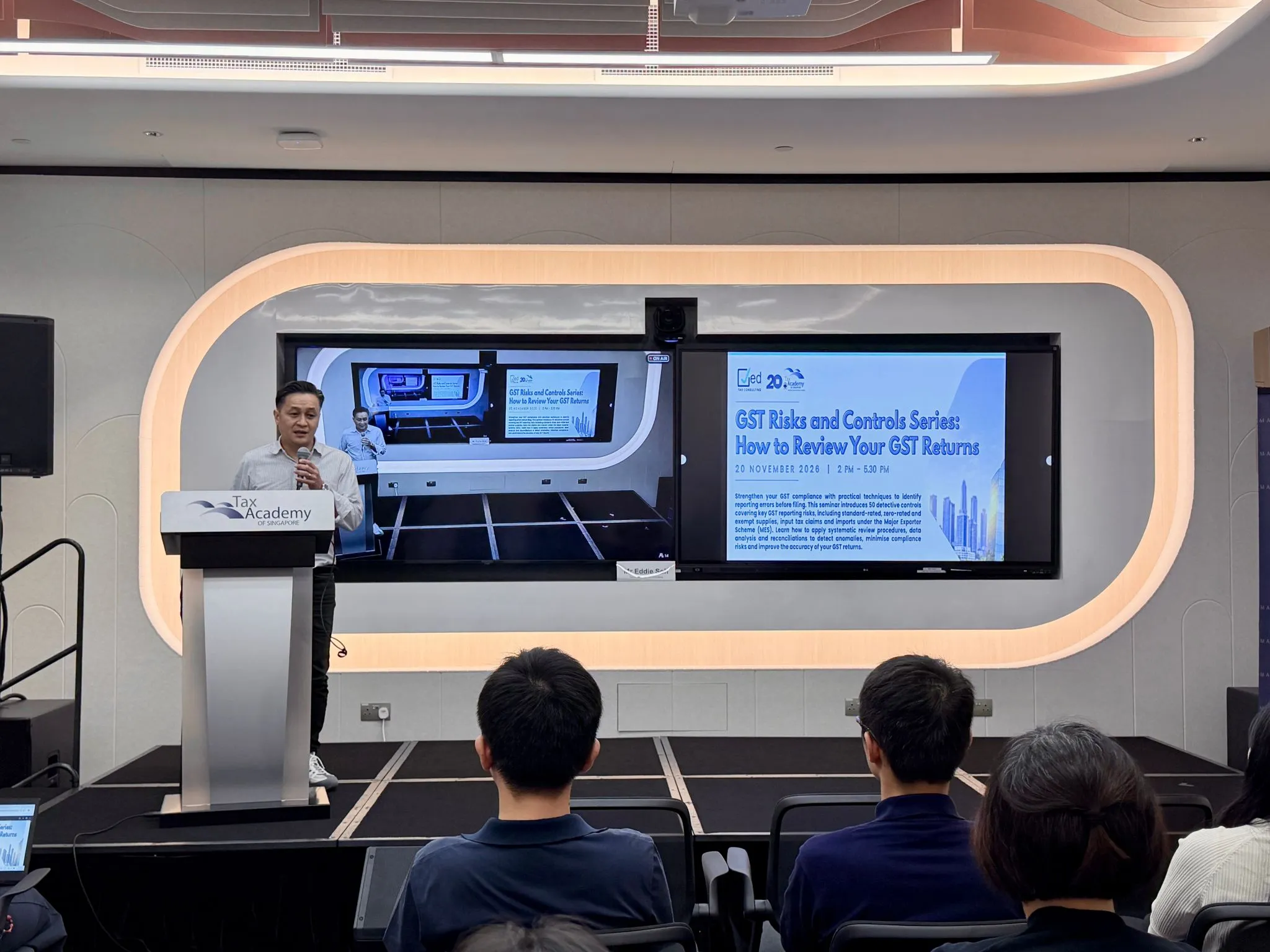
From Identifying Risks to Applying Detective Controls
With these risks in mind, the seminar explored how businesses can strengthen their review processes through the use of 50 practical detective controls. These controls were introduced across different areas of GST reporting, including supplies, purchases, input tax claims and other GST-related transactions.
The session also highlighted how data analysis and reconciliations can support the review process by helping businesses identify unusual patterns, investigate discrepancies and detect potential reporting errors. Rather than simply checking the figures in a GST return, participants were encouraged to consider the information and transactions behind those figures.
Strengthening the Overall GST Review Process
Beyond identifying potential discrepancies, the seminar also touched on the correction of past GST reporting errors and IRAS' Voluntary Disclosure Programme (VDP). This brought the discussion back to the broader importance of having a consistent and well-structured approach to GST compliance.
Ultimately, effective GST reviews involve more than carrying out checks before submission. They require businesses to understand where risks may arise, establish appropriate controls and address issues when they are identified. Through the practical insights shared, the seminar provided participants with a useful perspective on strengthening their GST review processes and building greater confidence in their reporting practices.
Tax Academy of Singapore extends its appreciation to Mr Eddie Soh, Co-founder and Tax Director of Jed Tax Consulting Pte Ltd, for sharing his practical knowledge and experience, as well as to Jed Tax Consulting and all participants for their engagement and contributions.