
WU–TA Advanced Transfer Pricing Programme 2026
1 October 2026
The 11th intake of the WU–TA Advanced Transfer Pricing Programme brought together international and local perspectives on evolving transfer pricing issues — from financial transactions and intangibles to business restructurings, digital business models and tax certainty.
As business models evolve and cross-border transactions become increasingly complex, transfer pricing continues to raise fundamental questions: Where is value created? How should profits be allocated? And how can businesses and tax administrations achieve greater tax certainty?
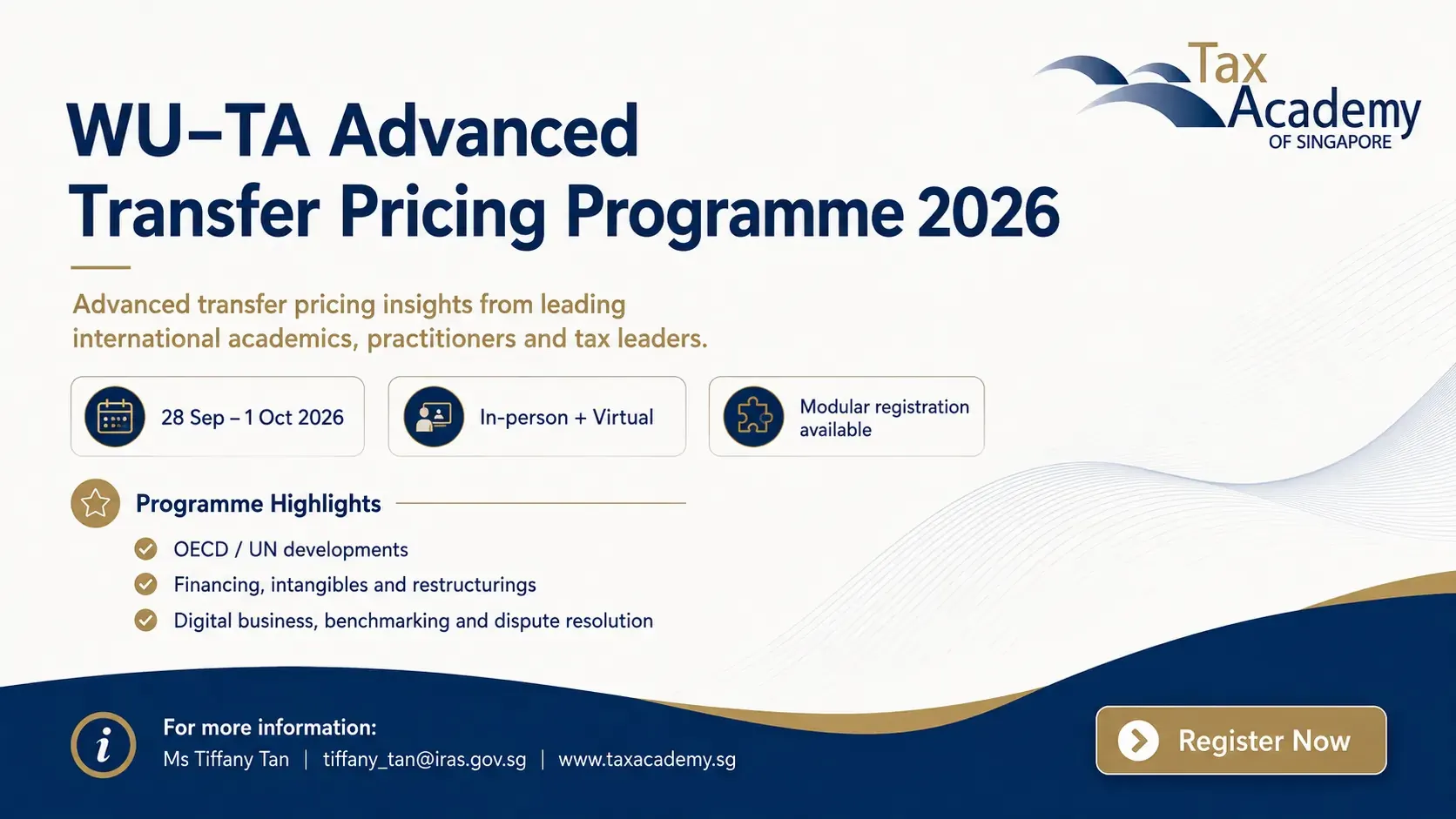
Against this backdrop, the WU–TA Advanced Transfer Pricing Programme returned from 28 September to 1 October 2026 for its 11th intake, continuing the longstanding collaboration between the Tax Academy of Singapore and the WU Transfer Pricing Center at the Institute for Austrian and International Tax Law, WU (Vienna University of Economics and Business).
Across four days of technical discussions, case studies and workshops, perspectives from academia, professional practice, industry and tax administration came together to examine how transfer pricing principles are evolving and being applied in practice.
Here are some of the key insights from this year’s programme.
Day 1 – 28 September 2026
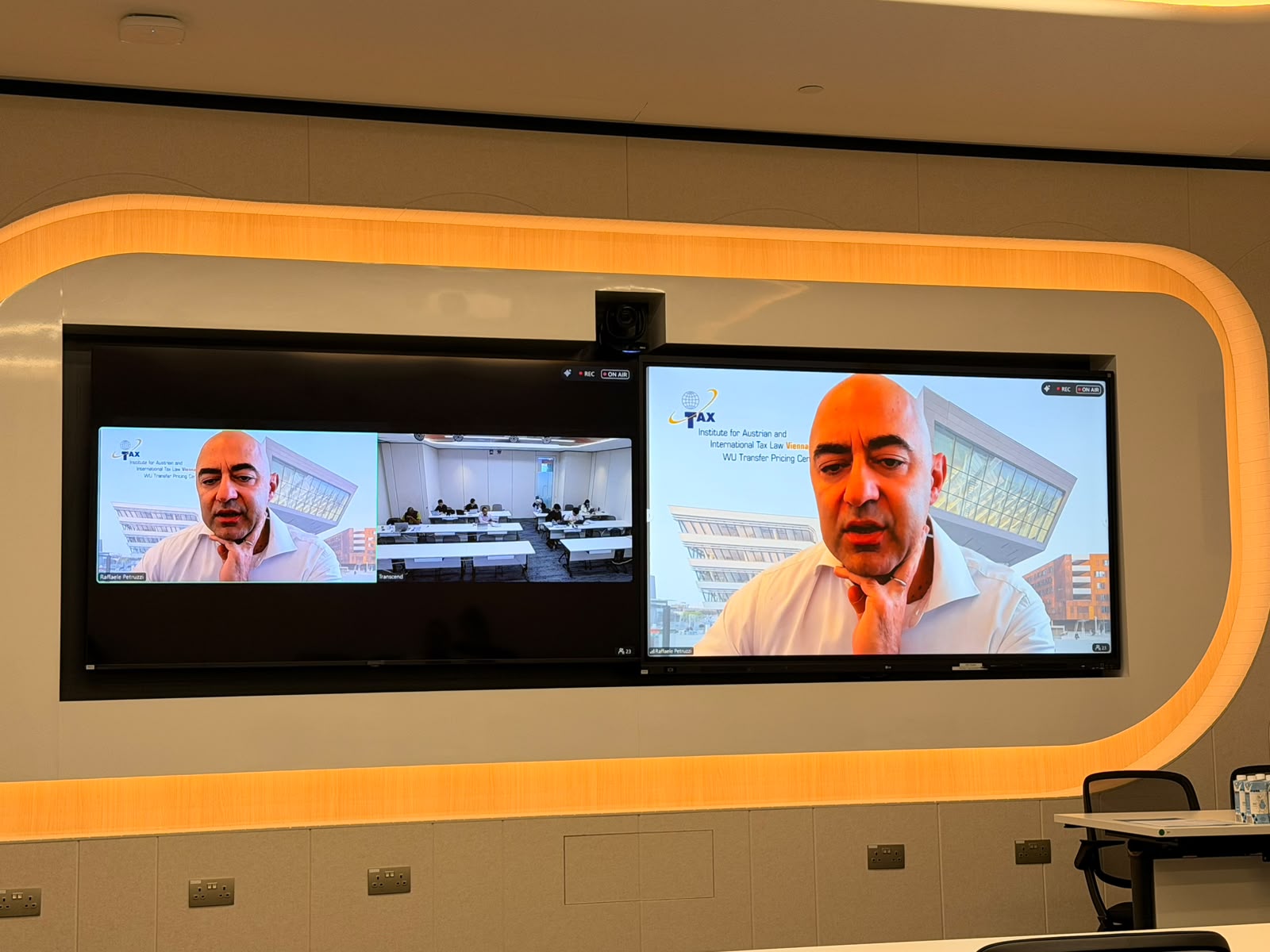
Day 1 Trainer: Dr Raffaele Petruzzi, LL.M., Managing Director of WU Transfer Pricing Centre & Founder and CEO of PETRUZZI Advisory
Session 1: Introduction and Recent Transfer Pricing Developments at the OECD and UN
Speaker: Dr Raffaele Petruzzi, LL.M.
The programme began with the fundamentals of applying the arm’s length principle — from identifying the commercial or financial relations and accurately delineating the transaction, to selecting and applying the most appropriate transfer pricing method. The discussion reinforced a fundamental point: a sound transfer pricing analysis starts with understanding the transaction and its economically relevant characteristics.
These principles were considered alongside recent developments at the Organisation for Economic Co-operation and Development (OECD) and the United Nations (UN), including digitalisation of the economy, Country-by-Country Reporting (CbCR), transfer pricing and services, dispute avoidance and resolution, and capacity building.
Practical cases involving central entrepreneur and distribution structures and the residual profit split method illustrated how functions, assets and risks can affect the allocation of profits. The profit split method, for example, may be particularly relevant where transactions are highly integrated or where multiple parties make unique and valuable contributions.
Session 2: Transfer Pricing and Financing
Speaker: Dr Raffaele Petruzzi, LL.M.
The focus then shifted to financial transactions, where determining the arm’s length pricing of an intra-group loan involves considerably more than identifying an interest rate.
Factors such as the amount, maturity, repayment schedule, purpose, currency, seniority, collateral and guarantees may all be relevant in accurately delineating a financing arrangement.
Through cases involving intra-group loans, financial guarantees, cash pooling and interest limitation rules, participants examined how the characteristics of a transaction — together with the functions performed and risks assumed by the parties — provide the basis for determining an arm’s length outcome.
Day 2 – 29 September 2026

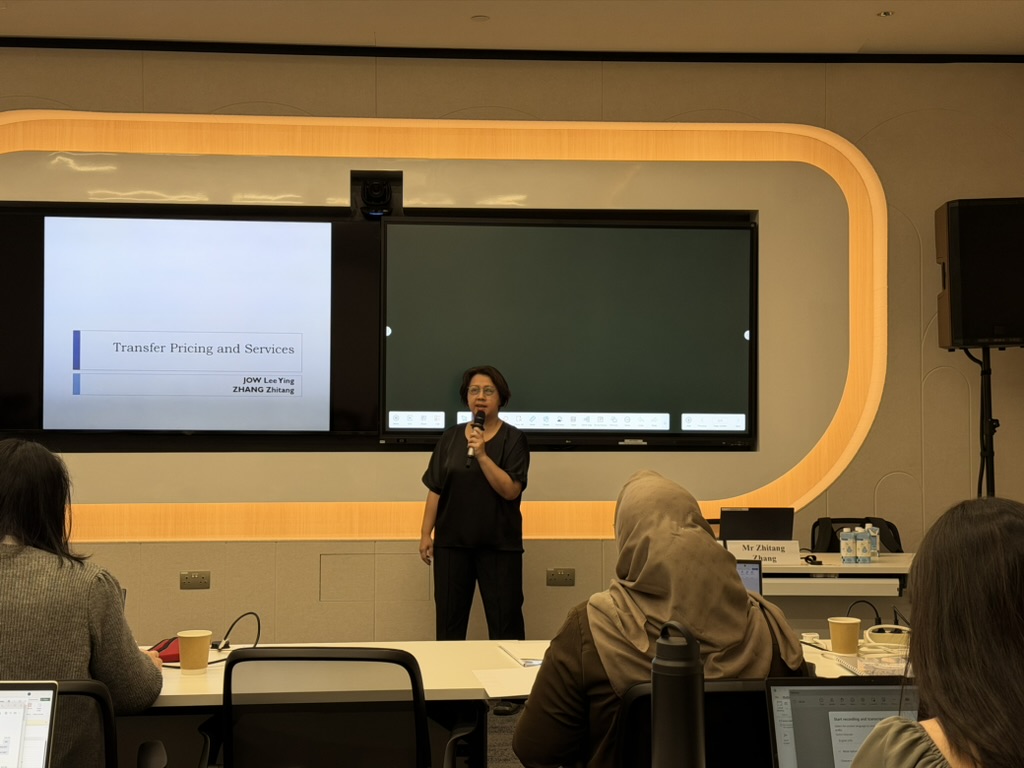
Session 3: Transfer Pricing and Services
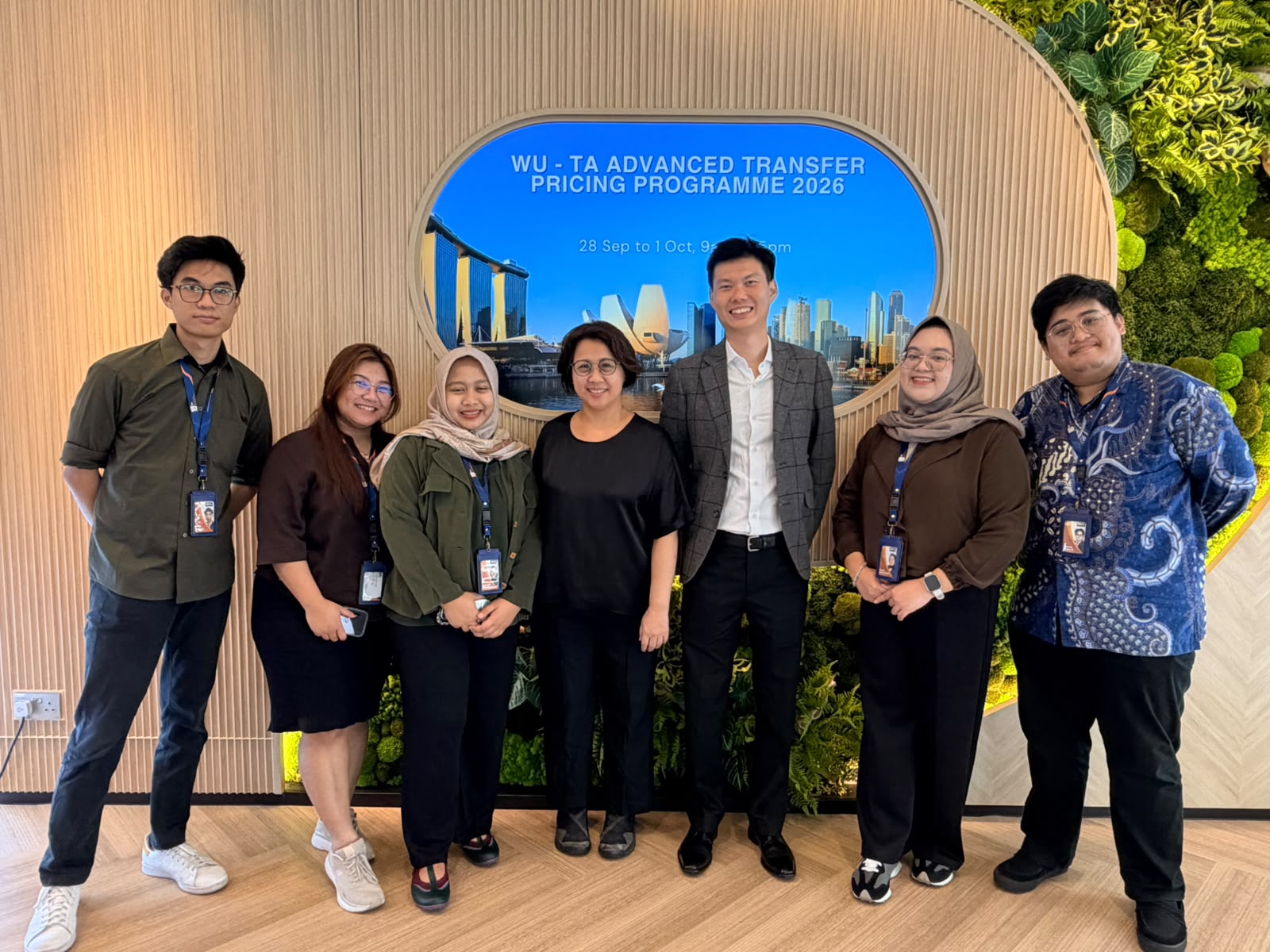
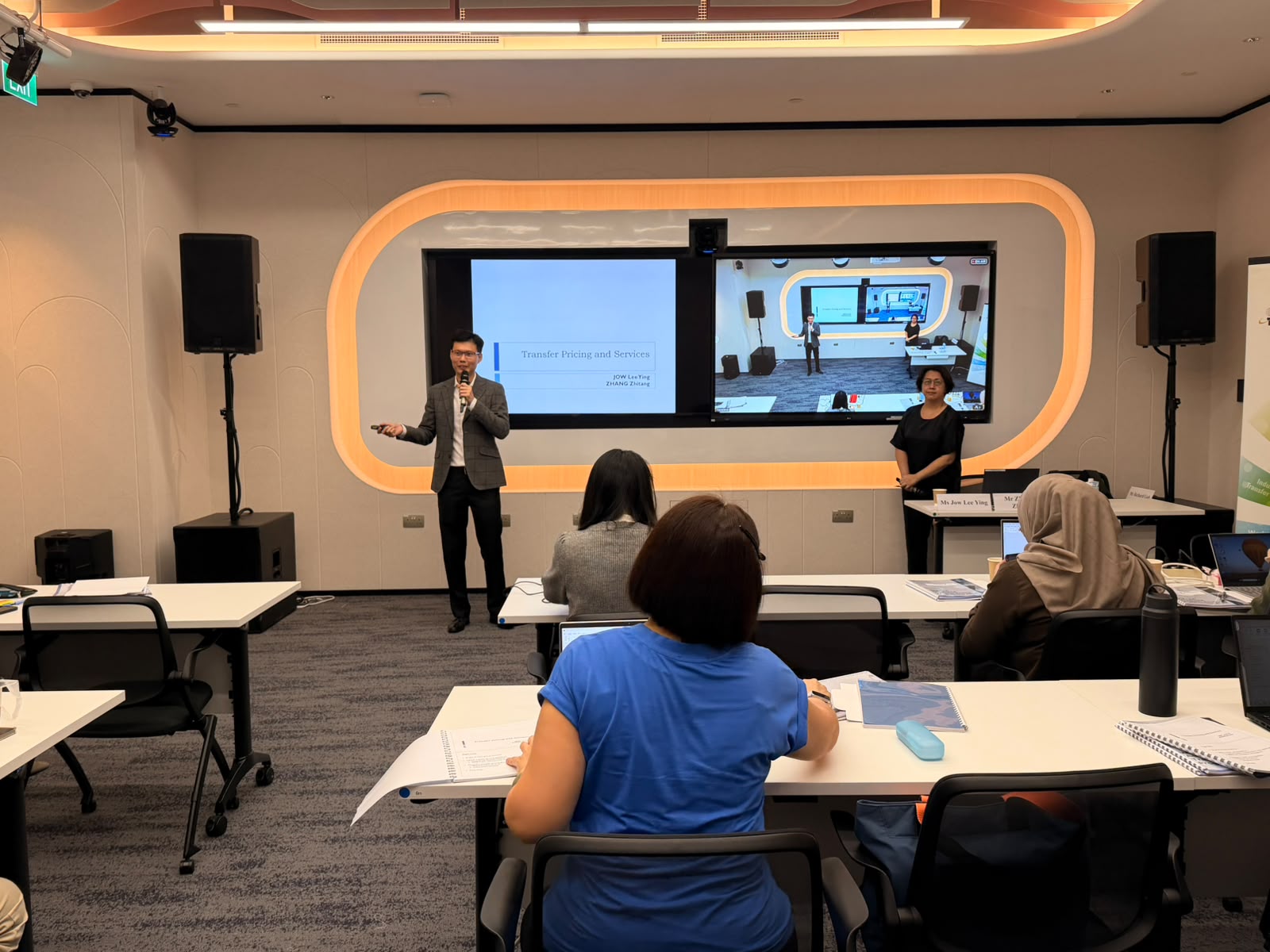
Speakers: Ms Jow Lee Ying and Mr Zhang Zhitang
Day 2 extended the discussion on accurate delineation to intra-group services. Before determining an appropriate charge, an essential question must first be addressed: has a service actually been rendered?
The benefit test considers, among other factors, whether the recipient receives or reasonably expects to receive economic or commercial value from the activity and whether an independent enterprise would have been willing to pay for it.
This remains particularly relevant as the OECD reviews Chapter VII of its Transfer Pricing Guidelines. The 2026 discussion draft places greater emphasis on accurate delineation, the benefit test and contemporaneous evidence, while retaining the core transfer pricing principles governing intra-group services.

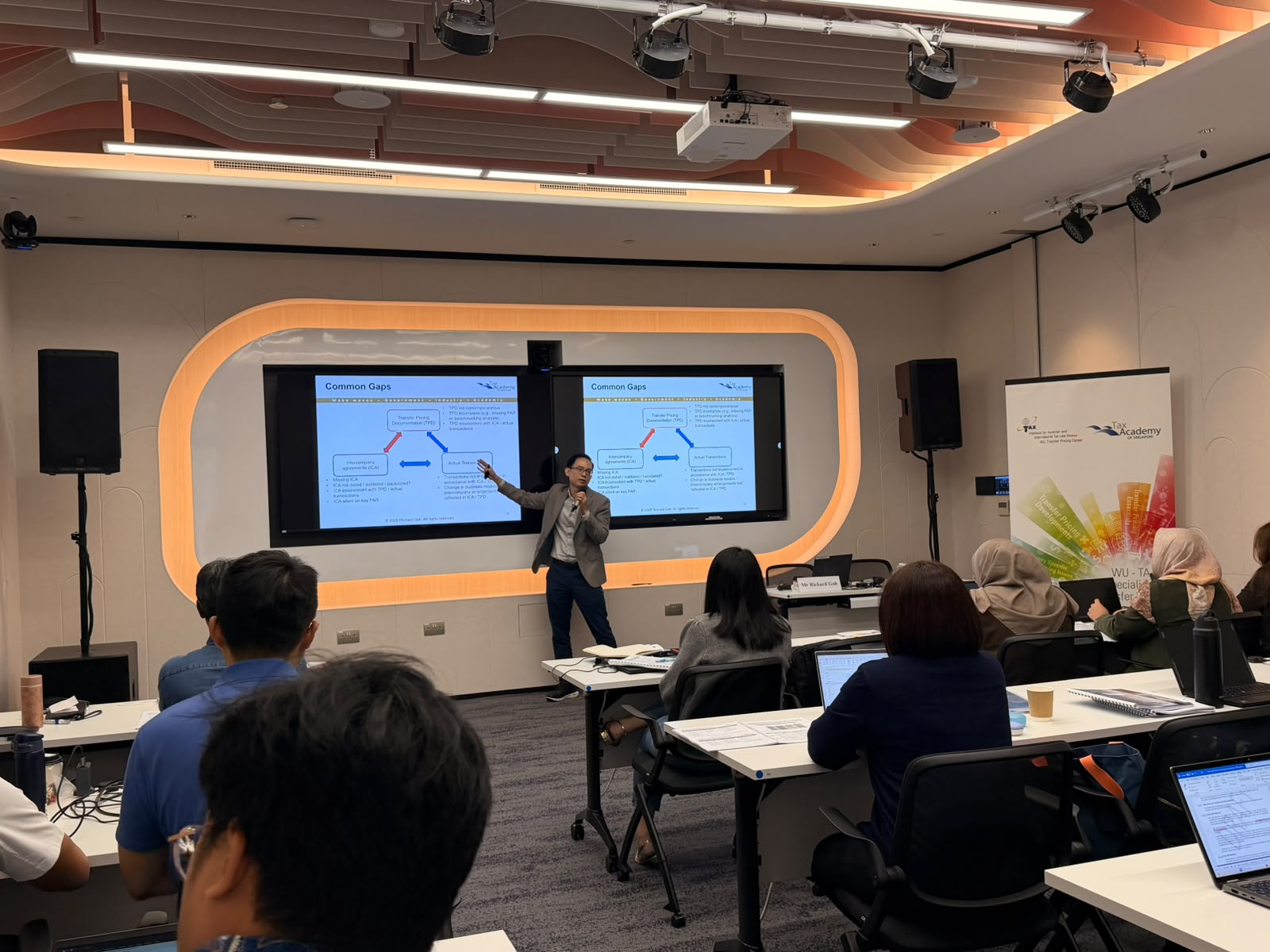
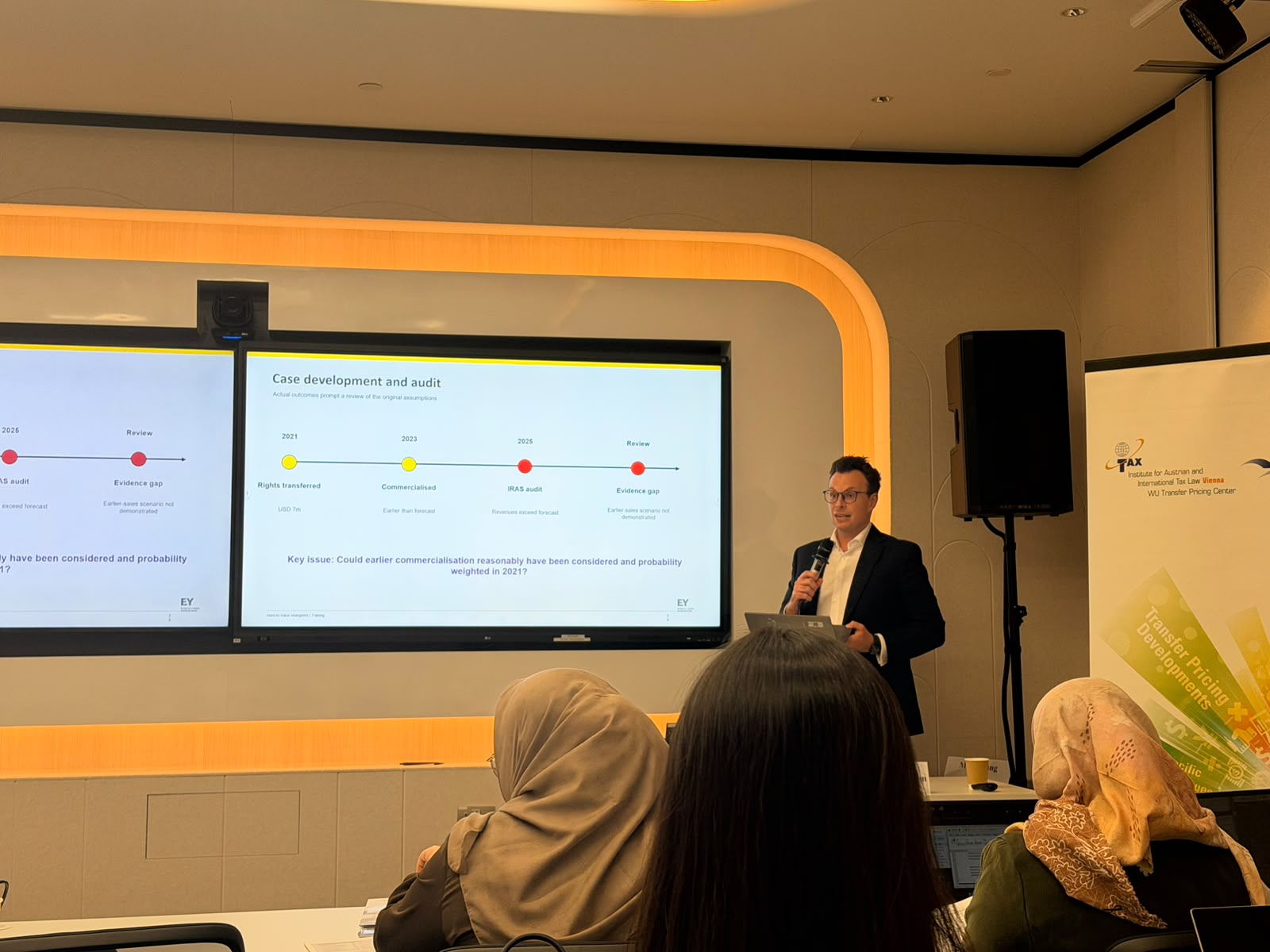
Session 4: Transfer Pricing and Intangibles
Speakers: Mr Richard Goh and Mr Adam Henderson
The discussion then moved to intangibles, where legal ownership is important but does not, by itself, determine entitlement to intangible-related returns.
The six-step framework brings together the identification of intangibles and associated risks, contractual arrangements and legal ownership, and the Development, Enhancement, Maintenance, Protection and Exploitation (DEMPE) functions, assets and risks. The analysis then considers whether contractual arrangements are consistent with the parties’ actual conduct, before accurately delineating and pricing the transaction.
Importantly, DEMPE does not alter legal ownership and is not itself a transfer pricing method. Rather, the functional and DEMPE analysis helps determine whether parties other than the legal owner may be entitled to part of the intangible-related returns and can inform the selection of the appropriate transfer pricing method.
The discussion on Hard-to-Value Intangibles (HTVI) further highlighted the importance of distinguishing information available at the time of a transaction from outcomes observed subsequently — an important safeguard against the inappropriate use of hindsight when assessing uncertain valuations.
Day 3 – 30 September 2026

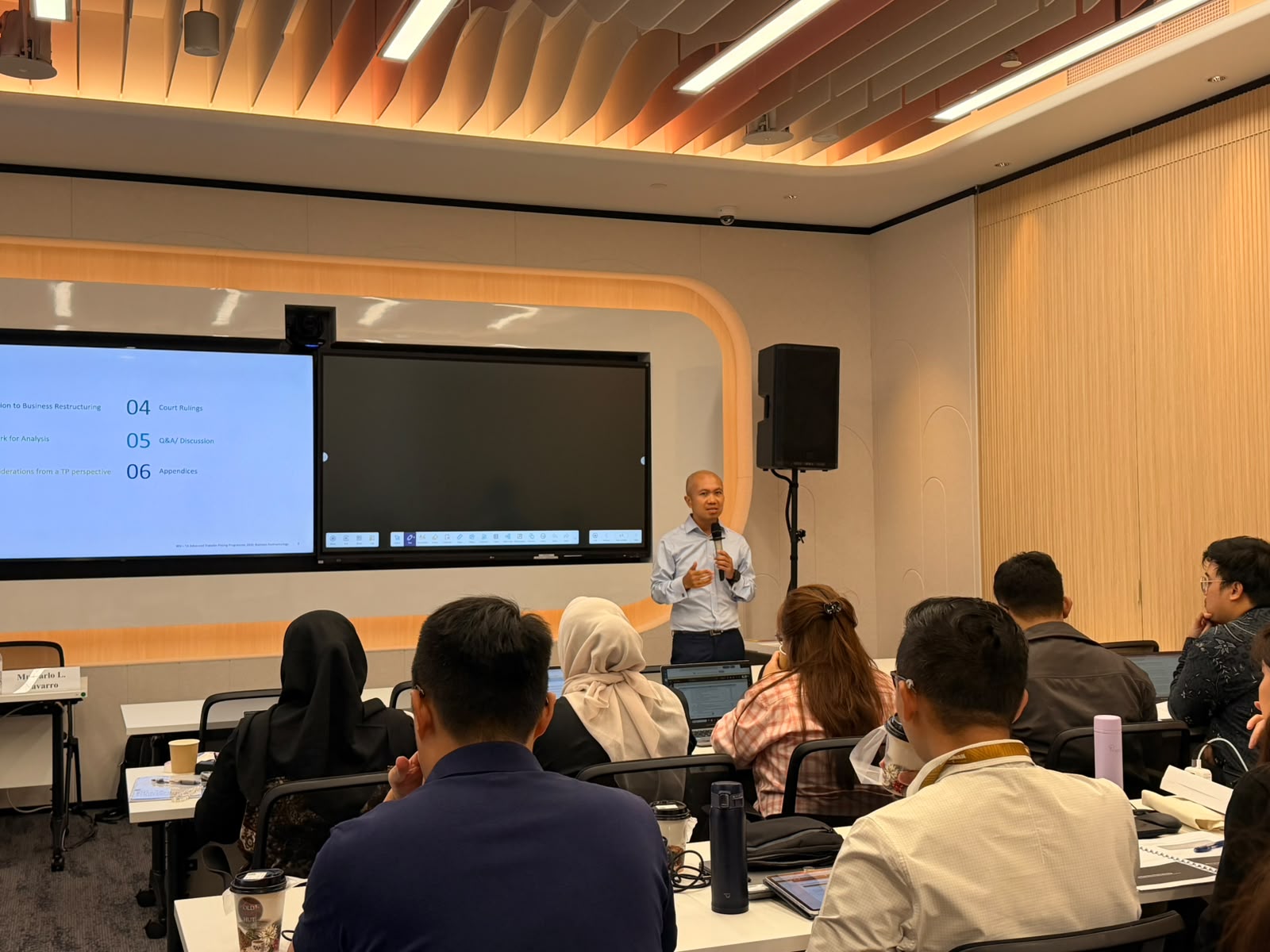
Session 5: Business Restructurings
Speakers: Mr Carlo L. Navarro and Mr Uziel Alvarez
Day 3 turned to how changes in a multinational group’s business model can affect its transfer pricing position. Business restructurings may involve the centralisation or relocation of intangibles, risks and functions, as well as mergers and acquisitions (M&A), reorganisations, transfers of business units and financial restructurings.
The analysis therefore extends beyond the organisational change itself. Key considerations include understanding the commercial reasons and expected benefits of the restructuring, accurately delineating the transactions involved, assessing any reallocation of profit potential, and determining whether something of value has been transferred for which arm’s length compensation may be required.

Session 6 & 7 Trainers (from left to right): Mr Jimit Parikh, Ms Yong Sing Yuan & Mr Falgun Thakkar
Session 6: OECD PE Definition and Profit Attribution
Speaker: Ms Yong Sing Yuan
The focus then broadened to Permanent Establishments (PEs) and the attribution of profits.
Under the two-step approach discussed during the programme, the analysis first undertakes a functional and factual assessment of the PE as though it were a distinct and separate enterprise, before applying comparability analysis and pricing principles by analogy to Article 9.
The relationship between Article 7 and Article 9 of the OECD Model Tax Convention also highlighted the interaction between PE profit attribution and transfer pricing. While jurisdictions may differ in their approach to sequencing, consistency remains important to avoid the double taxation of the same profits.
Session 7: Common Issues and Challenges in Benchmarking
Speakers: Mr Falgun Thakkar and Mr Jimit Parikh
Having considered how transactions should be characterised, the programme turned to how arm’s length outcomes can be supported through benchmarking and comparability analysis.
Comparability adjustments should be made where they materially improve reliability. At the same time, the need for numerous or substantial adjustments may itself suggest that a purported comparable is not sufficiently comparable.
A further distinction concerned the arm’s length range and the interquartile range. An arm’s length range is an outcome of the comparability analysis; an interquartile range is a statistical tool that may be used in appropriate circumstances. The discussion also highlighted that approaches to benchmarking can differ across jurisdictions.
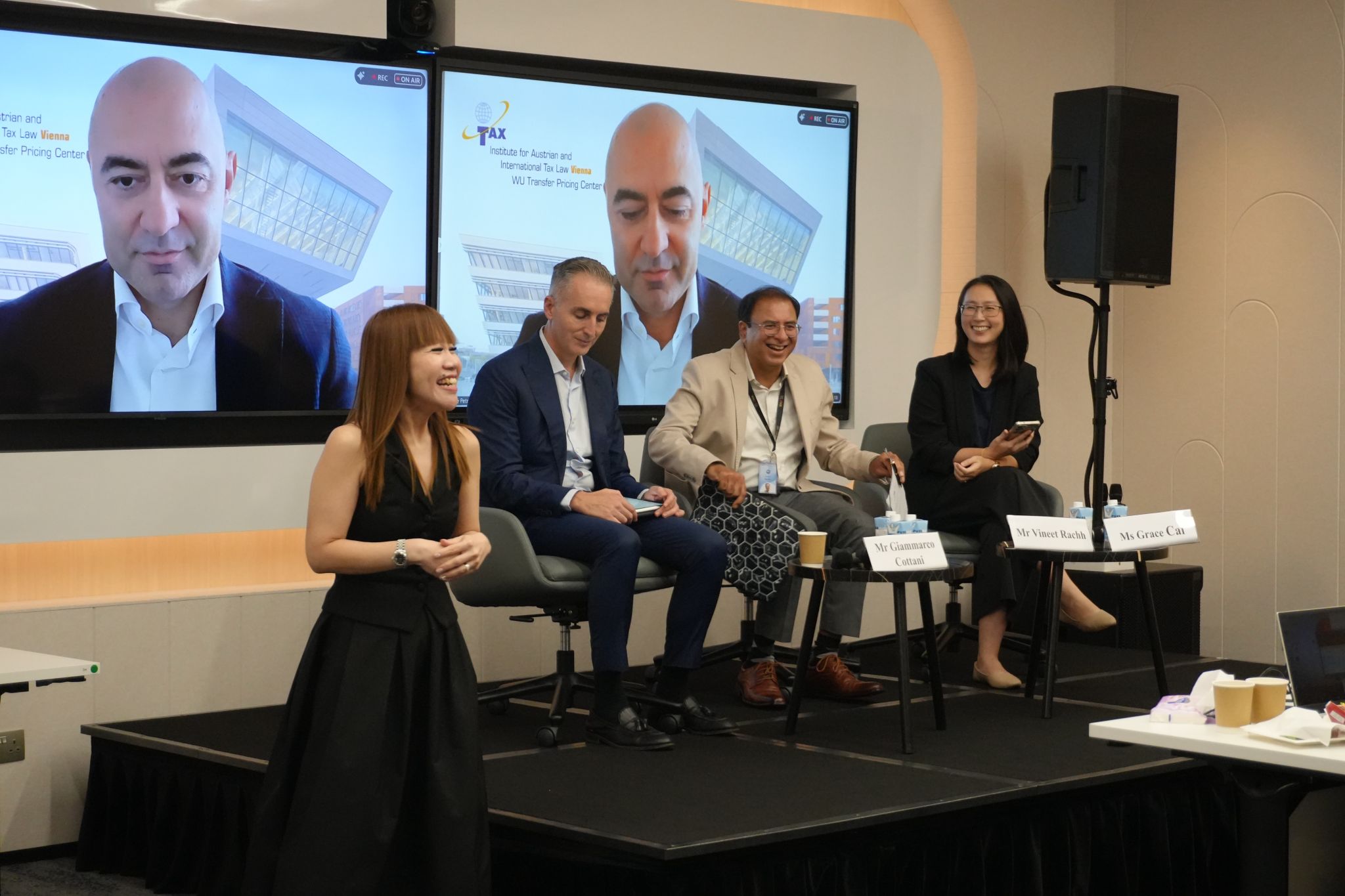
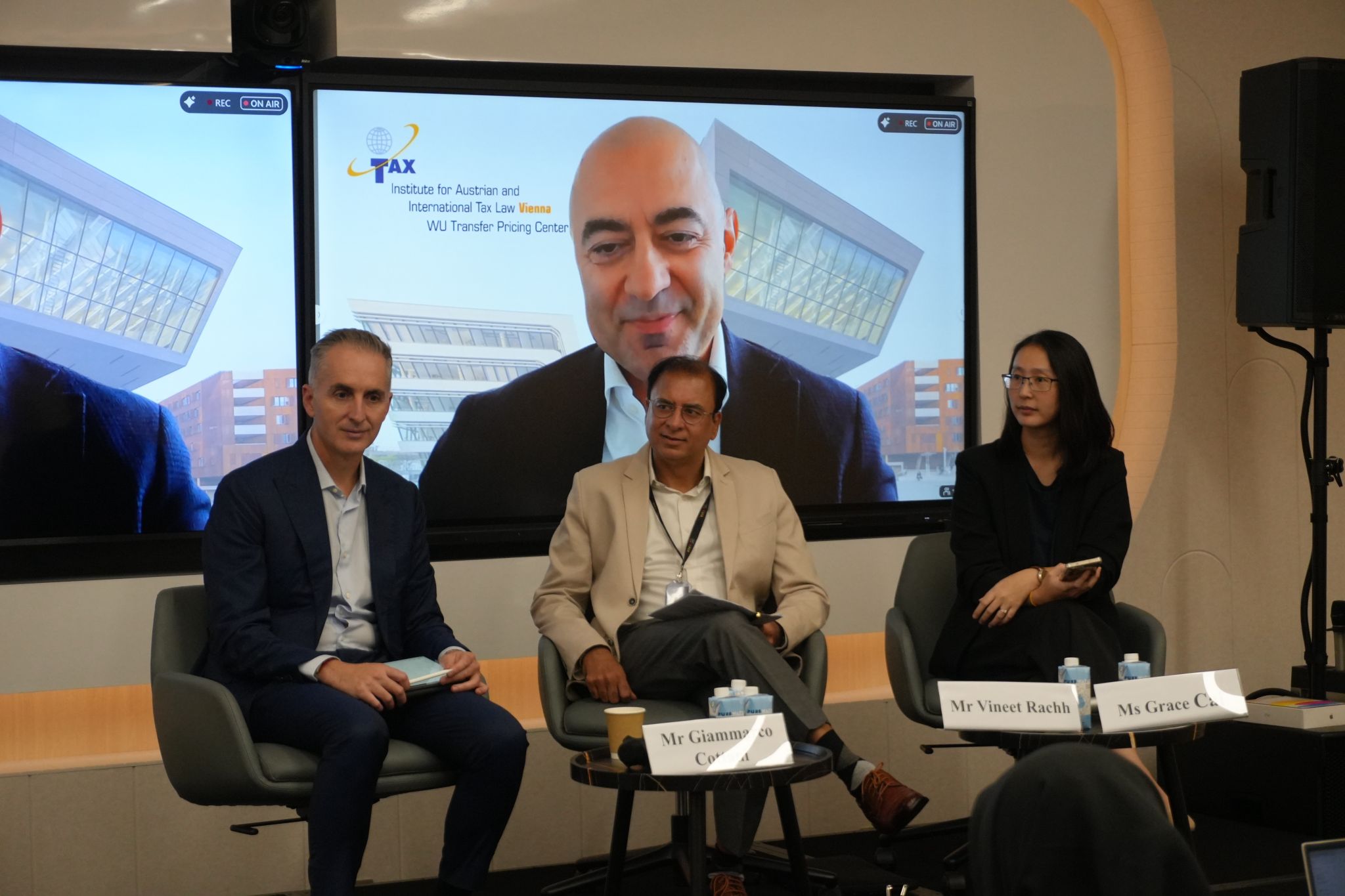
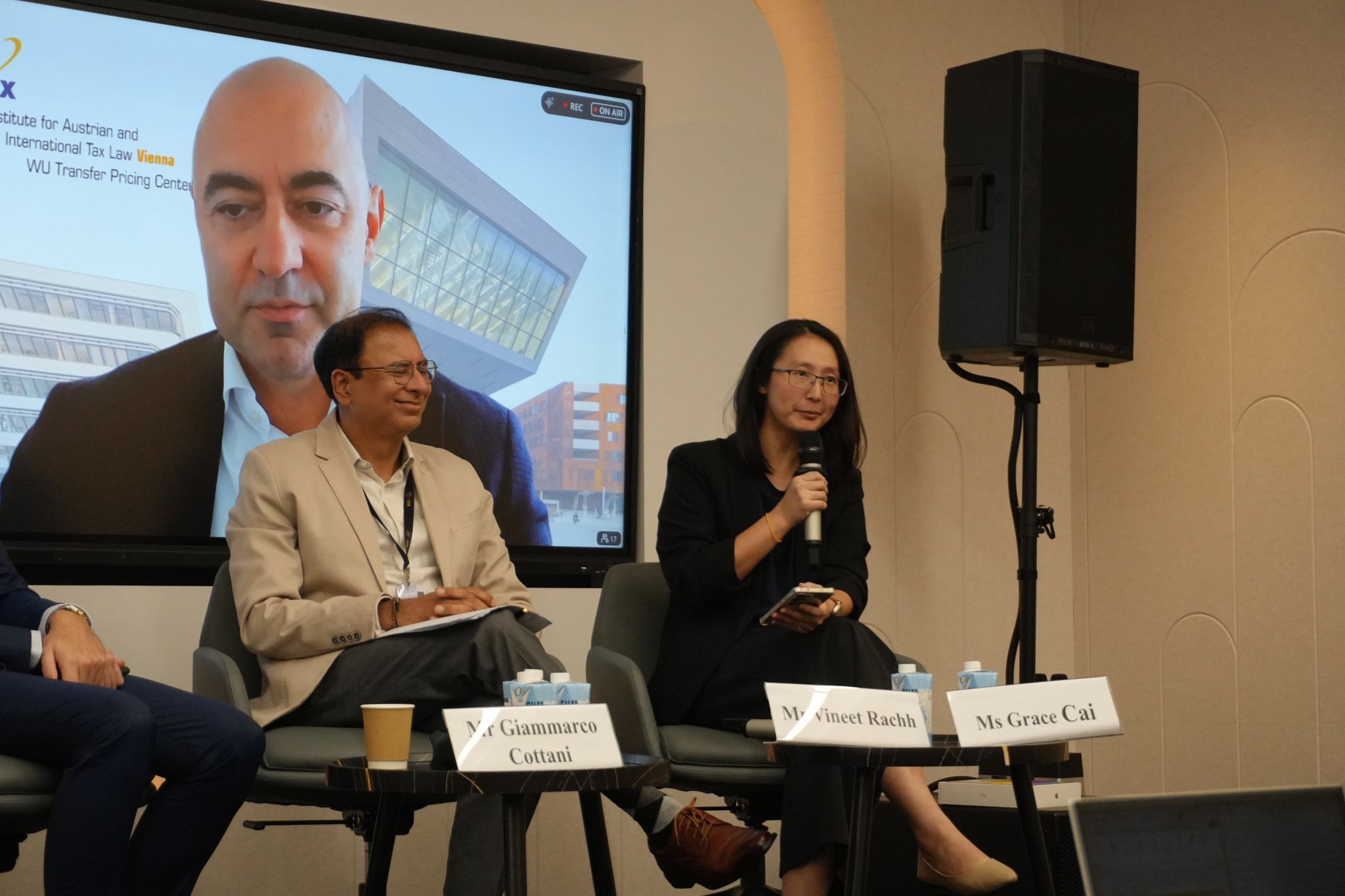
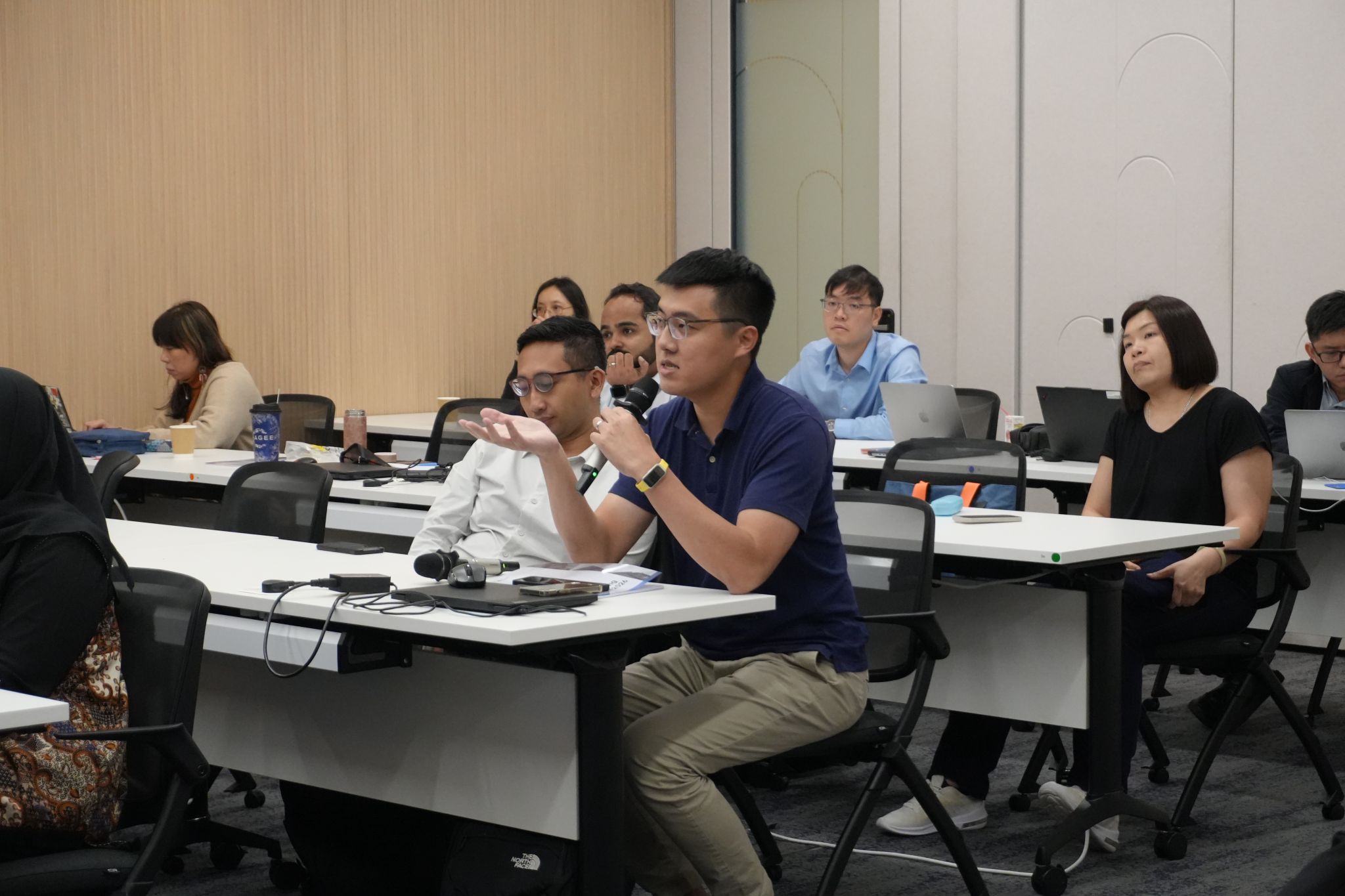
Fireside Chat: Transfer Pricing in a Changing Business Environment: Managing Risk, Cost and Certainty
Moderator: Dr Raffaele Petruzzi, LL.M.Speakers: Dr Giammarco Cottani, Mr Vineet Rachh and Ms Grace Cai
Rounding off Day 3, the Fireside Chat shifted the lens from individual transfer pricing rules to the broader challenges facing businesses as operating models and the international tax environment continue to evolve.
Drawing together perspectives from professional practice and industry, the conversation explored the practical tension between managing transfer pricing risk, controlling compliance costs and achieving greater certainty. It also provided an opportunity to reflect on how businesses can translate increasingly complex transfer pricing requirements into workable policies, governance and day-to-day decision-making.
The discussion underscored an increasingly important reality: transfer pricing is not simply a technical tax exercise, but an issue closely connected with business models, operational decisions, governance and risk management.
Day 4 – 1 October 2026
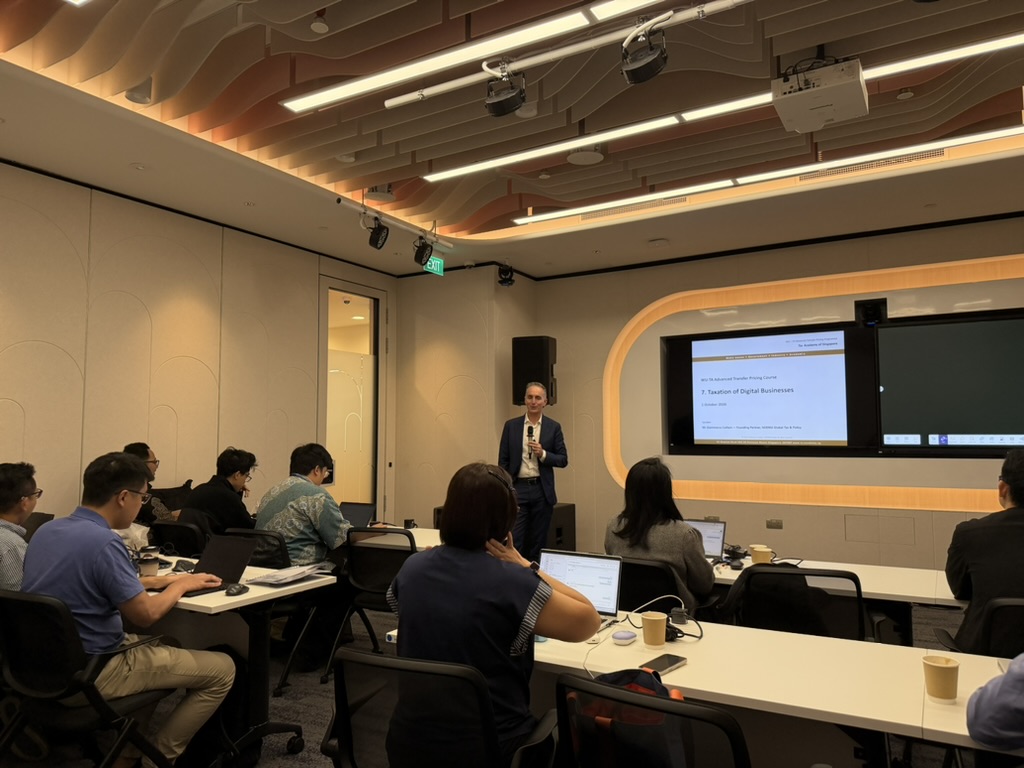
Session 8 Trainer: Dr Giammarco Cottani, Founding Partner of NOEMA Global Tax and Policy
Session 8: Taxation of Digital Businesses
Speaker: Dr Giammarco Cottani
The final day began with digital business models, where meaningful economic participation may occur with limited physical presence and value can depend heavily on intangibles such as technology, data, brands and network effects.
Business models spanning online advertising, digital platforms, Software as a Service (SaaS), cloud services, streaming and fintech illustrated how these characteristics can challenge traditional PE and transfer pricing approaches.
At the heart of the discussion was a fundamental question: where is value created?
A traditional transfer pricing and DEMPE lens focuses on significant functions, assets and economically significant risks, while market- and user-based perspectives may place greater emphasis on users, data, consumption and local markets. The discussion illustrated the continuing tension between established international tax principles and increasingly digitalised ways of doing business.
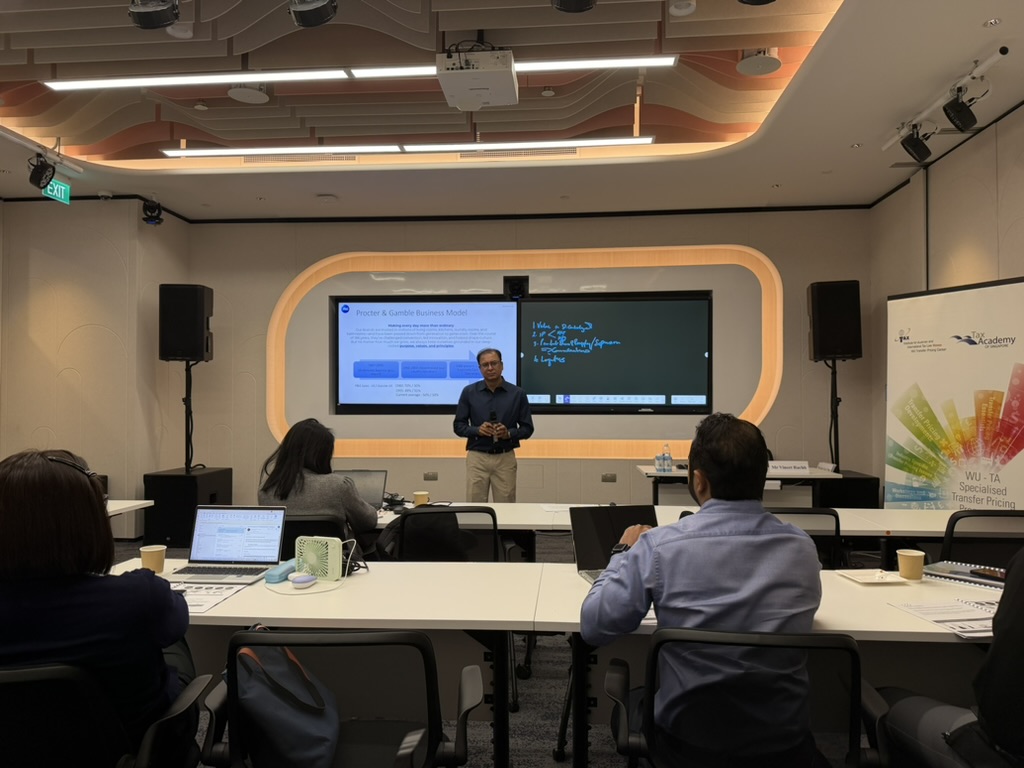
Session 9 Trainer: Mr Vineet Rachh, Vice President & Head of Tax (Asia Pacific, India, Middle East, Türkiye and Africa) of Procter & Gamble
Session 9: Transfer Pricing in the Consumer Goods Industry
Speaker: Mr Vineet Rachh
From digital businesses, the programme moved to the practical realities of the consumer goods industry, where transfer pricing models may reflect different roles across intellectual property (IP) ownership, regional business leadership, manufacturing and distribution.
An illustrative operating model demonstrated how different functions and responsibilities may be associated with different returns, and how the transfer pricing framework needs to align with the wider business and operating model.
The discussion also moved beyond policy design to consider compliance, governance and controversy management — reinforcing the importance of not only designing appropriate transfer pricing arrangements, but ensuring that they are consistently implemented, documented and managed within the business.
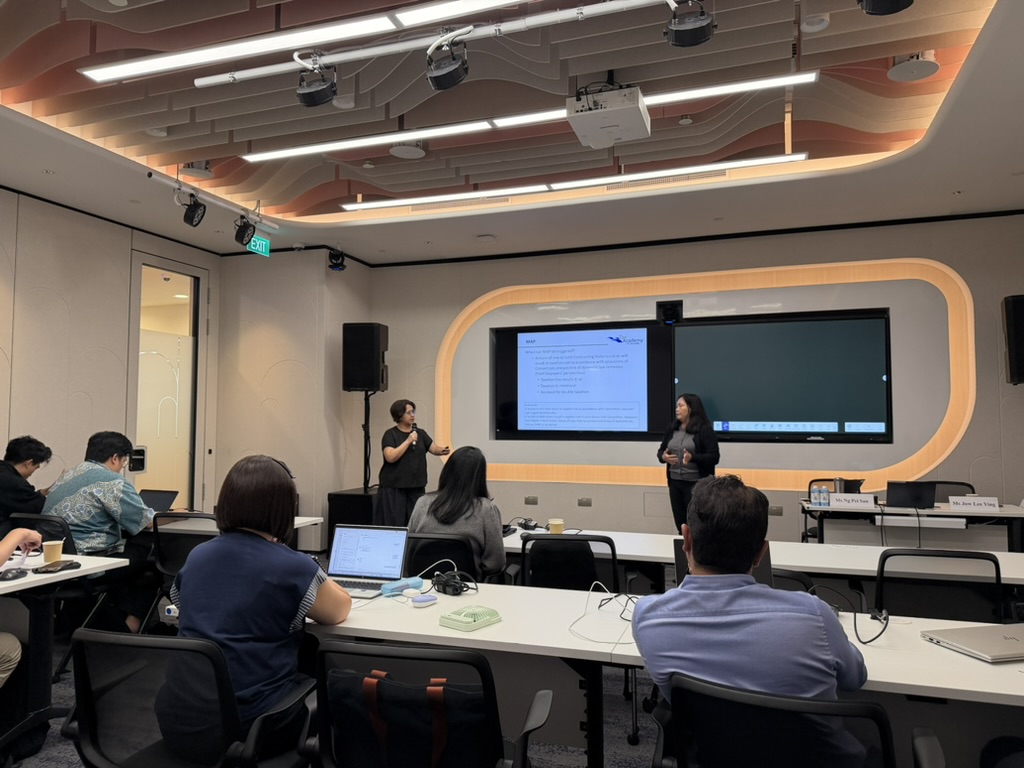
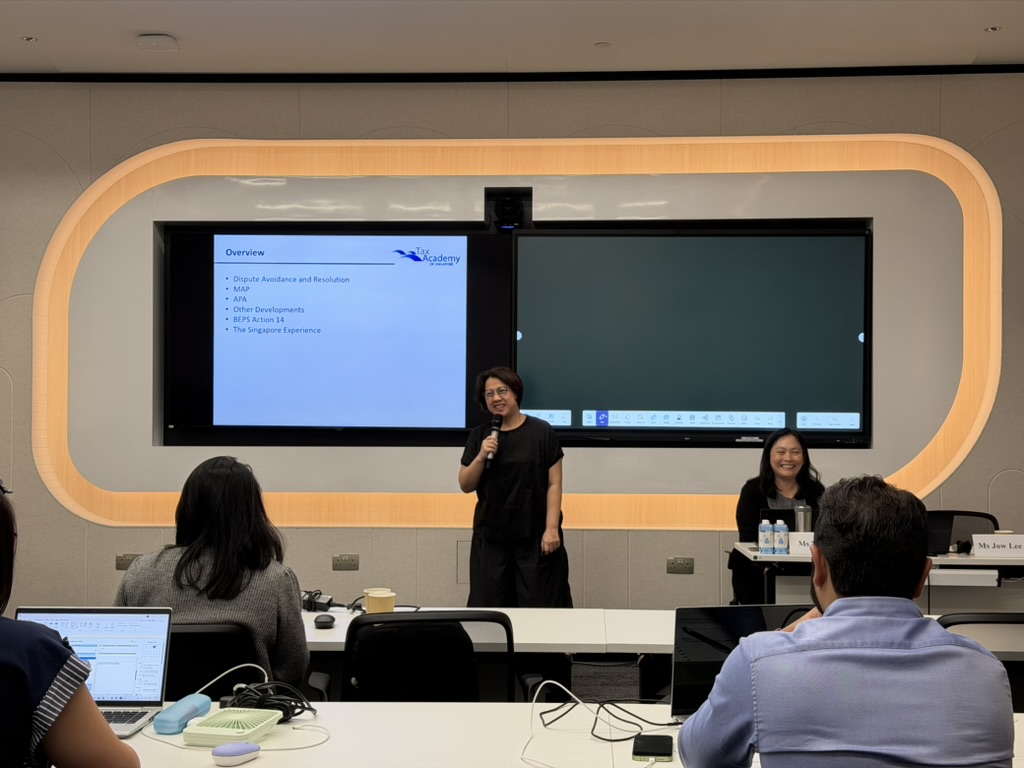
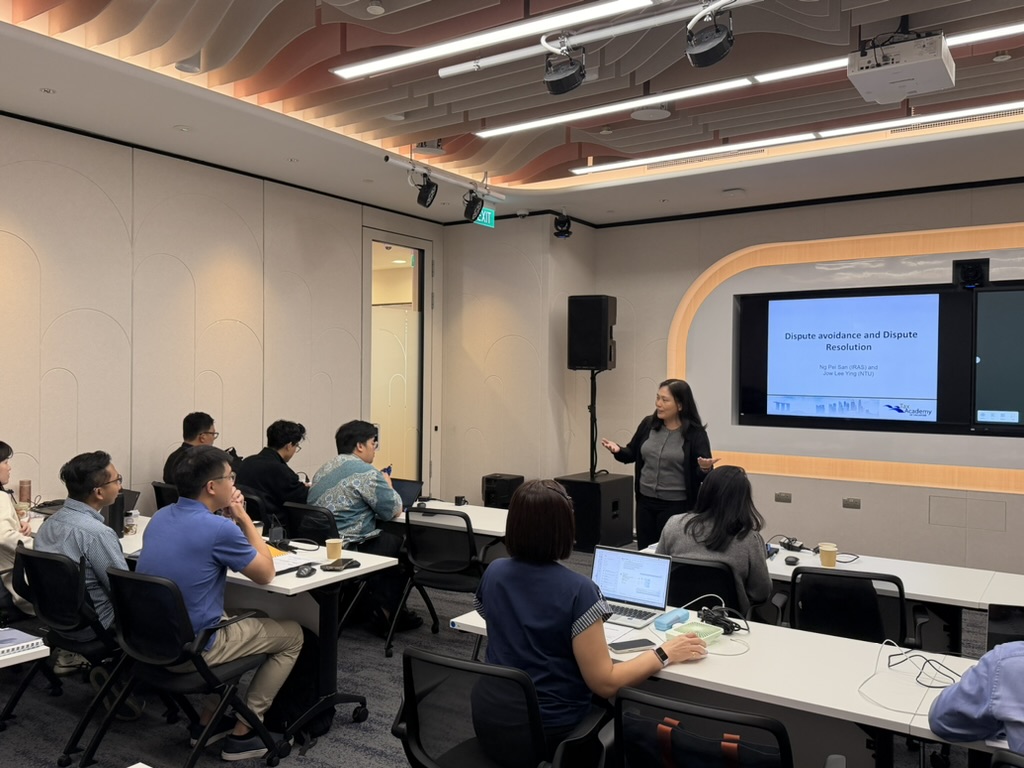
Session 10: Dispute Avoidance (e.g. Rulings and APA) and Dispute Resolution (e.g. MAP and Arbitration) – OECD Developments and MLI, APA and Dispute Resolution Practice in Singapore
Speakers: Ms Ng Pei San and Ms Jow Lee Ying
Bringing the programme to a close, the final session examined the mechanisms available for preventing and resolving international tax disputes.
Dispute prevention can include unilateral, bilateral and multilateral Advance Pricing Arrangements (APAs), while disputes that have already arisen may be addressed through domestic litigation and appeals, the Mutual Agreement Procedure (MAP) or arbitration.
The session also considered MAP, APA, BEPS Action 14, wider international developments and Singapore’s experience, giving participants a broader perspective on how dispute prevention, resolution and tax certainty complement substantive transfer pricing analysis.
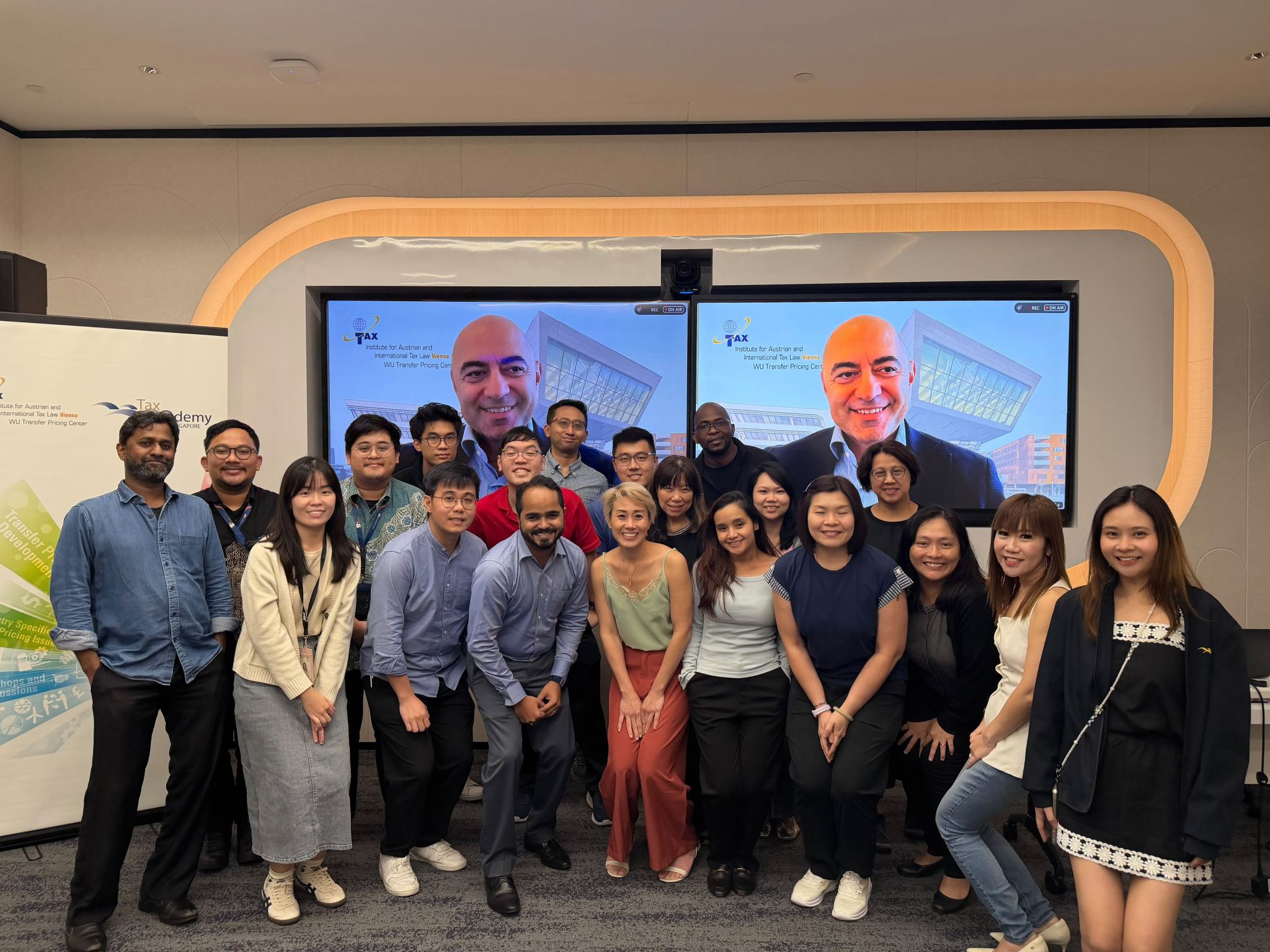
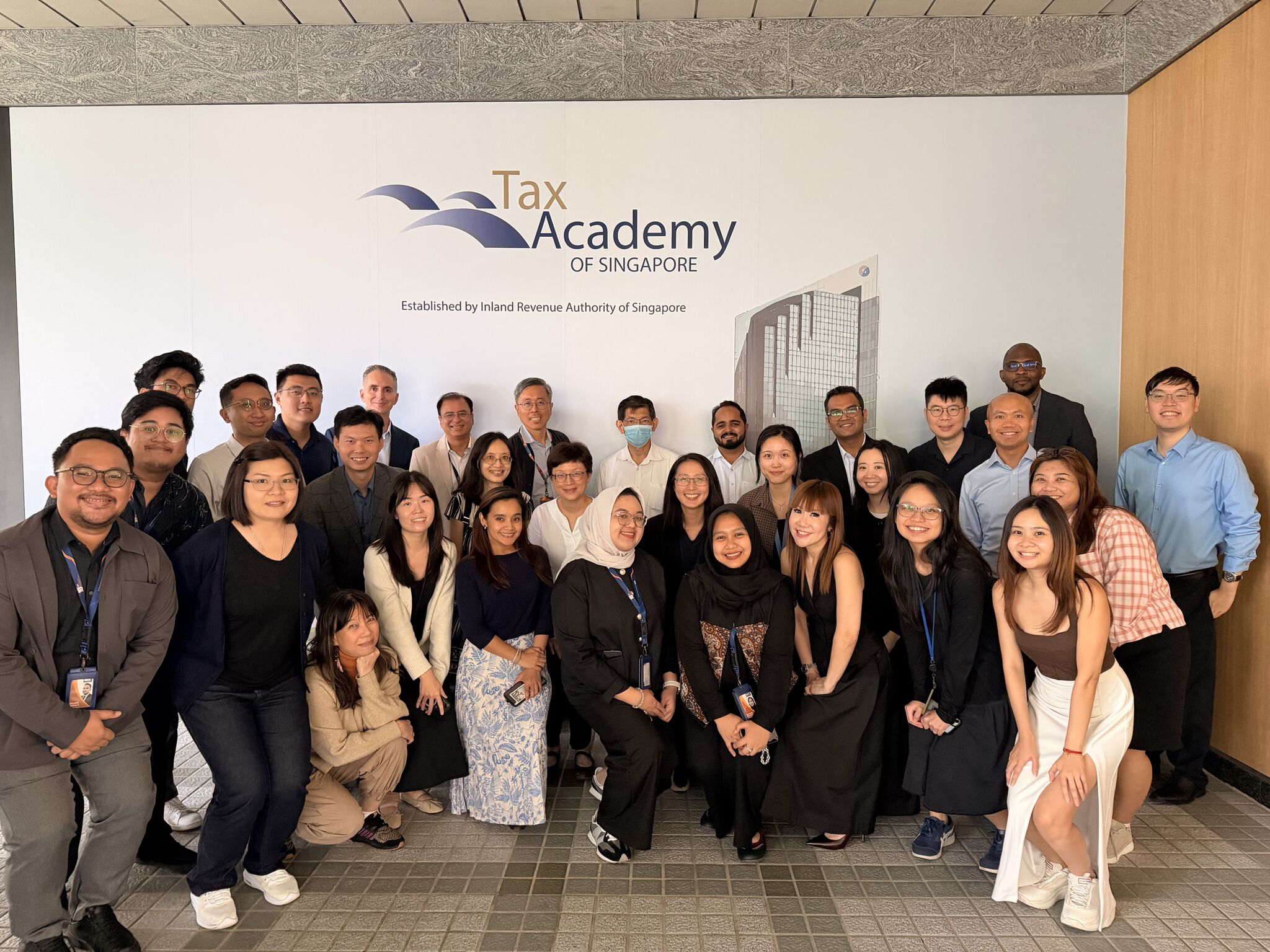

Connecting the Highlights: From Principles to Practice
Across the four days, one theme consistently emerged: effective transfer pricing begins with understanding the underlying transaction and the economic activities of the parties involved.
Whether dealing with financing, services, intangibles, business restructurings, permanent establishments, benchmarking or digital business models, accurate delineation, robust comparability analysis and credible evidence remain central to applying the arm’s length principle.
At the same time, the programme demonstrated that transfer pricing increasingly extends beyond technical analysis. Changing business models, digitalisation, evolving international tax rules and heightened scrutiny mean that businesses must also consider governance, implementation, dispute prevention and tax certainty.
Now in its 11th intake, the WU–TA Advanced Transfer Pricing Programme continues to connect international expertise with practical application, bringing together perspectives from academia, professional practice, industry and tax administration.
The Tax Academy of Singapore thanks the WU Transfer Pricing Center and our distinguished faculty for contributing their expertise, experiences and perspectives to four days of insightful learning and exchange.
Additionally, a special thank you to all our participants – local and overseas – for making this year's programme such a meaningful experience. We are particularly grateful to our overseas participants, who made the journey to Singapore to join us in person. Your diverse perspectives and active participation made every discussion all the richer.
We look forward to welcoming everyone back for the 12th intake next year. Until then, we hope the insights and connections from these four days continue to inspire your work in transfer pricing.