
AI and the Future of Tax Administration: Perspectives from Across the Asia-Pacific
19 May 2026
How are artificial intelligence, data and digitalisation reshaping tax administration? Perspectives shared at Tax Academy of Singapore’s 20th Anniversary Conference offer a view into how tax administrations and professionals across the Asia-Pacific are approaching a rapidly changing tax environment.
About this article
This article draws from the “Panel on Sharing of Country Experiences. Tax Administrations: Leveraging AI for Certainty” panel at Tax Academy of Singapore’s 20th Anniversary Conference on 19 May 2026, moderated by Dennis Lui, Chief Executive Officer of Tax Academy of Singapore.
The panel brought together representatives from the Inland Revenue Authority of Singapore, the Revenue Department of Thailand, Inland Revenue New Zealand and CPA Australia to share experiences and perspectives on digitalisation, artificial intelligence, compliance, risk management and the future of tax administration.
The perspectives below reflect the speakers’ presentations and discussion at the conference. They should not be read as comprehensive or definitive descriptions of the current policies, systems or operating environments of the jurisdictions or organisations concerned.

How is tax administration changing?
Tax administration has traditionally operated around periodic reporting, subsequent review and, where necessary, audit or dispute resolution.
The perspectives shared at the conference point towards a different direction: tax administration that is increasingly supported by continuous data, earlier risk identification, more targeted intervention and intelligent digital services.
Artificial intelligence is part of that transformation, but it is not the whole story.
The discussion also highlighted the importance of high-quality data, trusted information, governance, professional capability and human judgement. As digital systems become more capable, these foundations may become even more important.
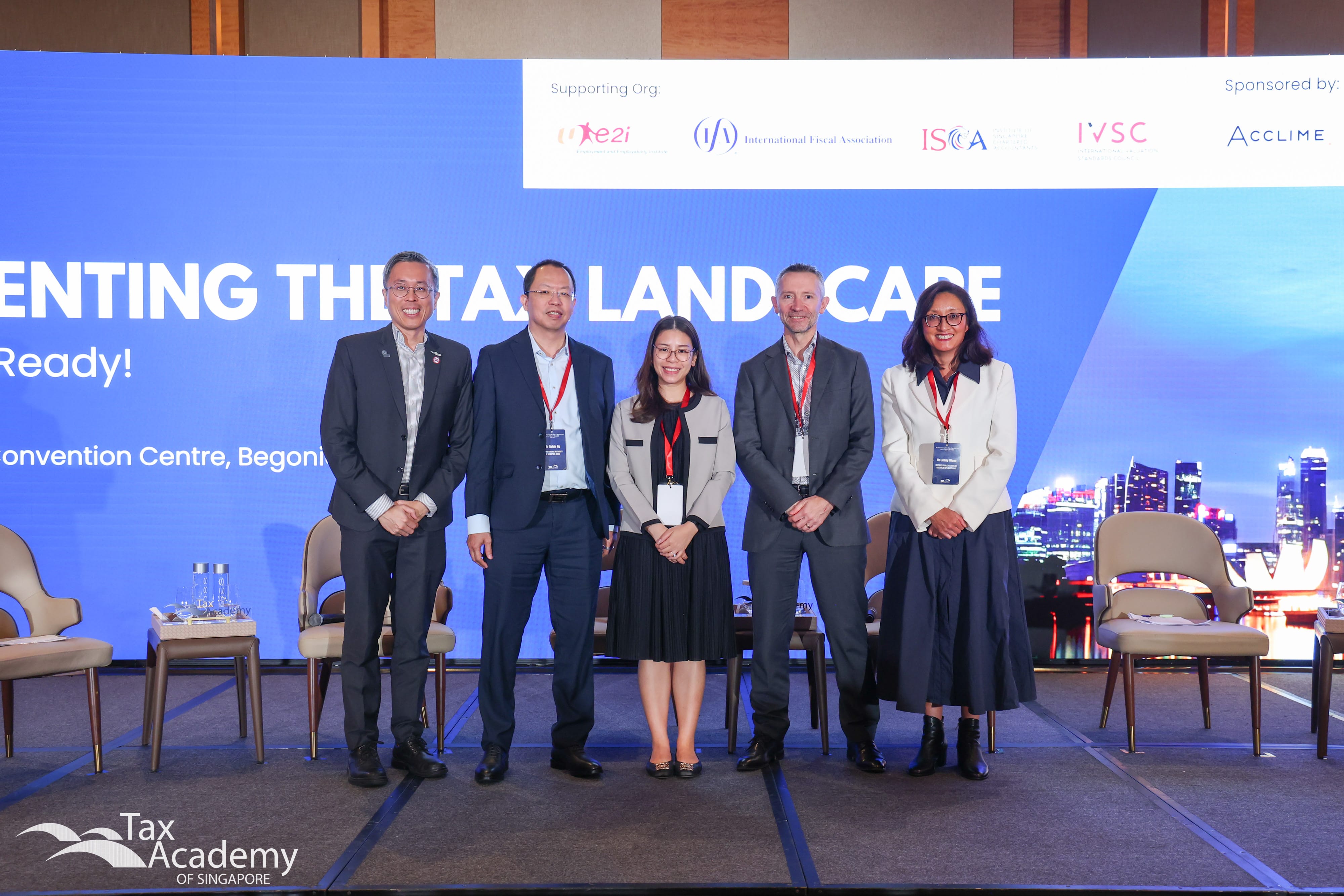
From Left to Right, Mr. Dennis Lui, Mr. Robin Ng, Ms. Kornrug Silanookit, Mr. Patrick O'Doherty, Me. Jenny Wong
Perspectives from the Asia-Pacific
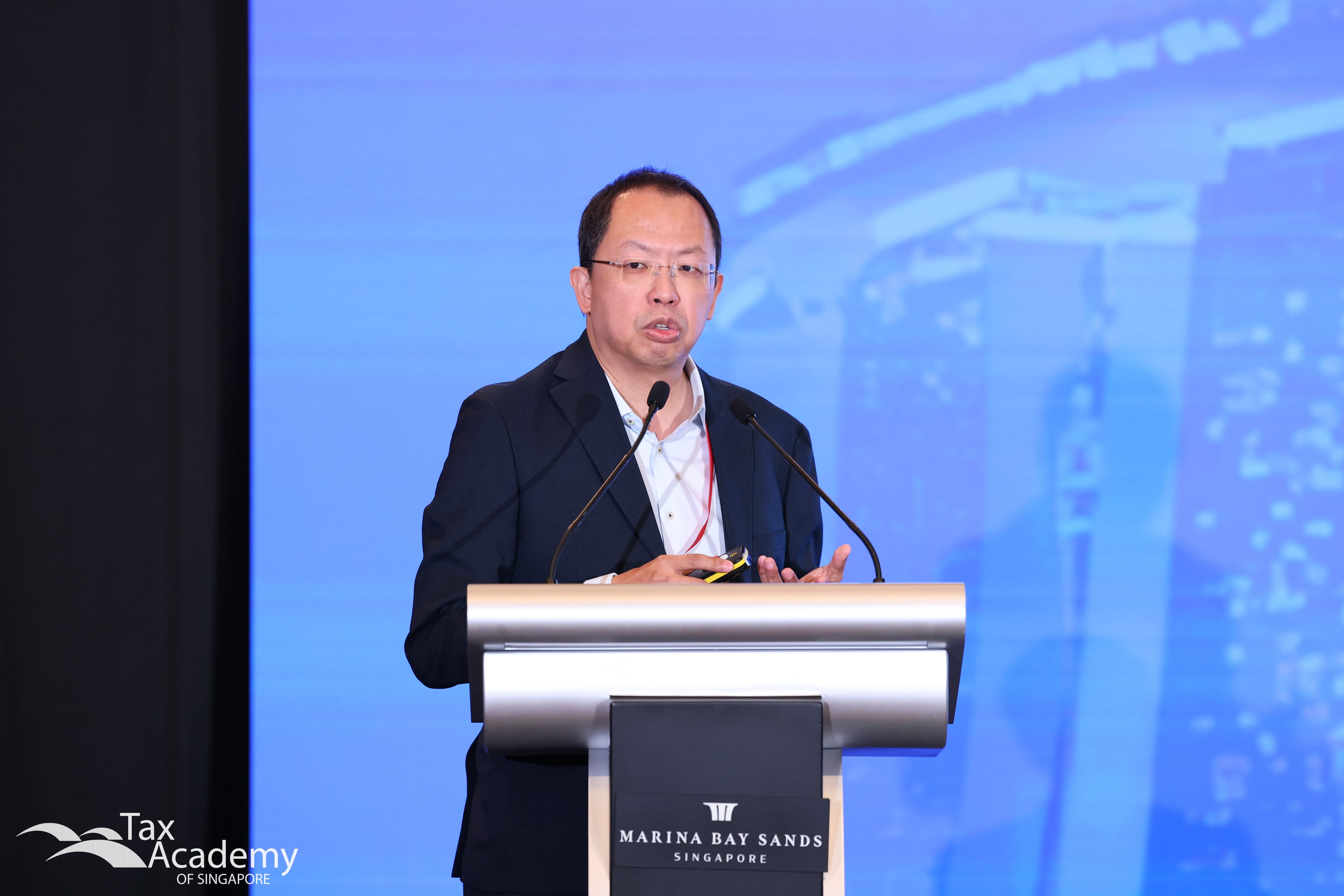
Mr. Robin Ng, Assistant Commissioner (Data & Digital Ecosystem Division) and Chief Data Officer, Inland Revenue Authority of Singapore
Singapore: How could AI make tax administration more real-time and predictive?
Perspective shared by Robin Ng, Assistant Commissioner, Data & Digital Ecosystems Division and Chief Data Officer, Inland Revenue Authority of Singapore
The Singapore presentation explored how AI could fundamentally reshape the future operating model of tax administration.
Robin Ng described a possible future in which tax administrations become increasingly real-time, predictive and almost invisible from the taxpayer’s perspective.
Tax filings could increasingly be pre-completed using trusted data ecosystems, while AI agents could support first-line taxpayer interactions and provide more personalised guidance based on individual circumstances.
On the compliance front, the presentation considered a shift from periodic and retrospective reviews towards more continuous compliance management. Large-scale transactional data, machine learning and network analytics could help identify anomalies, relationships and potential risks earlier.
IRAS already describes the use of artificial intelligence and data analytics to support risk profiling and more targeted compliance interventions.
The presentation also stressed that the ability to scale AI depends on trust.
As AI becomes increasingly embedded within operations, governance must evolve alongside it. Areas highlighted included fairness, explainability, human oversight, model monitoring, data governance, security and workforce capability.
The implication is that the future of tax administration is not simply about introducing more AI. It is about building the systems, skills and governance needed to use AI meaningfully and responsibly.
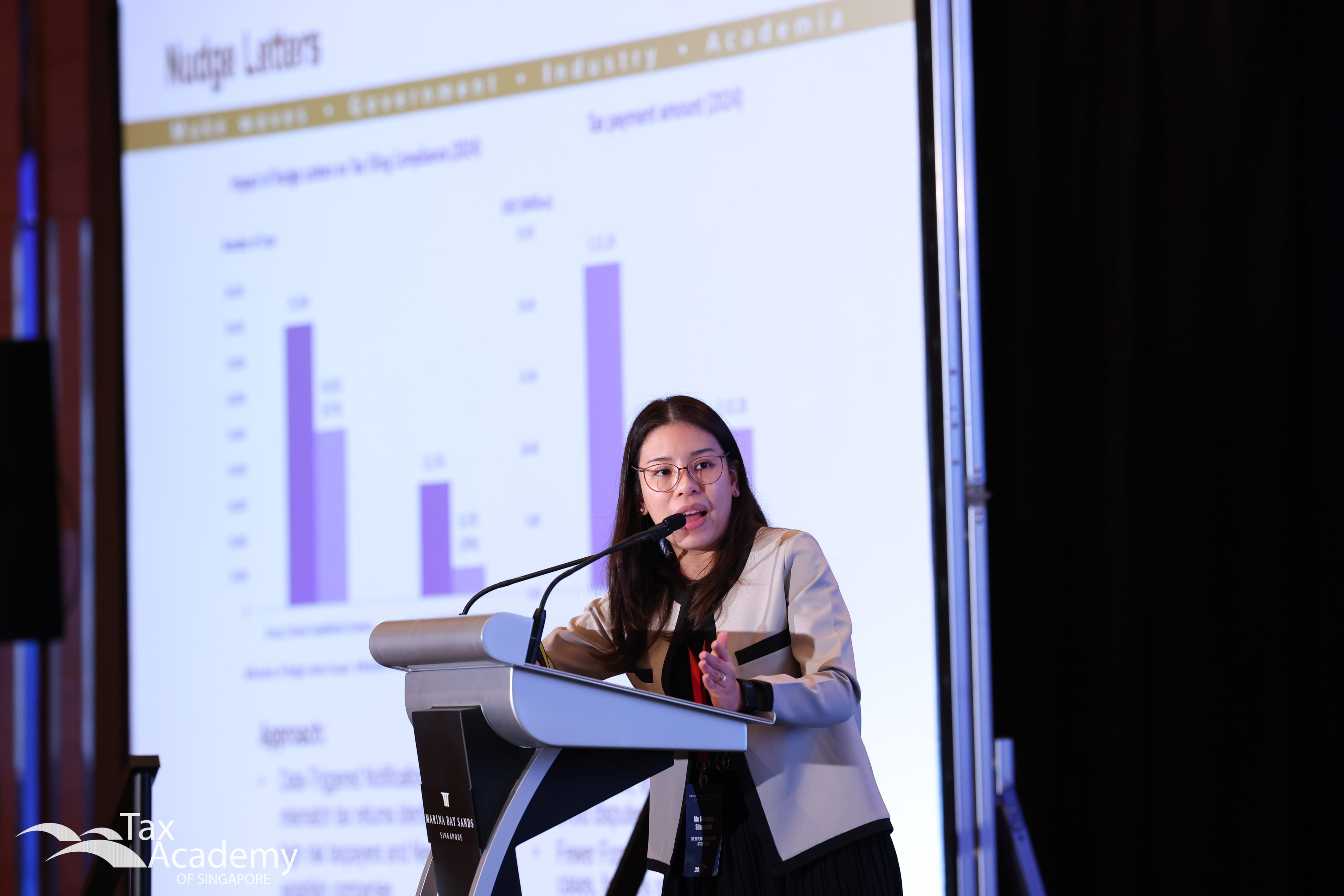
Ms. Kornrug Silanookit, Head of the International Compliance Audit Development Division, The Revenue Department of Thailand
Thailand: Can data support earlier intervention and greater tax certainty?
Perspective shared by Kornrug Silanookit, Head of the International Compliance Audit Development Division, Revenue Department of Thailand
The Thailand presentation focused on how data can help a tax administration use limited resources more effectively while providing greater certainty to taxpayers.
Its approach was framed around three areas:
Prevention. Detection. Early resolution.
Rather than relying only on enforcement after an issue has occurred, the Revenue Department has explored the use of data and risk indicators to identify potential compliance concerns earlier.
One example shared was the use of nudge letters — targeted notifications intended to prompt taxpayers to review and voluntarily correct potential inconsistencies before formal audit action becomes necessary.
The presentation also discussed data-driven case selection and risk-based tax refund processing. Lower-risk taxpayers could receive faster treatment, while higher-risk cases could continue to receive closer scrutiny.
Thailand’s Revenue Department has separately documented the use of data analytics, notification letters and work involving AI in tax administration in its published annual reporting.
The wider message from the presentation was significant: data is not useful only for finding non-compliance.
Used effectively, it can also help tax administrations intervene earlier, allocate resources more precisely and provide greater tax certainty to compliant taxpayers.
As the speaker summarised the direction of Thailand's experience, the movement is from enforcement towards trust and the delivery of tax certainty through data.
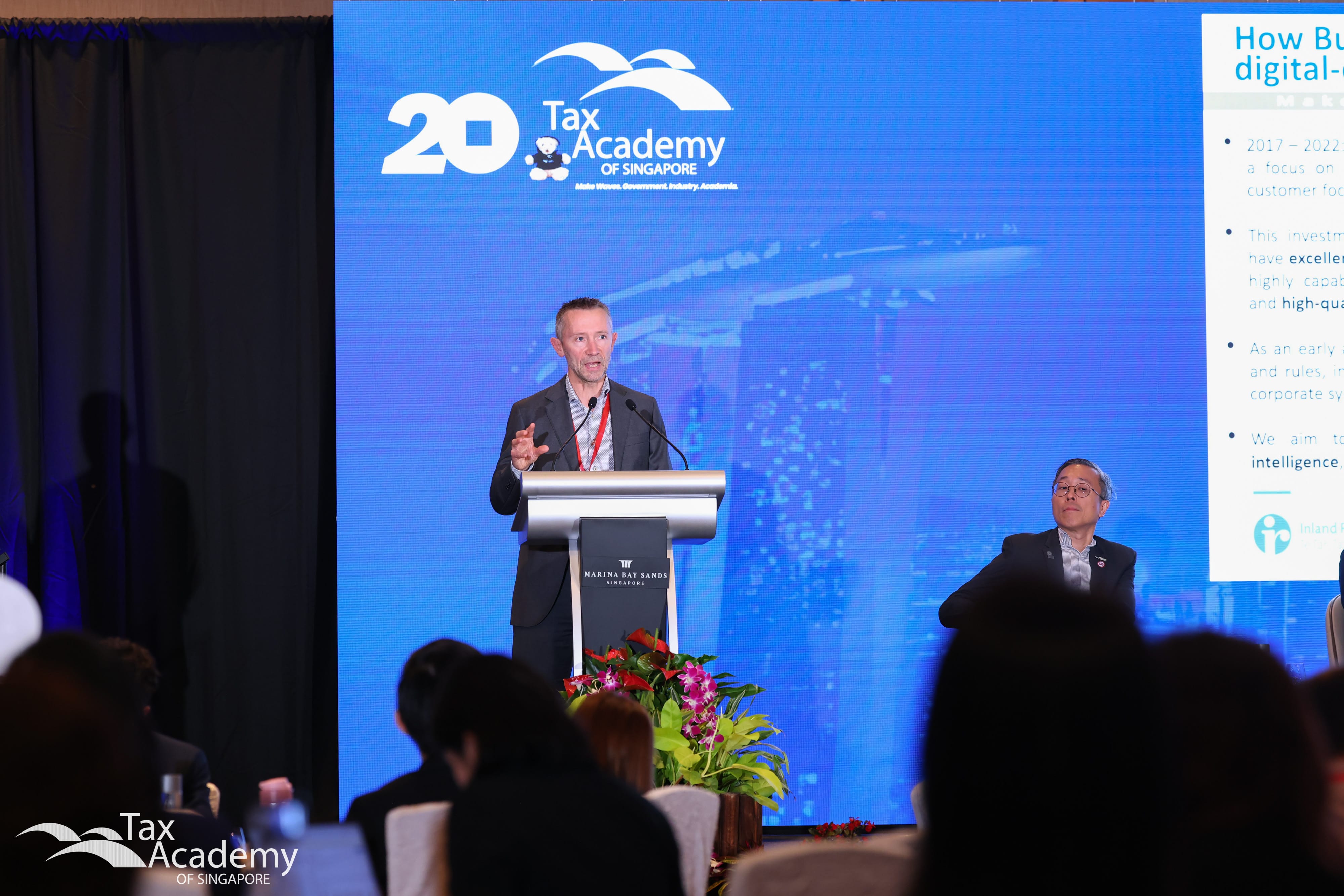
Mr. Patrick O'Doherty, Chief Digital Officer, Inland Revenue New Zealand
New Zealand: What happens when AI becomes part of the tax ecosystem?
Perspective shared by Patrick O’Doherty, Chief Digital Officer, Inland Revenue New Zealand
New Zealand’s presentation began from a different starting point.
Technology matters, but successful transformation also depends on good data, organisational capability and people who are confident adapting to change.
One of the concepts highlighted was digital dexterity.
Digital literacy can mean learning how to use a particular tool. Digital dexterity goes further: it is the ability to identify which tools, AI models or solutions can help someone perform their role more effectively as technology continues to change.
Inland Revenue New Zealand states that it already uses machine-learning algorithms across large datasets for advanced analytics, decision support and predictive modelling, with human oversight and decision-making remaining part of the process.
The presentation then raised one of the more forward-looking questions of the conference:
What happens when AI acts on behalf of taxpayers?
Patrick O’Doherty described a future in which individuals and businesses may increasingly use AI agents to interact with tax administrations on their behalf.
That creates new questions around identity, delegated authority and accountability. A future tax administration may need to recognise not only taxpayers and human tax agents, but also authorised digital agents acting for them.
The presentation also highlighted another emerging issue: trusted tax information.
As taxpayers increasingly use generative AI to find and interpret tax information, tax administrations may need to consider how authoritative content can remain discoverable and reliable within AI-enabled services.
Inland Revenue New Zealand has continued to publish information on its use and governance of artificial intelligence, including an information release in March 2026 covering its evolving AI approach.
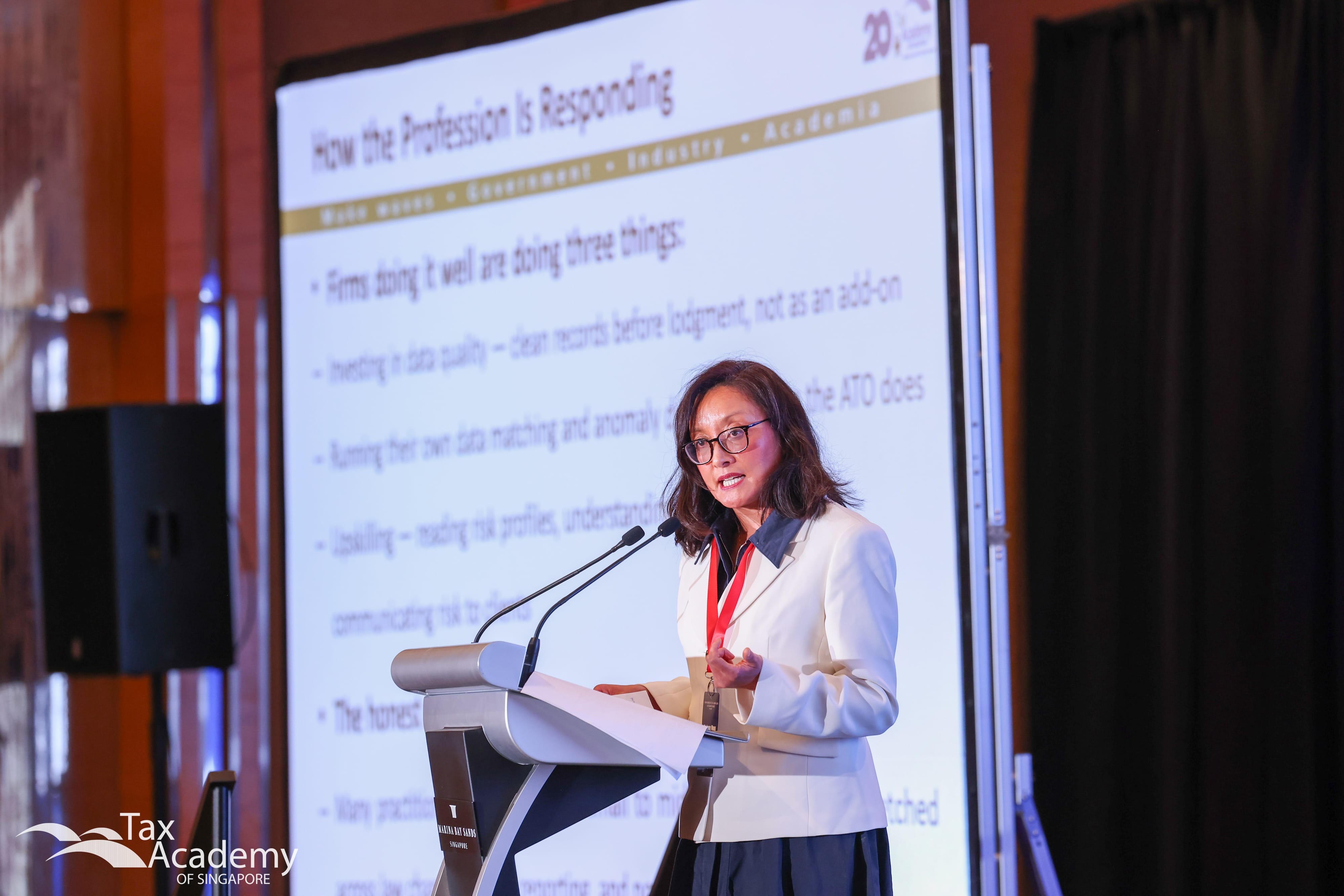
Ms. Jenny Wong, Tax Lead, Policy and Advocacy, CPA Australia
Australia: What does AI-enabled tax administration mean for tax professionals?
Perspective shared by Jenny Wong, Tax Policy Lead, Policy and Advocacy, CPA Australia
The Australian perspective looked at the transformation of tax administration through the lens of the tax profession.
As tax authorities make greater use of data analytics, automated risk identification and third-party information, the environment in which practitioners operate also changes.
The presentation highlighted a movement away from less targeted approaches towards increasingly data-driven compliance and risk selection.
For tax professionals, this increases the importance of data quality. Client information must increasingly be clean, consistent, complete and capable of being explained when discrepancies are identified.
But the presentation also drew an important distinction between AI support and professional accountability.
AI can assist with activities such as research, drafting and pattern recognition. It can also be wrong.
Professional judgement, verification and responsibility therefore remain with the human practitioner.
CPA Australia has similarly emphasised professional accountability in its 2026 submission on proposed guidance concerning the use of artificial intelligence by tax practitioners.
As routine and lower-complexity tasks become increasingly capable of automation, the presentation suggested that value may shift further towards the areas in which professionals remain particularly important:
judgement, relationships, ethics, interpretation and the ability to navigate ambiguity.
The future tax professional may therefore need to combine technical tax expertise with a stronger understanding of data, technology and the limits of automated systems.
Five Signals Shaping the Future of Tax Administration
Taken together, the perspectives shared at the conference point towards several developments worth watching.
1. Tax administration is becoming more continuous
Greater access to timely data may allow tax administrations to understand taxpayer activity closer to when transactions and reporting obligations arise, rather than relying only on retrospective review.
2. Compliance can move upstream
Data and analytics create opportunities to identify potential issues earlier, allowing some matters to be corrected or resolved before they develop into more resource-intensive audits or disputes.
3. AI is expanding the boundaries of taxpayer interaction
AI is already assisting tax officers and practitioners. In time, AI agents may also increasingly interact directly with tax administrations on behalf of individuals and businesses.
4. Better technology increases the importance of better data
AI and analytics are only as useful as the information supporting them. Data quality, governance and the ability to understand how data is being interpreted therefore become increasingly important.
5. Trust remains fundamental
Greater technological capability does not remove the need for human accountability.
As AI becomes more deeply embedded in tax systems, governance, explainability, security, professional judgement and human oversight remain central to maintaining confidence in the tax system.
What does this mean for the future tax professional?
The perspectives shared at the conference suggest that the future of tax will require more than technical tax expertise alone.
Tax professionals may increasingly work at the intersection of:
Tax. Data. Technology. Governance. Professional judgement.
Routine processes may continue to change as technology develops, but the need to interpret complex circumstances, exercise judgement, communicate with taxpayers and businesses, and understand the consequences of decisions remains.
The challenge is therefore not simply to learn today's technology.
It is to develop the capability to adapt as tax administration itself evolves.

Mr. Dennis Lui, Moderating the Panel Discussion on how Tax Administrations Leverage AI for Certainty
Continuing the Conversation
The future of tax administration is still being shaped.
Different jurisdictions will take different approaches, influenced by their tax systems, policy environments, technology, data and taxpayer needs.
What is increasingly clear is that the transformation of tax administration extends beyond technology alone. It involves the relationship between tax administrations, taxpayers, professionals and the wider digital ecosystem.
Tax Academy of Singapore will continue to bring together tax administrators, practitioners, academics and professional communities to exchange perspectives, examine emerging developments and build the capabilities needed for what comes next.