
The Future of Tax Administration: Digitalisation, AI and the Changing Tax Profession — A Singapore Perspective
3 September 2026
Drawing on the Public Lecture at Universitas Indonesia, "The Future of Tax Administration", this article explores how digitalisation, AI and cross-border integration are reshaping tax administration and the tax profession, while highlighting opportunities for Singapore–Indonesia learning, capability-building and future collaboration.
Digitalisation is changing much more than the way taxpayers file returns.
Across the world, tax administrations are gaining access to more timely data, digital transactions are becoming increasingly integrated with business systems, and artificial intelligence is beginning to support both administrative processes and professional work.
The implications extend beyond technology.
They raise more fundamental questions: What will tax administration look like in an increasingly digital economy? How should tax authorities introduce artificial intelligence? What capabilities will tax professionals need? And how can jurisdictions learn from one another while developing approaches suited to their own circumstances?
These questions formed the focus of The Future of Tax Administration: Digitalisation, AI and the Changing Tax Profession – A Singapore Perspective, a public lecture by Mr Dennis Lui, Chief Executive Officer of the Tax Academy of Singapore and Deputy Commissioner at the Inland Revenue Authority of Singapore, hosted by the Faculty of Administrative Sciences, Universitas Indonesia on 3 September 2026. The programme was designed to connect the Singapore experience with questions relevant to students, practitioners, tax authorities and the wider Indonesian tax ecosystem.
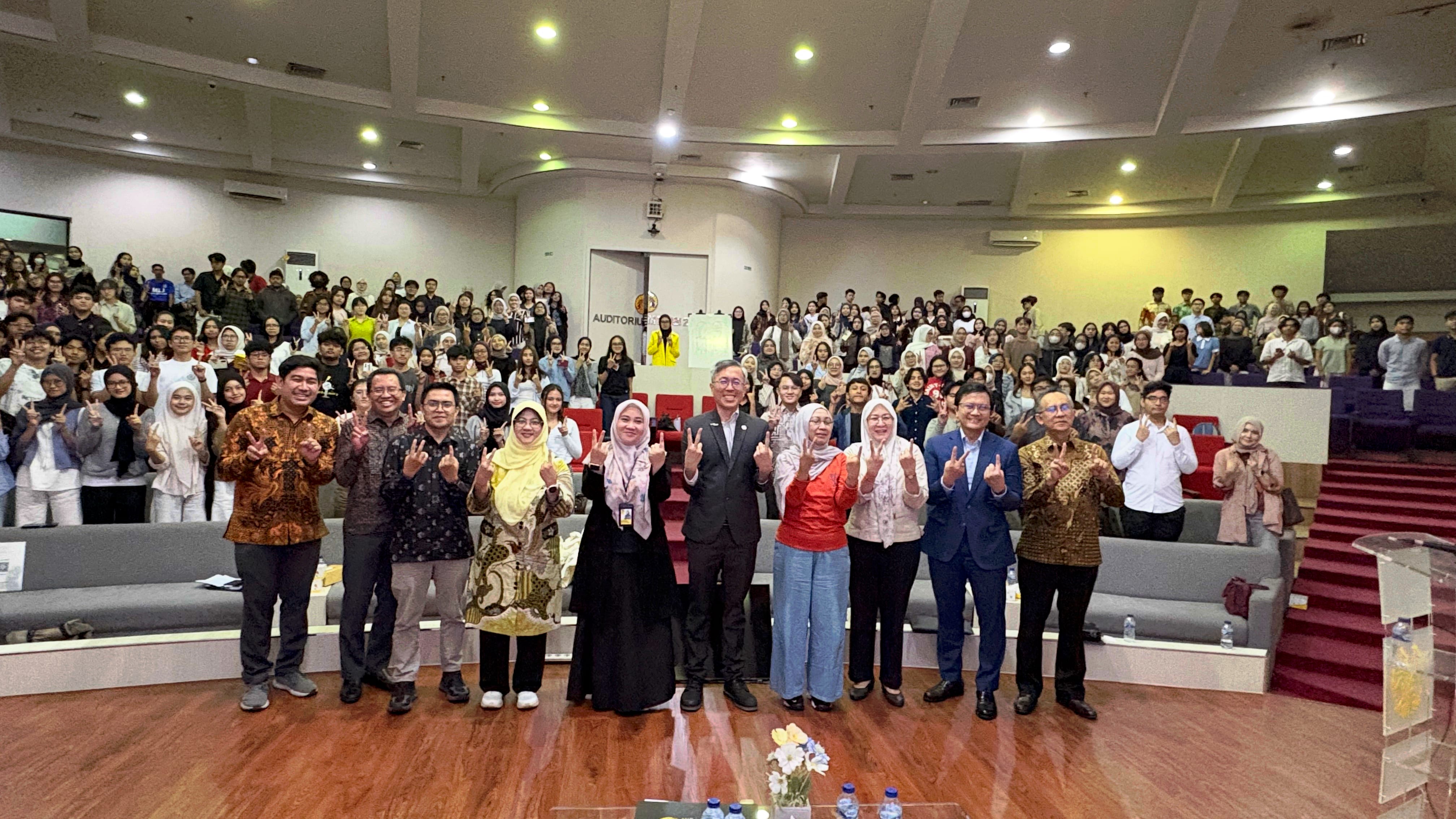
Group Photo of all participants at "The Future of Tax Administration, Digitalisation, AI, and the Changing Tax Profession - A Singapore Perspective" public lecture.
Digital transformation is not simply about putting tax online
Singapore’s experience illustrates an important distinction between digitalising existing processes and transforming the way tax administration works.
IRAS’ transformation journey has progressively moved from connecting taxpayers digitally and embedding analytics into processes towards deeper integration with the wider ecosystem, richer data and increasingly sophisticated applications of artificial intelligence.
The objective is not technology for its own sake.
Digitalisation should ultimately contribute to better outcomes: making it easier for taxpayers to comply, strengthening voluntary compliance, improving service experiences and increasing the productivity and agility of tax administration.
That distinction matters beyond Singapore.
A tax administration can introduce new portals, software and artificial intelligence without necessarily transforming the underlying experience. Sustainable transformation requires technology to be accompanied by redesigned processes, reliable data, appropriate governance and people who know how to use the new capabilities effectively.
From digital filing to more integrated tax administration
Much of the first generation of digital tax administration focused on replacing paper processes with electronic ones.
The next generation is increasingly concerned with integration.
Singapore’s development of InvoiceNow demonstrates this shift. InvoiceNow is Singapore’s nationwide e-invoicing network based on the international Peppol standard. Its growing integration with GST administration allows invoice data to move digitally between businesses and, where required, to IRAS through InvoiceNow-ready solutions. Singapore is progressively extending the GST InvoiceNow requirement across GST-registered businesses through 2031.
This creates possibilities that extend beyond faster invoicing.
More timely and structured data can support more efficient compliance processes, earlier identification of risks, better-targeted interventions and, potentially, faster resolution of routine matters. Dennis’ presentation describes the benefits for businesses and tax administration in terms of productivity, reliability, stronger compliance and better use of information.
For ASEAN, the broader issue is increasingly important.
Businesses operate across borders, while tax and regulatory systems remain jurisdiction-specific. As digital reporting, e-invoicing and data exchange continue to develop, interoperability between business systems and public administration could become an increasingly important part of facilitating regional commerce.
The future of tax administration may therefore be shaped not only by what happens inside individual revenue authorities, but by how effectively tax systems interact with the wider digital economy.
AI works best when the foundations are already in place
One of the clearest messages in the Singapore presentation is that artificial intelligence cannot be separated from the environment in which it operates.
The presentation frames the equation simply:
AI + good data + systems + skills + processes + governance = productivity + better compliance + better service.
This is significant because much of today’s discussion focuses on the sophistication of the AI model itself.
For institutions, however, the harder questions may concern everything around the model.
Is the necessary data available and reliable? Are the systems ready? Does the proposed use case create sufficient value? Are there simpler alternatives? Are governance and accountability clear? And do officers have the skills to understand and challenge the output?
Singapore’s experience suggests that these questions should precede large-scale adoption.
Start small — and scale what works
The presentation proposes a pragmatic approach to artificial intelligence: validate, scale up and formalise.
Rather than transforming entire processes at once, organisations can begin with prototypes and minimum viable products, test them under real operating conditions, evaluate whether they create value and expand them progressively where evidence supports doing so.
One example presented was an AI assistant supporting GST refund review work. The system can assist with information retrieval, risk assessment, risk mitigation analysis, recommendations and report generation, providing auditors with a first draft for further professional review.
The example is important not merely because AI is being used.
It demonstrates a broader principle: technology should support a clearly defined operational problem, while professional accountability remains with the human officer.
Will artificial intelligence replace tax professionals?
This is perhaps one of the most frequently asked questions about the future of tax.
The perspective presented at the lecture is more nuanced.
AI can automate routine work, process information more quickly, help identify patterns and support more consistent analysis. But these capabilities make other human capabilities more, rather than less, important.
Complex tax matters involve context.
They require professionals to interpret facts, understand commercial realities, exercise judgement, recognise uncertainty, communicate with taxpayers or businesses and remain accountable for decisions.
The presentation therefore describes AI as a potential force multiplier for human work rather than simply a substitute for people.
The new bottleneck may be judgement
The implications extend directly to the tax profession.
Historically, specialist knowledge itself was difficult to obtain. Professionals developed value partly because they possessed knowledge that others could not easily access.
That environment is changing.
Search engines, specialised databases and generative AI can increasingly retrieve technical information within seconds.
As knowledge becomes easier to access, professional value increasingly moves towards the ability to ask better questions, challenge outputs, curate evidence, connect disciplines and apply judgement.
Dennis’ presentation characterises the future professional as increasingly “T-shaped”: retaining depth of specialist expertise while developing greater breadth across tax, business, technology, policy and people.
Depth remains essential.
But tax professionals operating in increasingly digital and cross-border environments will also need to understand how different disciplines interact.
What does this mean for Indonesian businesses expanding into Singapore or ASEAN?
The lecture was primarily about tax administration and professional capability rather than a guide to establishing businesses in Singapore.
Nevertheless, its themes connect directly with an increasingly important business reality: tax cannot be treated as an issue that begins only after a cross-border business decision has been made.
For an Indonesian business entering Singapore — or for a business using Singapore as part of a wider ASEAN strategy — questions can arise around corporate tax, tax residency, cross-border payments, transfer pricing, indirect taxation, digital reporting and the interaction between different jurisdictions.
Singapore’s headline corporate income tax rate is currently 17% of chargeable income, but the rate alone does not determine the tax position of a business. A company’s Singapore tax residency, for example, depends on where its control and management is exercised rather than simply where the entity is incorporated.
Related-party transactions must also be considered. Singapore applies the arm’s-length principle to transfer pricing, requiring related-party transactions to reflect the pricing that independent parties would use under comparable circumstances.
Singapore and Indonesia also have an updated agreement for the elimination of double taxation that entered into force in 2021. The agreement provides a framework for coordinating taxing rights and reducing double taxation where its requirements are satisfied.
The practical lesson is therefore not that one jurisdiction is necessarily preferable to another.
It is that cross-border expansion increasingly requires tax, regulation, systems and business strategy to be considered together.
Enterprise Singapore similarly notes that businesses entering ASEAN markets require not only an understanding of opportunities, but knowledge of regulation and suitable local partners.
For Tax Academy, this reinforces the importance of capability-building around the intersection between tax and real business decisions.
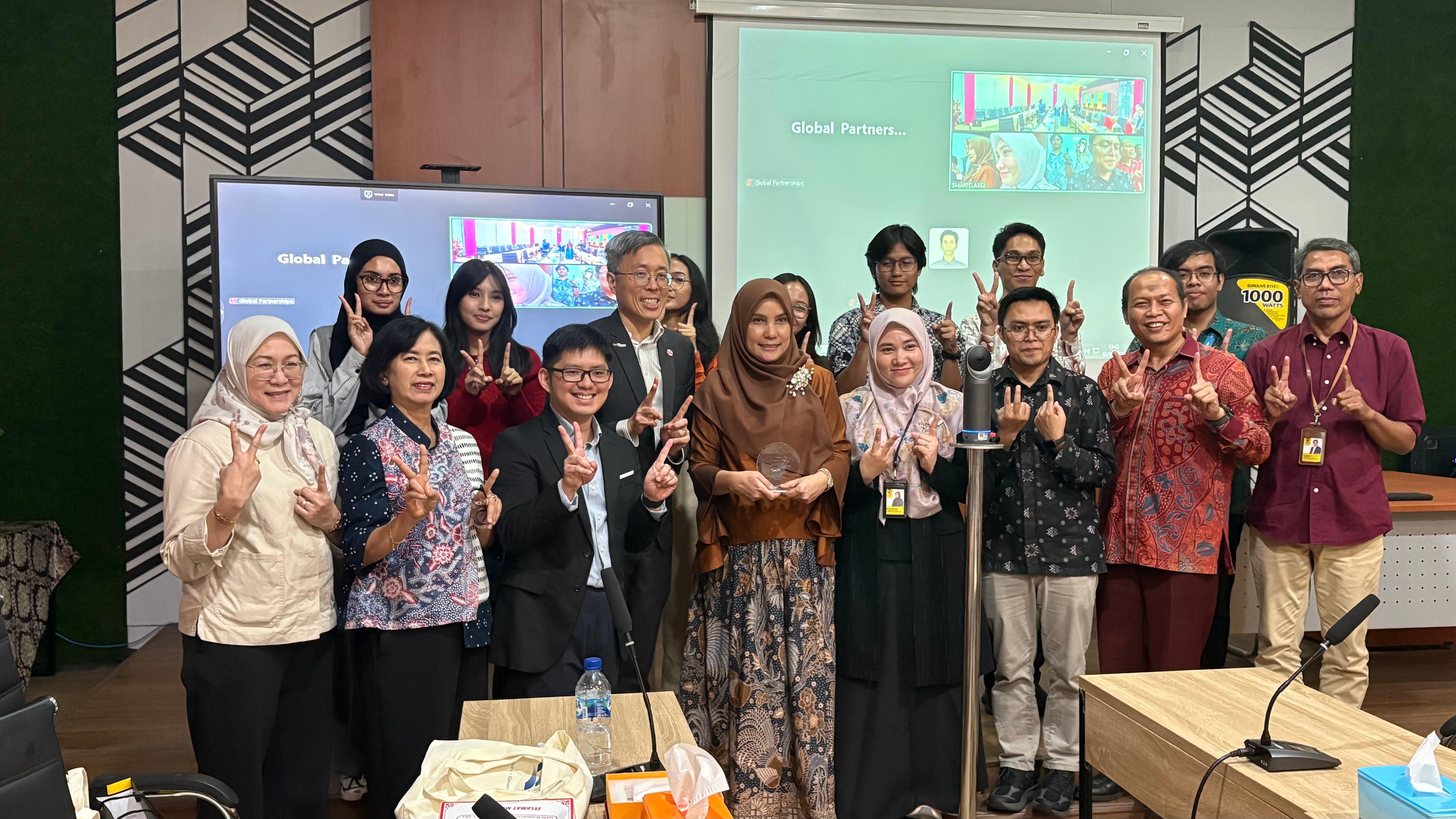
CEO Tax Academy, Mr. Dennis Lui; Tax Academy Digital & Innovation Lead, Mr. Sim Chen Xing, having a group photo with the Faculty of FIA UI
Exploring future collaboration between Universitas Indonesia and Tax Academy of Singapore
The Universitas Indonesia visit also provides an opportunity to continue the institutional conversation between Singapore and Indonesia.
Alongside the public lecture, the programme includes an exploratory discussion between the Faculty of Administrative Sciences, Universitas Indonesia and the Tax Academy of Singapore on possible areas of collaboration in education, applied research and professional exchange.
Possible areas for future discussion could include comparative Singapore–Indonesia tax developments, international tax and global coordination, the digital economy and emerging economic activity, environmental taxation, researcher exchanges and joint seminars.
These remain areas for exploration rather than announced commitments.
The broader opportunity is nevertheless significant.
Universities, tax administrations, industry and professional communities each observe different parts of the tax system. Bringing those perspectives together creates opportunities for research to inform practice, professional experience to inform education, and regional knowledge to move in both directions.
That model also reflects Tax Academy of Singapore’s wider role.
In an environment where information is increasingly abundant, the role of professional education is evolving from simply transmitting knowledge towards curating, connecting, contextualising and building capability.
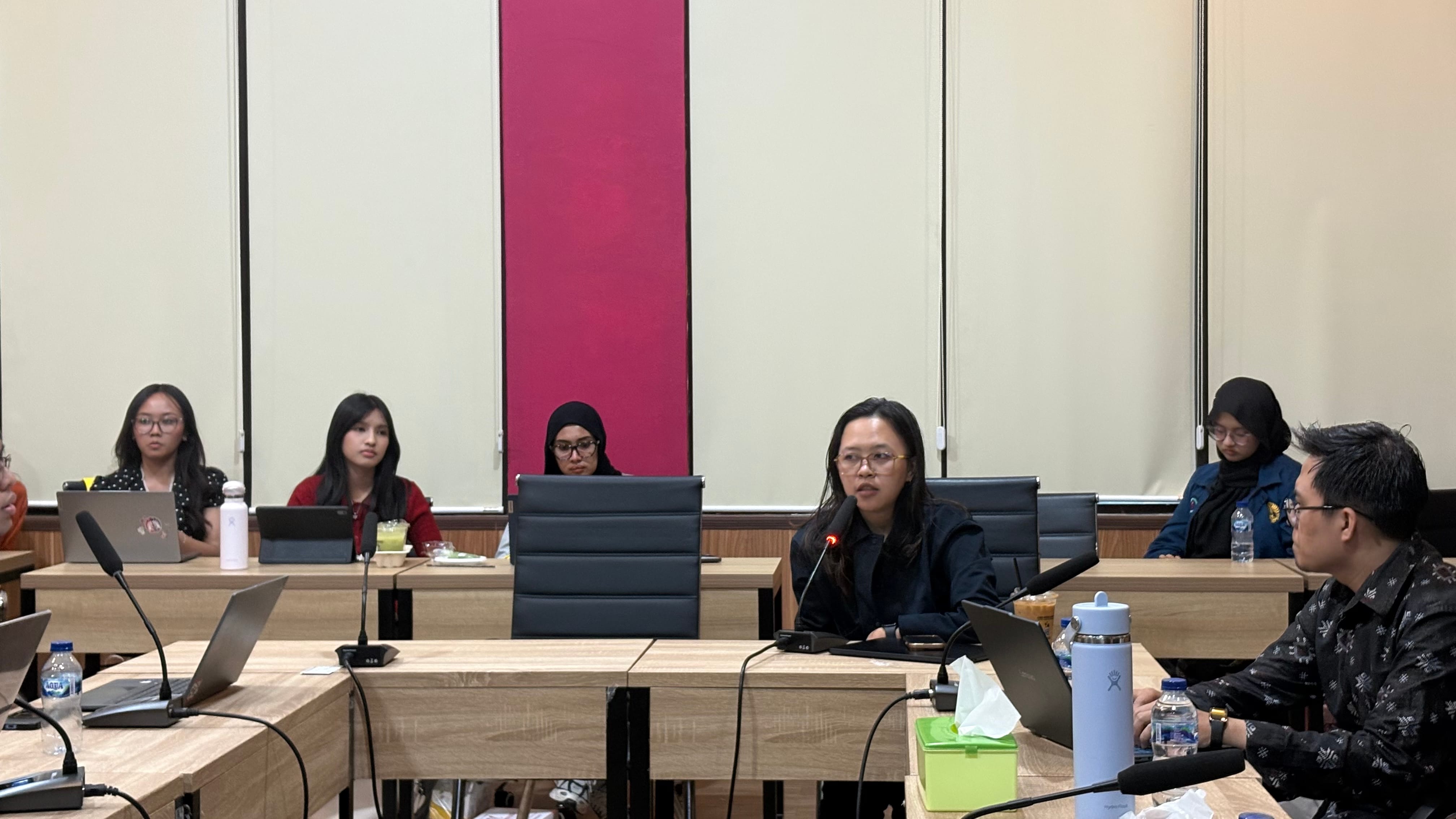
Dr. Krisna Puji Rahmayanti, sharing about the interests of FIA UI as well as possible collaboration angles
Singapore and Indonesia can learn from one another
Singapore and Indonesia operate at very different scales.
Dennis’ presentation explicitly recognises these differences at the outset. Indonesia’s geography, population and administrative environment mean that Singapore’s experience cannot simply be transplanted directly into the Indonesian context.
That makes comparative exchange more useful, not less.
Both jurisdictions are considering questions involving digital tax administration, data, e-invoicing, artificial intelligence, taxpayer experience and the capabilities required of the future workforce.
The opportunity is therefore not to identify a single model for the region.
It is to understand what can be learned across different models.
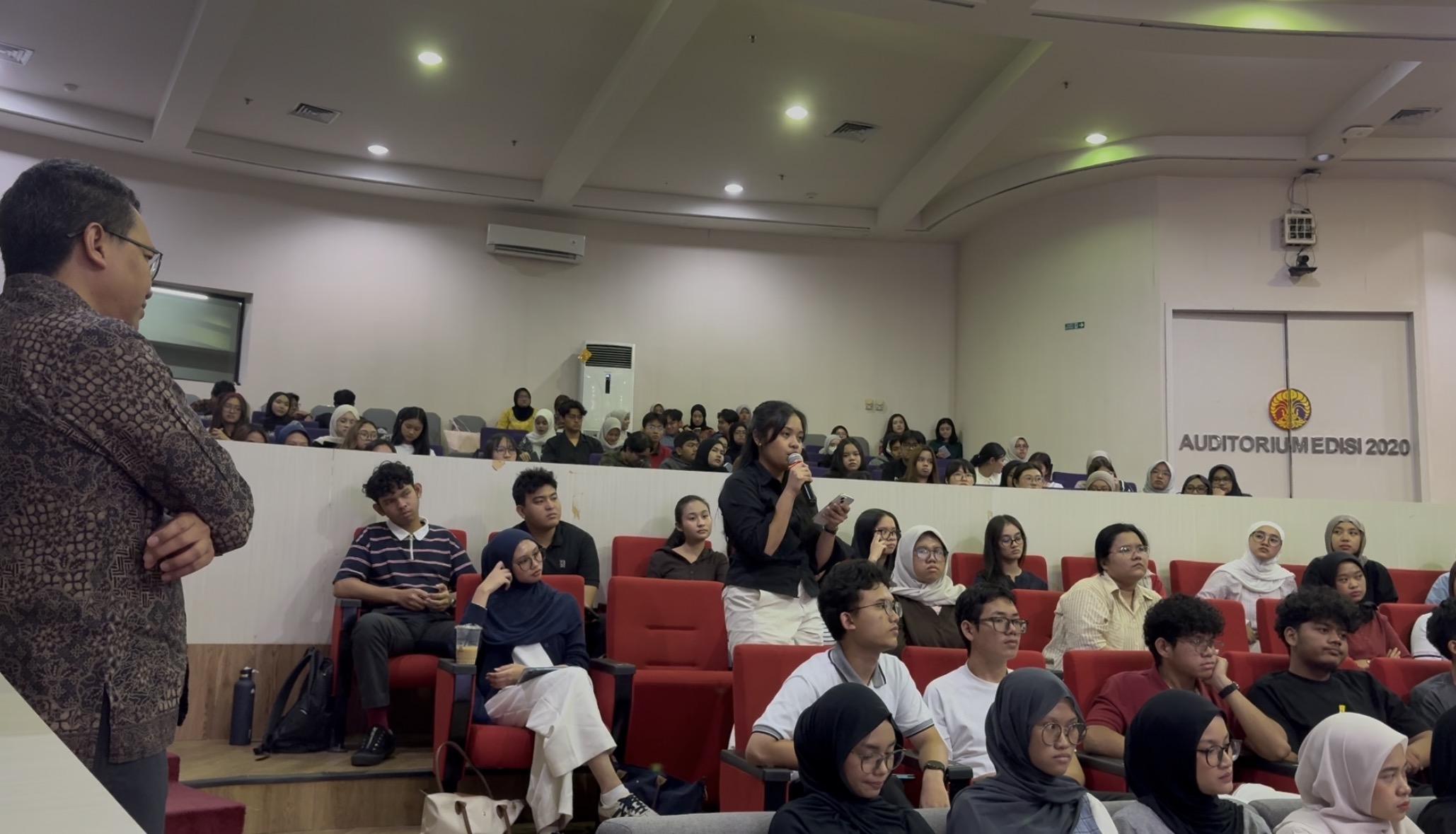
A student in FIA UI asking a very insightful question during Q&A.
Frequently asked questions
How is Singapore using AI in tax administration?
Singapore is progressively incorporating AI and data into tax administration to support productivity, analysis and service delivery. The approach presented by IRAS emphasises selecting high-value use cases, ensuring data and platform readiness, beginning with pilots and retaining appropriate human governance and accountability.
What is Singapore’s InvoiceNow system?
InvoiceNow is Singapore’s nationwide e-invoicing network based on the Peppol standard. Singapore is progressively integrating InvoiceNow with GST administration, with GST-registered businesses being brought within the requirement in phases.
Will AI replace tax professionals?
AI is likely to automate and augment parts of tax work, but complex tax decisions continue to require context, professional judgement, accountability and communication. The emerging challenge is therefore not simply learning to use AI, but learning to evaluate and apply its outputs responsibly.
What skills will future tax professionals need?
Technical tax expertise will remain important, but professionals will increasingly benefit from broader capabilities spanning business, technology, data, policy, communication and professional judgement.
What should an Indonesian company consider before expanding into Singapore?
The appropriate structure depends on the business and should not be determined by tax rates alone. Relevant considerations may include the commercial model, legal form, Singapore tax residency, the Singapore–Indonesia tax treaty, transfer pricing, GST and other regulatory obligations. Foreign companies also have different choices for establishing operations in Singapore, each with its own requirements.
Does the Singapore–Indonesia tax treaty eliminate double taxation?
The Singapore–Indonesia DTA provides mechanisms for coordinating taxing rights and relieving double taxation in qualifying circumstances. Treaty benefits depend on the relevant provisions and whether applicable requirements are satisfied; they are not automatic simply because a company is incorporated in one of the two jurisdictions.
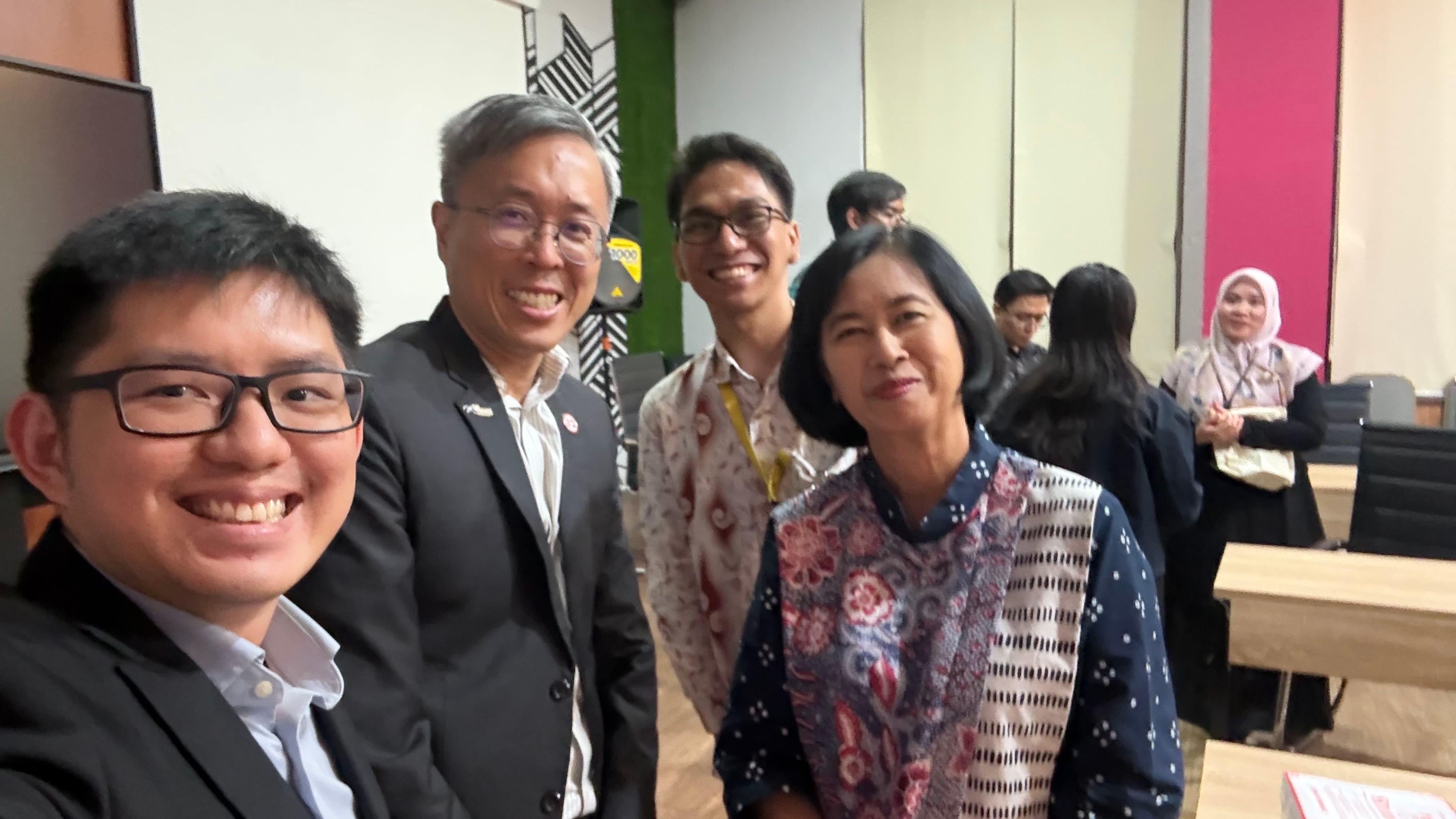
Tax Academy Digital & Innovation Lead, Mr. Sim Chen Xing; CEO Tax Academy of Singapore, Mr. Dennis Lui; Research and Training Associate of Tax Centre, FIA UI, Mr. Abrar Bilisanimar; Executive Director Tax Centre FIA UI, Dr. Titi Muswati Putranti
Continuing the Singapore–Indonesia conversation
Digitalisation and artificial intelligence are changing tax administration, but technology is only one part of the transformation.
The deeper changes concern how information moves, how institutions operate, how professionals exercise judgement and how capability is developed.
Singapore’s experience offers one perspective.
Indonesia’s scale, digital transformation and evolving tax ecosystem provide another.
Continued exchange between tax administrations, academics, practitioners, businesses and professional institutions can help both countries — and the wider ASEAN region — better understand what the future of tax administration may require.
Tax Academy of Singapore will continue to bring together perspectives from government, industry and academia to support that conversation and develop tax professionals for a rapidly changing environment.
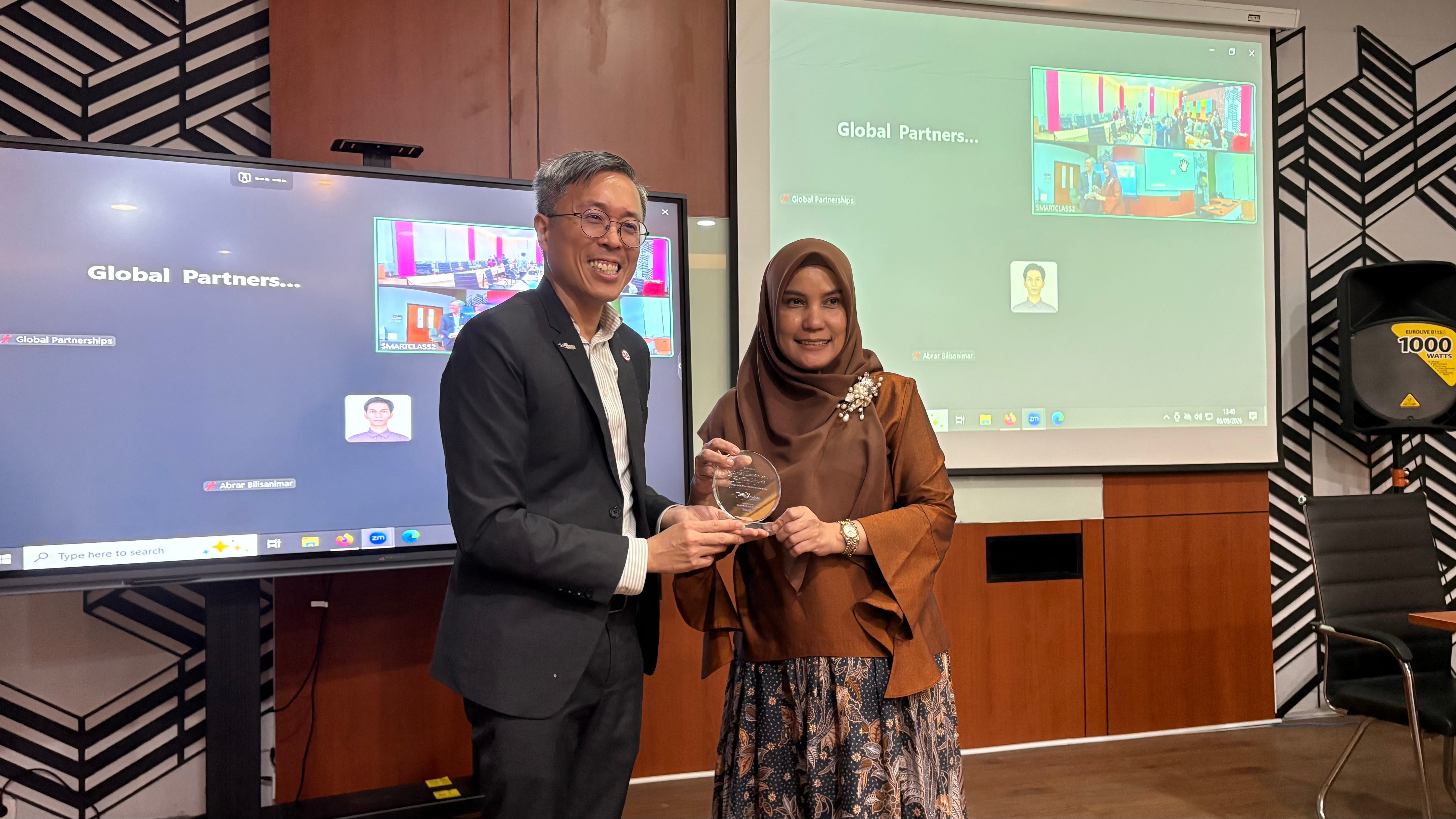
CEO Tax Academy of Singapore, Mr. Dennis Lui, offering a plaque of appreciation to Dean of Prof. Dr. dra. Retno Kusumastuti Hardjono, Dean of FIA UI.