
Beyond AI: The Human Edge in Tax | Associate Professor Darren Koh
15 October 2026
Explore the future of tax with Associate Professor Darren Koh as he discusses AI, human judgment, career opportunities and the evolving tax profession.
What does it take to succeed in tax when businesses evolve faster than legislation and artificial intelligence is transforming the way professionals work?
In this episode of The Tax Academy of Singapore Podcast, Associate Professor Darren Koh joins Eunice Toh to explore why tax is much more than numbers and compliance, the career opportunities it offers, and why human judgment, commercial awareness and critical thinking remain essential in an increasingly AI-driven world.

Why tax deserves a second look
Tax is often associated with calculations, filing returns and navigating complex legislation. Yet behind these technical requirements lies a profession that connects business, law, economics, public policy and human behaviour.
For Associate Professor Darren Koh, this intersection is precisely what makes tax an intellectually stimulating and rewarding career.
In conversation with Eunice Toh of Tax Academy of Singapore, Darren draws on his experience across professional services, industry and academia to challenge common misconceptions about taxation and offer insights into the capabilities future tax professionals will need.
The discussion moves from career opportunities and the importance of commercial understanding to the growing influence of artificial intelligence — and ultimately, the qualities that distinguish a good tax professional from a merely knowledgeable one.
Five perspectives from Associate Professor Darren Koh
1. Tax is more than numbers and compliance
One of the most common misconceptions about tax is that the profession revolves around preparing returns and calculating liabilities.
While compliance remains essential, Darren explains that tax advisory work goes considerably further.
Tax professionals help businesses navigate the interaction between commercial objectives and legislative requirements. Whether a company is entering a new market, restructuring its operations or developing a new business model, tax advisers must understand what the business hopes to achieve and how to get there within the applicable legal framework.
This requires more than technical knowledge. It demands an understanding of business strategy, economics, law and the practical challenges that organisations face.
Darren also challenges the notion that tax advice is simply about minimising tax liabilities. In many situations, businesses are seeking certainty and a way to pay the appropriate amount of tax as their operations evolve.
As he observes:
Business moves way faster than the law does.— Associate Professor Darren Koh
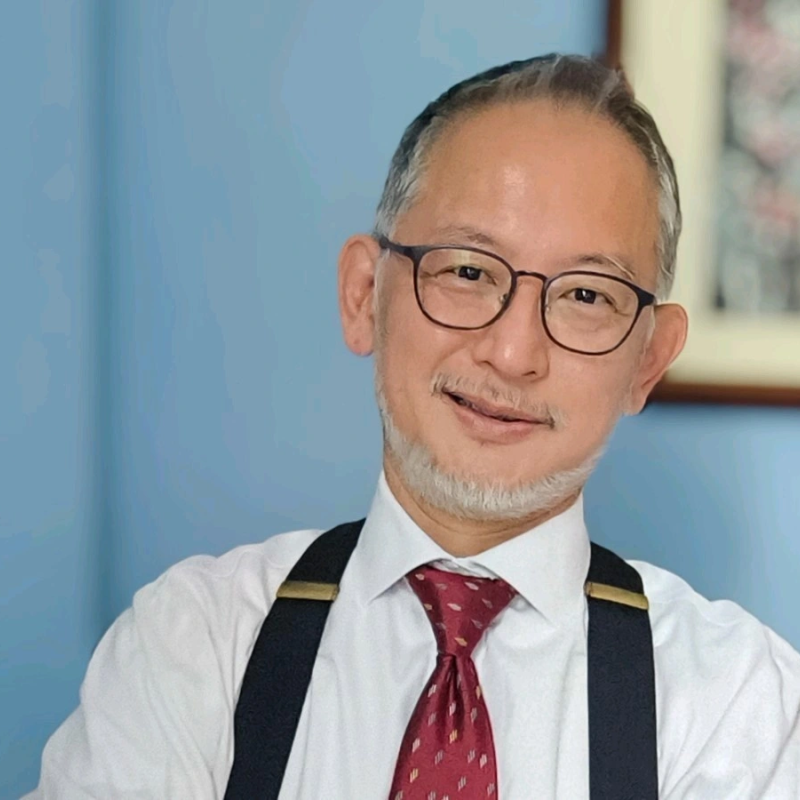
The challenge for tax professionals is to bridge that gap.
2. You do not need to be a mathematician to succeed in tax
Do aspiring tax professionals need to be exceptionally good with numbers?
According to Darren, this is another misconception worth reconsidering.
Although numerical competence is important, the mathematical calculations involved in much of tax practice are generally straightforward. The greater challenge lies in understanding commercial transactions, interpreting legislation and applying tax principles to real business situations.
A strong tax professional must be able to ask the right questions: How does a business operate? What is it trying to achieve? Which legislative provisions apply? What risks might arise?
This calls for critical thinking, strategic awareness and problem-solving abilities.
While accounting and law remain common entry points into the profession, Darren emphasises the importance of developing a broader understanding of the commercial world.
3. A career in tax can take you around the world
Tax may be a specialised profession, but specialisation does not necessarily mean limited career opportunities.
Darren reflects on his own journey through professional services, in-house tax roles and academia, as well as opportunities to work internationally.
As businesses expand across borders, they increasingly require professionals who understand the tax implications of operating in multiple jurisdictions.
Experienced tax practitioners may find opportunities in regional and global advisory roles, multinational corporations, professional services firms and tax education.
Darren also offers a realistic perspective: tax is a field in which many practitioners build long-term careers, with their expertise becoming more valuable through accumulated experience.
For those who enjoy solving complex problems and understanding how international businesses operate, the profession can offer considerable intellectual depth and international exposure.
4. In the age of AI, be the human in the loop
Artificial intelligence is rapidly changing how tax professionals retrieve information, review legislation and approach technical questions.
Darren acknowledges that AI will increasingly outperform humans in tasks involving information retrieval and may become significantly more capable of addressing complex tax problems.
Rather than competing with these capabilities, he encourages young professionals to develop the qualities that technology cannot readily replicate.
You cannot outrun AI. So why are you trying to be AI? Be the thing that AI cannot be. Be the human.— Associate Professor Darren Koh
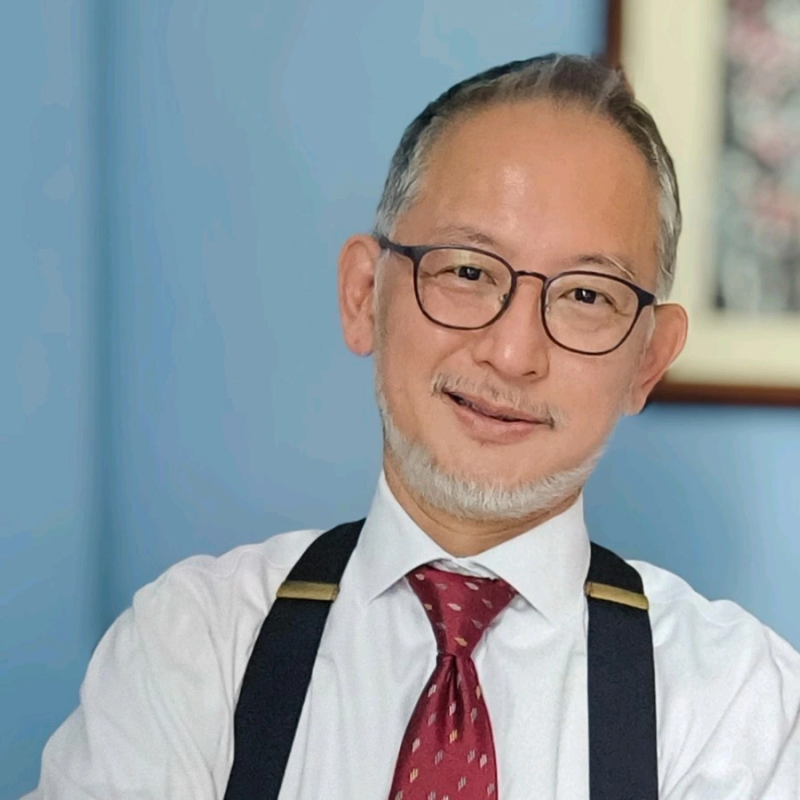
For Darren, the future tax professional must be able to evaluate AI-generated information, verify its accuracy and translate technical findings into advice that people can understand and act upon.
This might involve explaining a complicated wealth-planning arrangement to a family, advising a chief financial officer on business risks or challenging a proposed commercial decision.
Each situation requires not only technical competence but also communication, empathy, professional judgment and an understanding of human relationships.
The value of the professional increasingly lies not merely in knowing the answer, but in understanding what that answer means for the people and organisations involved.
5. Great tax professionals go beyond memorising rules
If AI can retrieve legislation and technical information almost instantly, what should tax education focus on?
Darren describes a progression of learning that begins with knowledge but does not end there.
Professionals must first acquire a foundation of technical knowledge. They must then understand that knowledge well enough to explain it, apply it to practical situations and analyse unfamiliar problems.
The ability to handle situations that have never been encountered before is particularly important.
New commercial structures, emerging technologies and changing business practices regularly present tax questions that cannot be answered simply by recalling a familiar rule.
This is where analytical thinking and professional judgment become essential.
For Darren, thinking like a tax professional ultimately means using knowledge, understanding, application and analysis to develop practical solutions.
It is not enough to identify what the legislation says. A professional must also be able to explain its implications and help others navigate the choices before them.
Building the next generation of tax professionals
The conversation also explores how students and working professionals can begin developing an interest in taxation.
Darren encourages accounting students to consider advanced tax modules and law students to explore revenue law where available.
For those already in the workforce or considering a career transition, he highlights Tax Academy of Singapore's structured Level 1, Level 2 and Level 3 programmes as progressive pathways for developing tax expertise.
He also discusses the Master of Taxation programme offered by the Singapore University of Social Sciences (SUSS), including its connection to Tax Academy's efforts to support further professional development.
These pathways reflect an important principle: tax expertise develops progressively, from foundational understanding to increasingly sophisticated application and analysis.
Darren closes the conversation with an invitation to young people who are curious about how businesses work, enjoy solving problems or find satisfaction in helping others.
Tax, he suggests, may be worth a second look.
The profession brings together technical expertise, commercial problem-solving, public policy and human interaction. And as the world becomes more complex, these capabilities remain highly relevant.
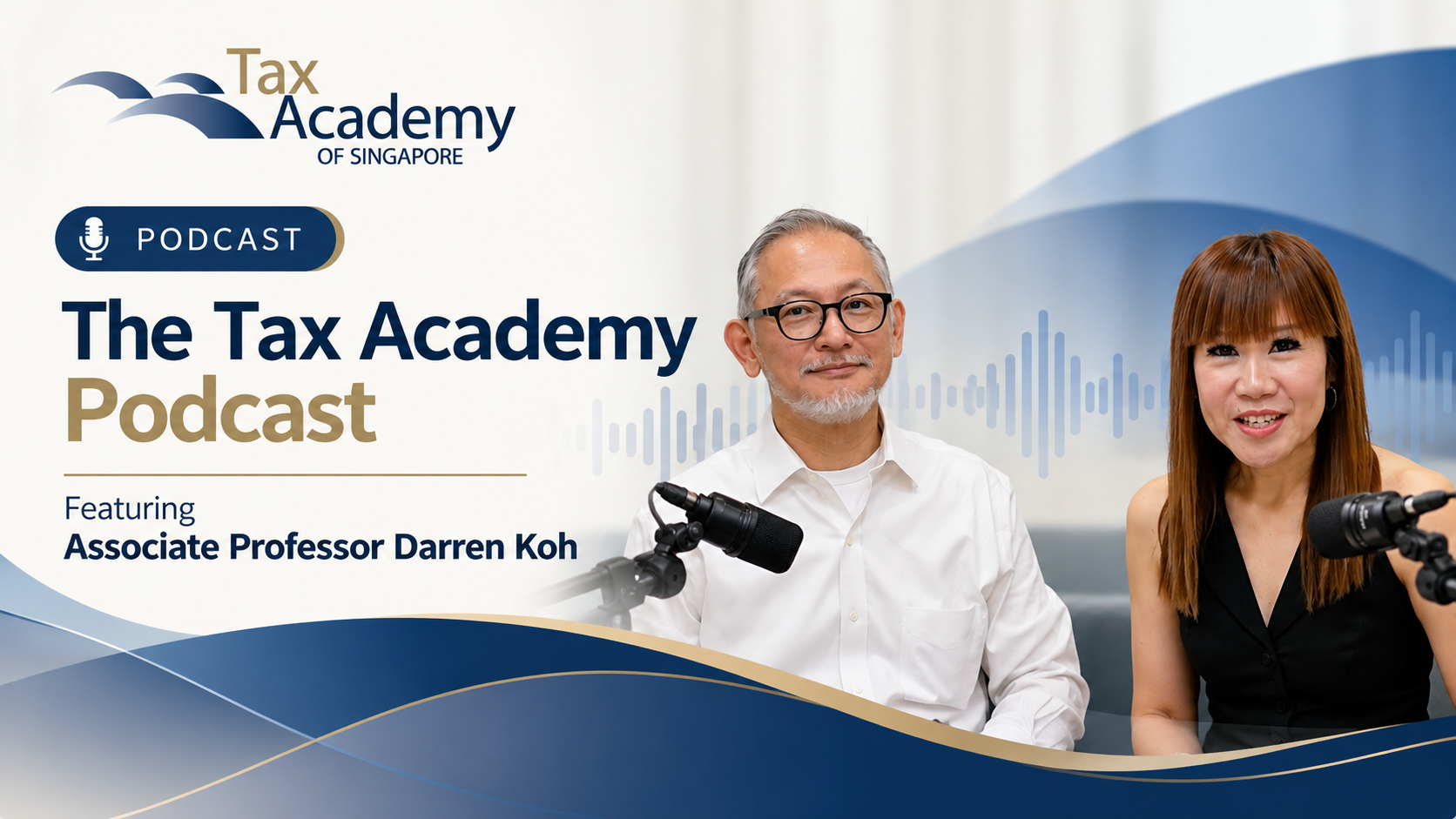
About Associate Professor Darren Koh
Associate Professor Darren Koh brings professional experience spanning tax advisory, in-house tax practice and academia.
His career has included international experience across multiple jurisdictions, providing him with perspectives on the interaction between tax legislation, business operations and professional practice.
Through his work in tax education, he advocates developing professionals who can move beyond technical knowledge to exercise critical thinking, apply tax principles and deliver practical solutions.
Continue your tax learning journey
Interested in exploring tax as a career or strengthening your professional expertise?
Tax Academy of Singapore offers structured programmes designed to support progressive learning and professional development in taxation.
Explore our programmes: https://www.taxacademy.sg (opens in new tab)
Discover more podcast conversations: https://www.taxacademy.sg/resources/podcast/ (opens in new tab)
Explore TaxTOC: https://www.taxacademyportal.com/taxtoc (opens in new tab)