
Connecting Expertise, Inspiring Dialogue: Highlights from the IFA–TA International Tax Conference 2026
16 October 2026
Highlights from the IFA–TA International Tax Conference 2026, exploring emerging global tax challenges, expert perspectives and the launch of TaxTOC.
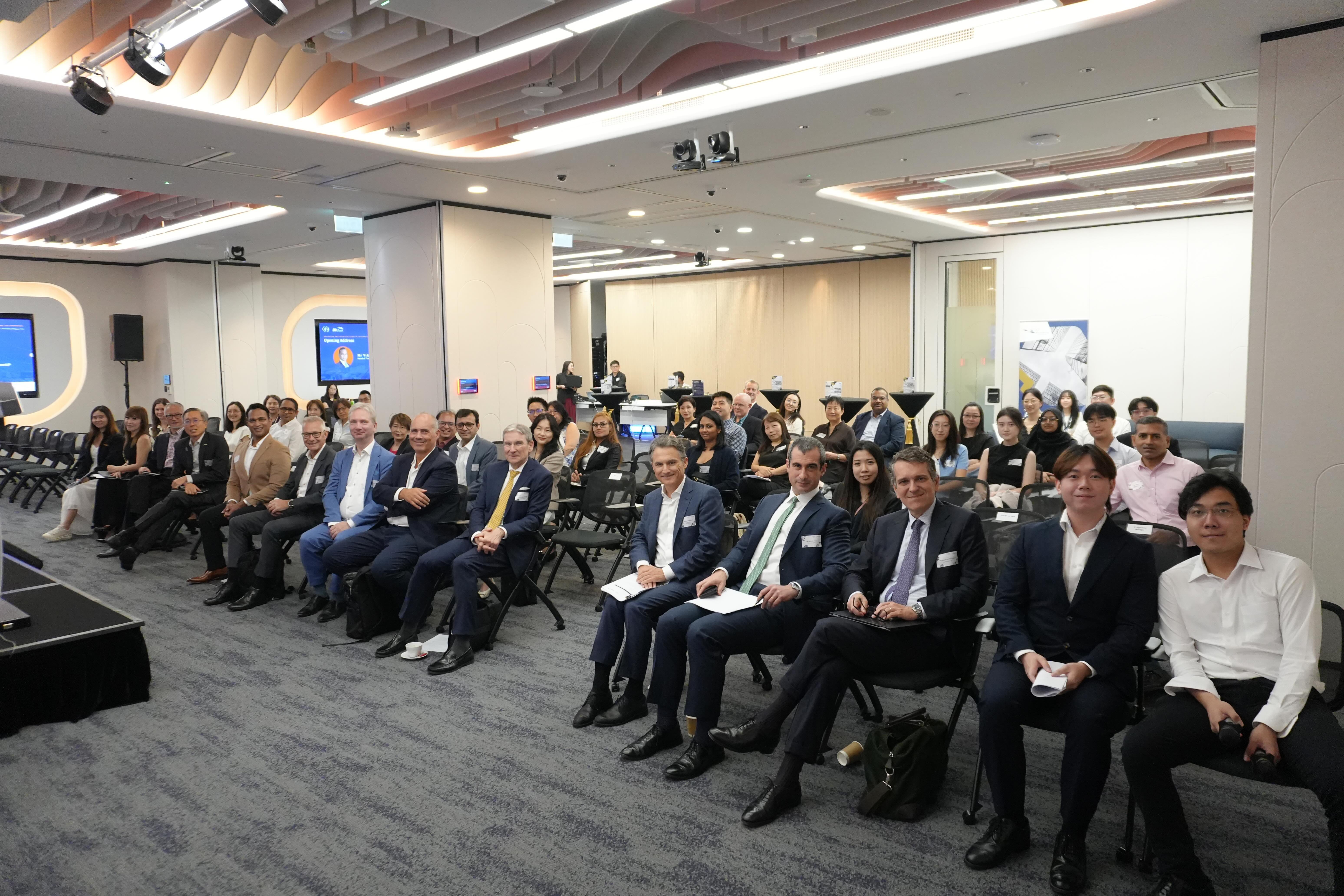
Group Photo at IFA–TA International Tax Conference 2026
The IFA–TA International Tax Conference 2026, jointly organised by the Tax Academy of Singapore (TA) and the International Fiscal Association (IFA) Singapore (opens in new tab), brought together leading international and local tax experts, academics, policymakers and practitioners for a day of insightful discussions on emerging challenges in international taxation.
Held at the Tax Academy of Singapore Hub on 16 October 2026, the conference explored how international tax principles are evolving in response to changing business models, regulatory developments and the increasingly interconnected global economy.
Through presentations and panel discussions, participants had the opportunity to examine these developments from academic, policy and practical perspectives, while exchanging insights across jurisdictions and professional disciplines.
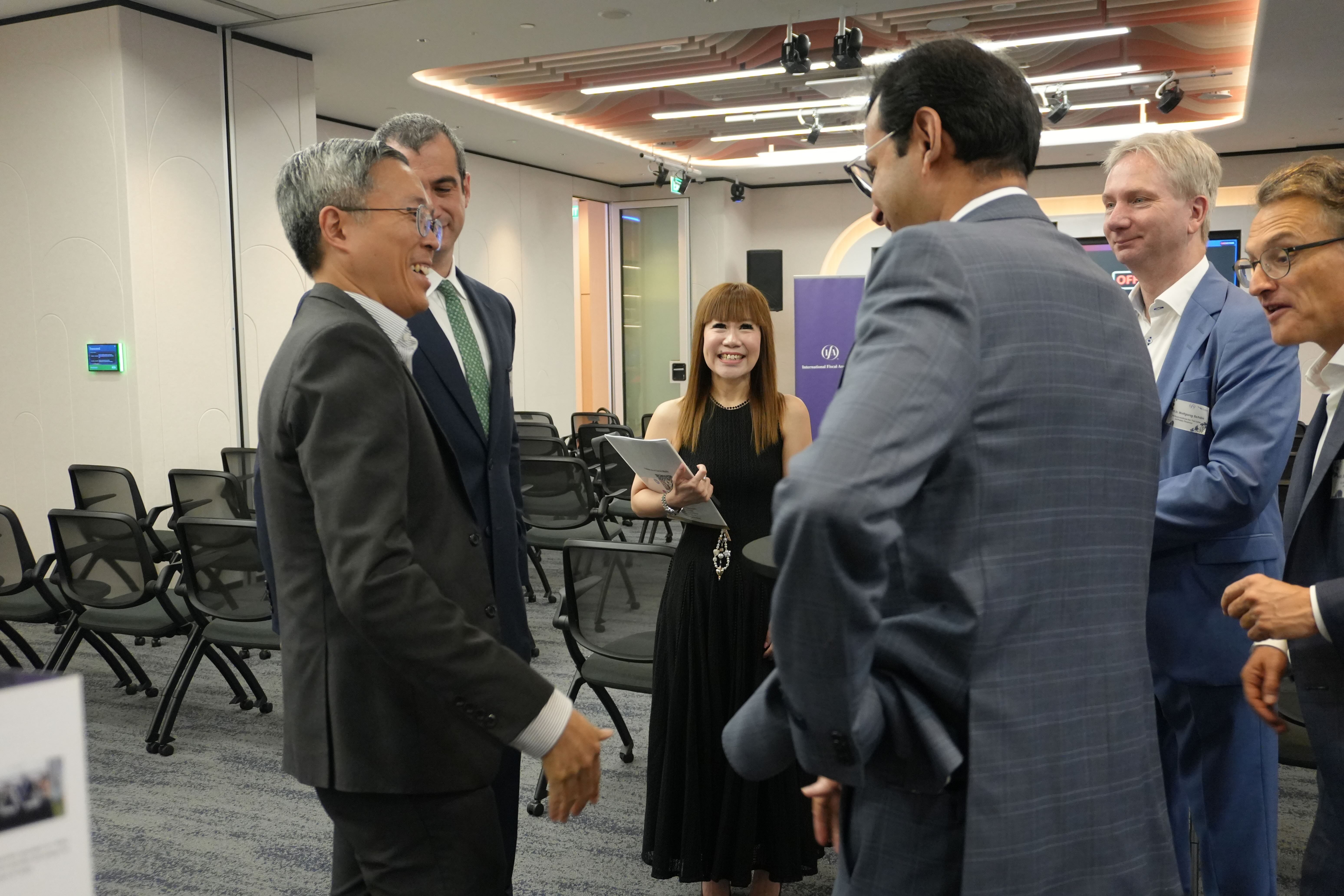
Exploring the Changing Landscape of International Taxation
The conference opened with a keynote address by Prof. Dr. Wolfgang Schön of the Max Planck Institute for Tax Law and Public Finance, Munich, on Market Country Taxation after Pillar One.
The session examined fundamental questions surrounding the allocation of taxing rights between jurisdictions, particularly as international efforts to reform the taxation of multinational enterprises continue to evolve. It provided a perspective on the role of market jurisdictions and the challenges of balancing competing taxing claims while maintaining international tax coordination.
Building on these discussions, Prof. Dr. Pasquale Pistone, Academic Chairman, IBFD, explored Public International Law and the Establishment of International Tax Nexus.
His presentation considered the legal foundations of taxing jurisdiction and the relationship between a country's taxing rights and the economic activities taking place within or connected to its jurisdiction. The discussion raised important questions about how international tax principles can respond to cross-border activities that increasingly take place without a traditional physical presence.
The conference also examined several other dimensions of international taxation:
VAT/GST in Tripartite Transactions: Prof. Stephen Phua of the Faculty of Law, National University of Singapore, explored the complexities of applying indirect tax rules to transactions involving multiple parties, including questions surrounding the identification of suppliers, recipients and taxable supplies.
Recent Relevant ECJ Decisions and Trends for Non-EU Investors: Mr Aurelio Massimiano, Partner at Maisto e Associati, Milan, examined developments in European tax jurisprudence and their potential implications for cross-border investments involving non-EU businesses and investors.
Global Minimum Taxation and Profit Shifting: Prof. Dr. Martin Wenz of the University of Liechtenstein, Vaduz, presented Global Minimum Taxation and Profit Shifting – empirical vs. regulatory analyses of CbCR-Data and GloBE-Rules under the SbS-System. The session explored the relationship between empirical evidence from Country-by-Country Reporting data and the evolving global minimum tax framework, including the GloBE Rules.
Together, these sessions reflected the breadth and complexity of contemporary international taxation, from foundational questions of taxing jurisdiction to the practical implications of increasingly sophisticated international tax frameworks.
The accompanying panel discussions provided further opportunities for speakers and participants to exchange perspectives, consider different approaches and reflect on how international tax developments may affect businesses, policymakers and tax administrations.
Connecting Tax with the Wider World
In his opening remarks, Mr Dennis Lui, CEO of Tax Academy of Singapore, emphasised a central message:
Tax does not exist in isolation.— Mr Dennis Lui, CEO of Tax Academy of Singapore
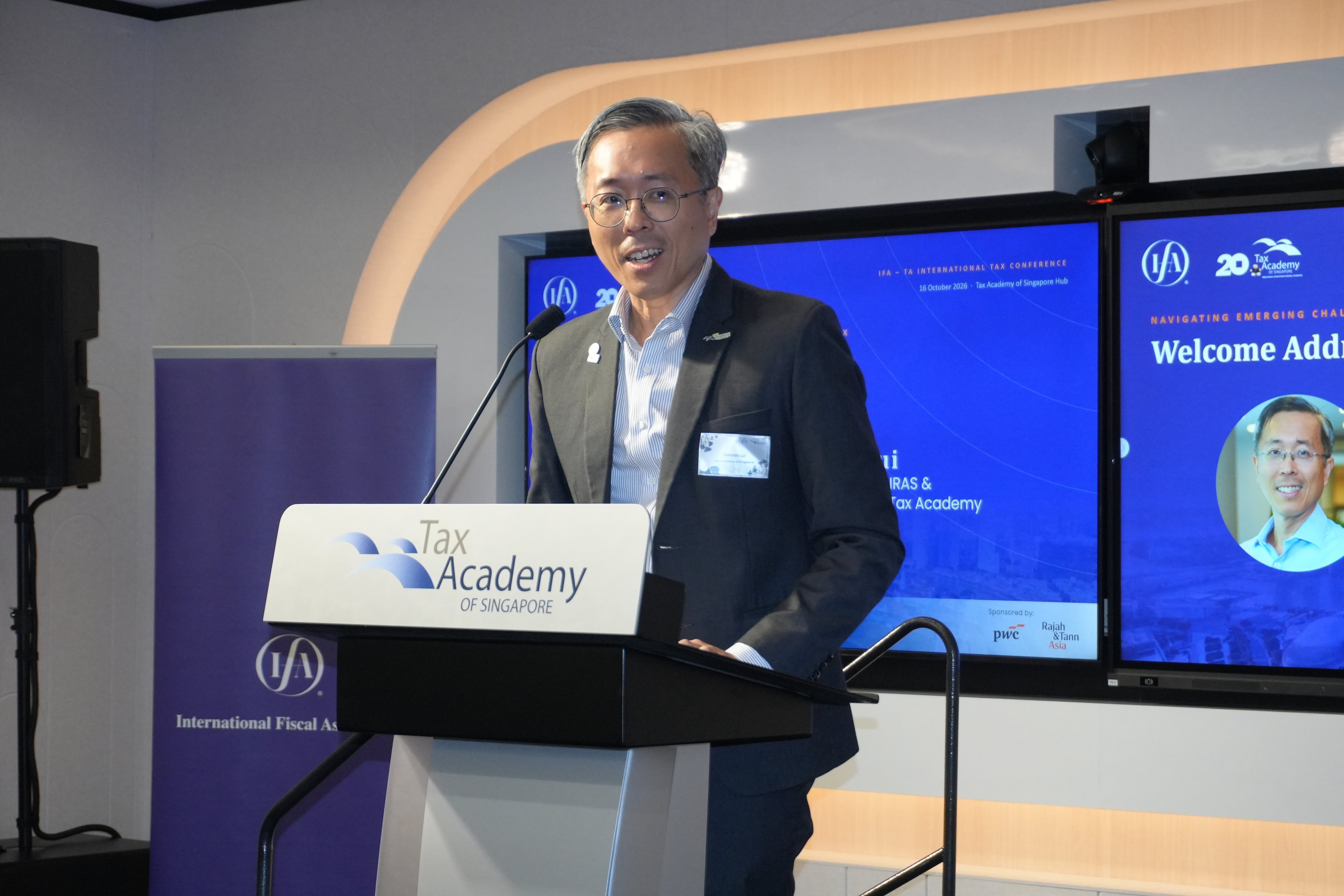
Tax is closely connected to business, investment, governance and public policy. As the challenges facing the profession become increasingly complex, addressing them requires expertise and perspectives that extend beyond traditional disciplinary boundaries.
Mr Lui highlighted TA's commitment to building tax capability beyond classroom training and bringing together government, industry and academia.
Through initiatives such as the Singapore Tax Academy Research Initiative (STARI), TA seeks to strengthen collaboration between academics and practitioners, develop local research talent and contribute to international tax discussions.
He also emphasised the importance of creating partnerships that extend beyond individual events, expressing the hope that TA's collaboration with IFA Singapore would lead to continued exchanges, closer professional connections and opportunities to develop ideas that benefit the wider tax community.
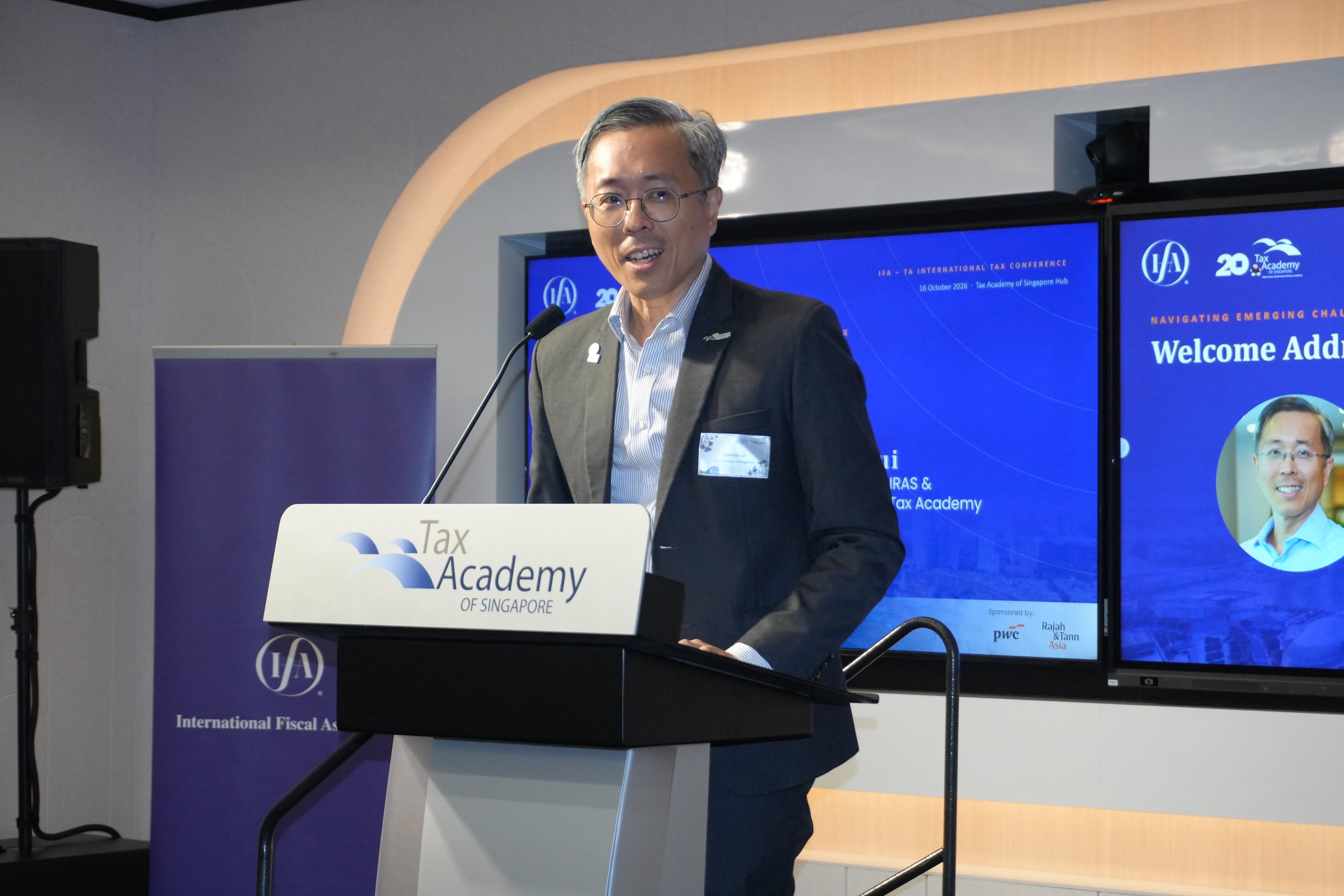
Mr Dennis Lui, CEO of Tax Academy of Singapore, giving the Opening Remarks
Introducing TaxTOC: Learning Beyond the Classroom
The conference also marked the official launch of TaxTOC, Tax Academy's new digital learning platform.
TaxTOC brings together recorded lectures, conference sessions, expert insights and on-demand learning opportunities, allowing tax professionals and learners to access knowledge beyond the classroom and revisit learning materials at their own pace.
The launch represents another step in TA's efforts to make quality tax education more accessible and extend the value of its programmes and collaborations beyond the duration of individual events.
TaxTOC Introductory Banner
Continuing the Conversation
The IFA–TA International Tax Conference 2026 demonstrated the value of bringing together academic research, policy perspectives and professional experience to deepen understanding of the issues shaping international taxation.
More importantly, it reinforced the importance of continued dialogue and collaboration in navigating an increasingly complex global tax environment.
Tax Academy extends its sincere appreciation to IFA Singapore, our distinguished speakers, panellists and participants for contributing their expertise, insights and perspectives to the conference.
Through continued partnerships, research and knowledge-sharing initiatives, TA looks forward to strengthening connections across the international tax community and contributing to the conversations shaping the future of taxation.